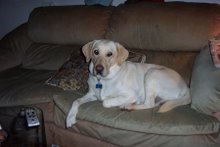
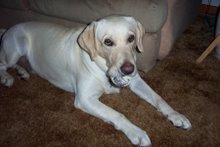
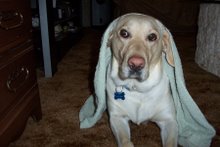
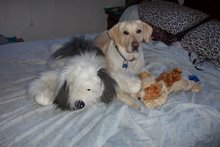
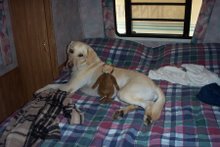
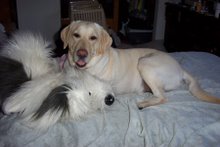
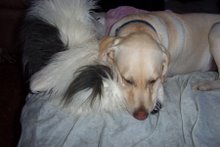
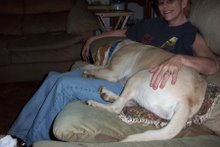
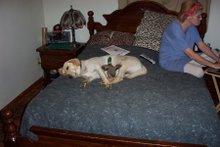
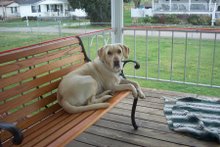
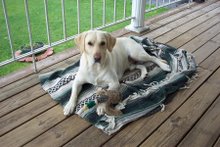
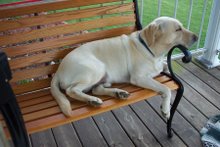
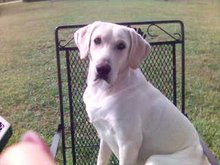
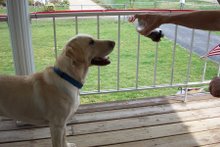
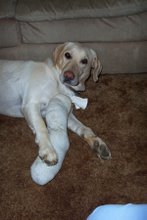
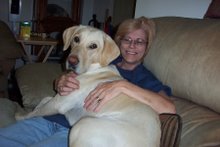
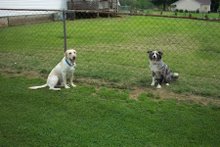
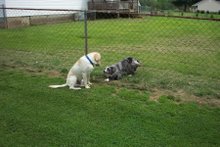
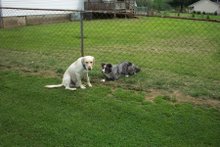
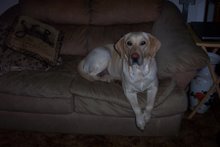
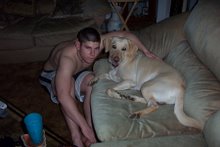
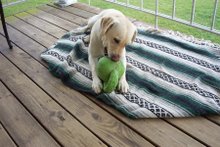
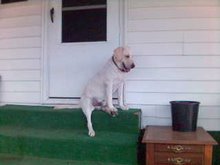
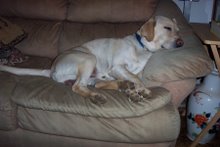
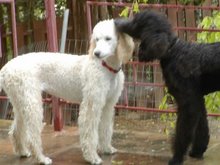
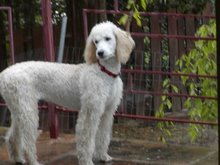
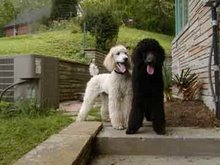
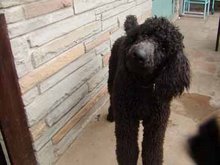
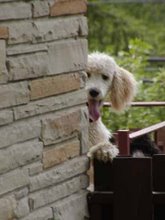
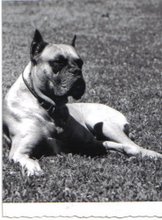
Kallee and Tamara
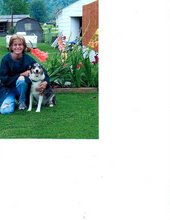
A Beautiful Summer Day.
Madam Kallee, CTD, CGC - 1994-2005 - Certified Therapy Dog and a Canine Good Citizen
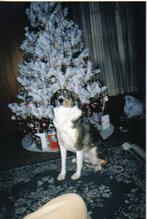
I am so pretty!
Kallee, T.D.I., CGC - Certified Therapy Dog and a Canine Good Citizen - 1994-2005

I loved to pose for the camera.
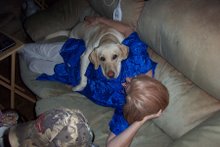
Hat Girl.

The things I do for my mom!
Happiness.

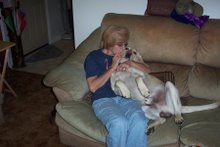
Bubby knows how to scratch a tummy.
Best of Friends.

Mine! No, Mine!, No Mine!!!
Whew !

Bubby wears me out!
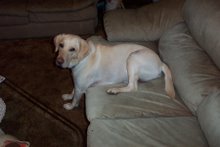
This is the Life.

Just relaxing with bubby.
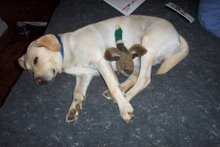
Kallee and Mr. Monkey
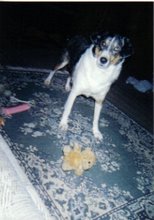
See Mr. Monkey? Wanna play?
Miss Cool.
I loved to wear my shades.
Wednesday, November 21, 2007
Animal Friends Looking for Rummage Sale Donations.
Animal Friends is picking up donations for indoor rummage sales throughout the winter. A free pick-up service is provided for both large and small items. All proceeds from the sales fund Animal Friends’ no-kill shelter and free spay/neuter service. Call (304) 429-2053 for more information.


Tuesday, November 20, 2007
Vick Owes $900,000 in Dog Care Bills.
(CNN) -- The government asked a federal court Tuesday to order former Atlanta Falcons quarterback Michael Vick to keep on hand assets valued at more than $900,000 -- the amount earmarked for the care of 54 pit bulls. Michael Vick leaves court in Richmond, Viriginia, in August after pleading guilty to dogfighting charges. The animals were found on his property when a dogfighting operation was busted last April. Vick turned himself in to authorities Monday to get a jump start on serving his sentence for running the ring. In a motion filed in U.S. District Court for the Eastern District of Virginia, U.S. District Judge Henry Hudson noted that Vick, in his plea agreement, agreed to pay "restitution for the full amount of the costs associated with the disposition of all dogs" in the case. Vick agreed that those costs could include "the long-term care and/or the humane euthanasia of some or all of those animals," which were seized from the "Bad Newz Kennels" on his property in Surry County, Virginia. The motion said that only a restraining order can ensure that Vick's assets are not placed beyond the reach of the government. It noted that Vick's financial condition is deteriorating, and cited the team's attempt to recoup bonus money from his 10-year, $130 million 2004 football contract; his alleged default on a $1.3 million bank loan for a wine store; another bank lawsuit seeking payment for default on a $2.5 million line of credit; and yet another bank's lawsuit seeking at least $2 million for loans related to a car-rental business. "In addition, published reports also indicate that Vick is in the process of selling assets, specifically a suburban Atlanta home listed at $4.5 million," it said. Vick, 27, is being held at Northern Neck Regional Jail in Warsaw, Virginia, until an upcoming sentencing hearing. He pleaded guilty in August to a federal conspiracy charge of bankrolling the dogfighting operation after three associates admitted their own roles in the ring and agreed to cooperate with prosecutors. Vick, who has been suspended indefinitely by NFL Commissioner Roger Goodell, faces 12to 18 months in prison on the conspiracy charge. The sentencing hearing is scheduled for December 10. On September 25, a Virginia grand jury indicted Vick and the three co-defendants on state charges of running a dogfighting ring. The Surry County grand jury brought two felony charges against the four men: one count of unlawfully torturing and killing dogs and one of promoting dogfights. Each could result in a five-year prison term.
Think Before You Give Left-overs To Your Dog.
QUESTION: Can certain foods that are safe for humans be toxic to dogs?
DR. BINGHAM: You might be surprised at how seemingly innocuous foods and beverages can be harmful, even fatal, to the family dog, depending on the dog’s size and how much is eaten. With the holidays on the way, it’s more important than ever to be aware of the risks.
Chocolate – A treasured treat for us, chocolate can be fatal to dogs. Containing a chemical called theobromine, even small amounts can lead to a problem.
Onions – Halitosis aside, onions can cause hemolytic anemia, a condition that destroys a dog’s red blood cells. And they can have a cumulative effect.
Macadamia nuts – Experts are not sure why just yet, but just a few Macadamia nuts can induce tremors and even temporary weakness in a dog’s hind legs.
Coffee – Caffeine is a methylxanthine compound which can increase a dog’s heart rate and trigger seizures.
Alcohol – Don’t let your Beagle belly up to the bar – alcohol depresses brain function and can cause a coma.
While your dog may find the same foods as appetizing as you, it doesn’t mean they’ll be just as safe for him. When in doubt it’s always wiser to reward your canine with real dog treats or dog food, not human fare.
If you have a question for Dr. Bingham, please send it to DrB@biljac.com.
DR. BINGHAM: You might be surprised at how seemingly innocuous foods and beverages can be harmful, even fatal, to the family dog, depending on the dog’s size and how much is eaten. With the holidays on the way, it’s more important than ever to be aware of the risks.
Chocolate – A treasured treat for us, chocolate can be fatal to dogs. Containing a chemical called theobromine, even small amounts can lead to a problem.
Onions – Halitosis aside, onions can cause hemolytic anemia, a condition that destroys a dog’s red blood cells. And they can have a cumulative effect.
Macadamia nuts – Experts are not sure why just yet, but just a few Macadamia nuts can induce tremors and even temporary weakness in a dog’s hind legs.
Coffee – Caffeine is a methylxanthine compound which can increase a dog’s heart rate and trigger seizures.
Alcohol – Don’t let your Beagle belly up to the bar – alcohol depresses brain function and can cause a coma.
While your dog may find the same foods as appetizing as you, it doesn’t mean they’ll be just as safe for him. When in doubt it’s always wiser to reward your canine with real dog treats or dog food, not human fare.
If you have a question for Dr. Bingham, please send it to DrB@biljac.com.
Monday, November 19, 2007
Little Victories to Host Benefit Dinner.
BARBOURSVILLE -- Little Victories Animal Rescue Group will be sponsoring a benefit dinner to raise funds to complete the construction of its no-kill animal sanctuary in Ona. The dinner will be held on Monday, Nov. 26, at Rocco's Ristorante, located at 252 Main St., Ceredo. Reservations are required and are available by calling Buck Crews at (304) 529-2391. Tickets cost $65. I know this seems like a lot of money for a dinner, but winter is coming fast, and there are many, many, many homeless animals that need help. Finishing the shelter means that these animals will have a chance at a new life. Sue Brown and the many volunteers work so hard trying to save them all. With your help, they, and you, will make a great difference.
Thursday, November 15, 2007
Vicious Dog Law.
We’ve been telling you for the last couple of months the city of Logan is stepping up their vicious dog ordinance. Enforcement of new laws will start next week. November 20th, which is next Tuesday, is the last day you have to register your dog.
The breeds that fit the requirement are Pit Bulls, Doberman Pinchers, Rottweilers or any dog of the Wolfe species. There is a fee of $300 to register the animal. If the dog is not registered by the Tuesday deadline the city will quarantine the dog.
The breeds that fit the requirement are Pit Bulls, Doberman Pinchers, Rottweilers or any dog of the Wolfe species. There is a fee of $300 to register the animal. If the dog is not registered by the Tuesday deadline the city will quarantine the dog.
Thursday, November 8, 2007
Genetics.
Inbreeding, Linebreeding and Crossbreeding in Dogs:
Some animal breeders, including many dog breeders, make a distinction between inbreeding (mating mother/son, father/daughter, brother/sister) and linebreeding(mating say grandparent/grandchild, aunt/nephew). To a geneticist linebreeding and inbreeding only differ in degree. Inbreeding occurs when animals are bred to their relatives. The closer the relationship the higher the "inbreeding coefficient". Inbreeding coefficients measure the degree of inbreeding an animal shows relative to a randomly breeding population. Inbreeding reduces fertility, vigour or overall health and mental stability. Inbred animals are more prone to diseases such as infections and cancer, and more likely to be "highly strung". To understand why this happens we need to consider basic genetics: All animals, including people and dogs, carry two copies of each gene - one from our mother and one from our father. These genes are unique sequences of DNA, each of which codes for a unique protein. Changes in the DNA code (called mutations) change the structure of the protein produced by the gene and as a result change the way the protein works. Because evolution has for millions of years selected for perfection of performance most changes or mutations are less effective than the original gene copy. The chance of having an abnormal copy, or mutation, of any one particular gene is low, but because we have so many genes we all carry some harmful genes. These genes are usually hidden because we have one good copy of the gene to carry us through and this gene produces a normal protein which can perform the tasks required. When we have two different copies of a gene we are said to be HETEROZYGOUS for that gene and if one gene copy is hidden by the other, the hidden copy is said to be RECESSIVE. If both copies of a gene are the same then we are HOMOZYGOUS and if the copy is "bad" then that gene won't work normally and we will be to some degree less healthy. Some single genes are so important that affected animals die, or suffer debilitating disease and some have only minor effects - affecting for example jaw structure or coat colour, the efficiency of an antibody molecule, the structure of a neurotransmitter or the shape of a red blood cell. As animals are mated to their relatives, however distant, simple mathematics will show that the likelyhood of any one gene becoming homozygous will increase. As homozygosity increases, variation among offspring decreases. The dog breeder takes advantage of this in line breeding to produce a breed which "breeds true" and conforms to a "breed standard" and within the breed to produce offspring that are like peas in a pod. Breeders look for a "prepotent" sire or bitch ( ie one that always throws pups very similar to itself). These animals come from a "good linebred pedigree" - that is one that is inbred so that the animal is homozygous for as many as possible of the characteristics that the breeder regards as desirable. Unfortunately this search for perfection and uniformity comes at a cost. Undesirable genes also become increasingly likely to be homozygous and so affect the health of the animal. Most of these genes have minor effects which gradually accumulate. There are many genes involved in traits like fertility, immune competence and mental stability and accumulation of homozygous recessive "bad" genes gradually diminishes the function of these systems. If inbreeding increases homozygosity, crossbreeding is its opposite and maximises heterozygosity. Crossbreeding is the mainstay of most farm animal and plant production - it takes advantage of a phenomenon which is widely talked about but poorly understood: HYBRID VIGOUR (or for the geneticists - HETEROSIS) is the term used to describe the burst of fertility, good health and growth that is seen in the progeny when two unrelated breeds are mated. The longer that these breeds have been separated, and the greater the differences between them, the stronger will be the resulting hybrid vigour. Hybrid vigour is not a theory, it is the name given to describe something that happens repeatably throughout all species in the animal and plant kingdom. When unrelated breeds of any animal species are mated the offspring in the first generation will be more healthy, fertile, and (in animals) mentally stable than either parent breed. This first F1 (Filial1) generation as the geneticists call it, will be intermediate in characterisics to the parent breeds and the offspring will resemble each other. Lets look at how this works using a simple model with only 9 genes. (Note that a convention in genetics is that small case letters are used to denote recessive genes and large case letters are used to denote dominant genes.) Say we have a dog of breed (A) which always has has long ears (aaBB), Short legs (CCdd), black coat (EE) and, by chance because of years of breeding within a small gene pool, has the "fertility" genes FF gg hh II. The bitch of breed (B) has short ears (AAbb), long legs (ccDD) a gold coat (ee) and, again by chance, the "fertility" genes ff GG HH ii. The cross would look like this:
(A)
aa BB CC dd EE FF gg hh II
X
(B)
AA bb cc DD ee ff GG HH ii
Producing an F1
Aa Bb Cc Dd Ee Ff Gg Hh Ii
These offspring will have medium ears (A-B-) and medium length legs (C-D-). They will be black (Ee) because only one gene is involved and black is dominant to gold, and they will be more fertile than either parent. Genes for mental stability and "vigour" - like these fertility genes - become more homozygous with inbreeding and in the first cross will be as heterozygous as it is possible with that breed combination. This example oversimplifies matters - in reality thousands of genes are involved, dominance/recessive relationships are not that simple and different breeds have many genes in common, however it does demonstrate the way in which hybrid vigour works and why the F1 progeny are similar to each other. The degree of similarity in the F1 progeny will, as in purebreeding, depend on how homozygous the parent breeds are. Certainly if two animals of different breeds are mated and if both parents are highly strung, and if this nervous behavious is genetically based, and if the same genes are involved in both parents, then crossbred progeny will probably also be highly strung or neurotic. Clearly however this is less likely than if these two animals are of the same breed and related in some way. This example can also be used to show why hybrid vigour only works in the first generation and why "mongrels" or "mutts" come in all shapes and sizes. While our theoretical F1 - produced from highly homozygous parents, has only one genetic combination possible, if an F1 was crossed with another F1 there would be many hundreds of possible combinations produced in the "F2" generation. These offspring would range from almost the same as one grandparent to almost the same as the other, with every possible combination in between and while most of these would be more heterozygous than the grandparent generation most of them would be less heterozygous than the parent F1s. It is possible to prevent this deterioration in health and vigour by limiting linebreeding and by selecting rigourously for highly fertile, vigorous, long lived, mentally stable animals. Responsible, intelligent dog breeders do just that. Unfortunately the the problem arises - what does one do with the less healthy, vigorous, and mentally stable animals? The answer in livestock breeding is that they are sold to an abbatoir - in purebred dog breeding they are usually sold as pets.
Another feature of crossbreeding used in livestock breeding is "complementarity" -the term used to describe the way two breeds can be combined to overcome defects in one or other breed - the way two bloodlines "nick" in dog breeding terms. The example which is commonly applied in cattle is the crossing of a dairy cow with a beef breed to produce a calf which has hybrid vigour and will be fertile healthy and fast growing. The heifer calf will also have better muscling than the dairy parent and better milk production than the beef parent and in this way the two breeds are complementary. Should the heifer calf be retained for breeding she could be backcrossed to either parent breed or - as is more commonly practiced - bred to a third breed in a "three breed rotation" which will retain the benefits of hybrid vigour, complementarity and reliable uniformity in the offspring. I am a country veterinarian and for a long time I have been aware of the trouble that purebred dog breeders are unintentionally getting their animals into. The practice of closing the stud book once a breed is "recognised" is, to me, a practice which benefits dog breeders but works to the detriment of the breed. I am not a traditional dog breeder and my bias is towards breeding dogs as life enriching companions for people rather than breeding dogs to preserve animals of an idealized type in perpetuity. I have chosen to breed Labradoodles for reasons outlined elsewhere. I believe that there is scope for other crossbred dogs to be deliberately bred. I realise that this approach to dog breeding is frowned on but I think that by creative application of crossbreeding new breed combinations can be produced which bring together desirable characteristics from different breeds. There is no reason why breeds of dogs should be treated as if they are separate (and increasingly endangered) species as is presently the case. The challenge is to develop checklist of desirable characteristics and then find the breeds most likely to complement each other. Complementary breeds should not share common structural problems, such as Hip Dysplasia, or Luxating Patellae and should have temperament characteristics which combine well. Single gene problems such as Haemophilia or Progressive Retinal Atrophy would still need to be screened for if they occurred in both parent breeds but carriers are not be a problem in this system because the progeny are not be bred from. Remember that the second generation is likely to be more variable and have less hybrid vigour than the F1 so breeding F1 to F1 is unwise unless the breeder is trying to create a new breed and doesn't mind breeding a lot of funny looking , and possibly unsatisfactory, dogs on the way. I don't want to create a new breed or produce puppies which are all identical - only puppies which are all healthy, intelligent, full of personality and with attributed which make them good family pets.
Some animal breeders, including many dog breeders, make a distinction between inbreeding (mating mother/son, father/daughter, brother/sister) and linebreeding(mating say grandparent/grandchild, aunt/nephew). To a geneticist linebreeding and inbreeding only differ in degree. Inbreeding occurs when animals are bred to their relatives. The closer the relationship the higher the "inbreeding coefficient". Inbreeding coefficients measure the degree of inbreeding an animal shows relative to a randomly breeding population. Inbreeding reduces fertility, vigour or overall health and mental stability. Inbred animals are more prone to diseases such as infections and cancer, and more likely to be "highly strung". To understand why this happens we need to consider basic genetics: All animals, including people and dogs, carry two copies of each gene - one from our mother and one from our father. These genes are unique sequences of DNA, each of which codes for a unique protein. Changes in the DNA code (called mutations) change the structure of the protein produced by the gene and as a result change the way the protein works. Because evolution has for millions of years selected for perfection of performance most changes or mutations are less effective than the original gene copy. The chance of having an abnormal copy, or mutation, of any one particular gene is low, but because we have so many genes we all carry some harmful genes. These genes are usually hidden because we have one good copy of the gene to carry us through and this gene produces a normal protein which can perform the tasks required. When we have two different copies of a gene we are said to be HETEROZYGOUS for that gene and if one gene copy is hidden by the other, the hidden copy is said to be RECESSIVE. If both copies of a gene are the same then we are HOMOZYGOUS and if the copy is "bad" then that gene won't work normally and we will be to some degree less healthy. Some single genes are so important that affected animals die, or suffer debilitating disease and some have only minor effects - affecting for example jaw structure or coat colour, the efficiency of an antibody molecule, the structure of a neurotransmitter or the shape of a red blood cell. As animals are mated to their relatives, however distant, simple mathematics will show that the likelyhood of any one gene becoming homozygous will increase. As homozygosity increases, variation among offspring decreases. The dog breeder takes advantage of this in line breeding to produce a breed which "breeds true" and conforms to a "breed standard" and within the breed to produce offspring that are like peas in a pod. Breeders look for a "prepotent" sire or bitch ( ie one that always throws pups very similar to itself). These animals come from a "good linebred pedigree" - that is one that is inbred so that the animal is homozygous for as many as possible of the characteristics that the breeder regards as desirable. Unfortunately this search for perfection and uniformity comes at a cost. Undesirable genes also become increasingly likely to be homozygous and so affect the health of the animal. Most of these genes have minor effects which gradually accumulate. There are many genes involved in traits like fertility, immune competence and mental stability and accumulation of homozygous recessive "bad" genes gradually diminishes the function of these systems. If inbreeding increases homozygosity, crossbreeding is its opposite and maximises heterozygosity. Crossbreeding is the mainstay of most farm animal and plant production - it takes advantage of a phenomenon which is widely talked about but poorly understood: HYBRID VIGOUR (or for the geneticists - HETEROSIS) is the term used to describe the burst of fertility, good health and growth that is seen in the progeny when two unrelated breeds are mated. The longer that these breeds have been separated, and the greater the differences between them, the stronger will be the resulting hybrid vigour. Hybrid vigour is not a theory, it is the name given to describe something that happens repeatably throughout all species in the animal and plant kingdom. When unrelated breeds of any animal species are mated the offspring in the first generation will be more healthy, fertile, and (in animals) mentally stable than either parent breed. This first F1 (Filial1) generation as the geneticists call it, will be intermediate in characterisics to the parent breeds and the offspring will resemble each other. Lets look at how this works using a simple model with only 9 genes. (Note that a convention in genetics is that small case letters are used to denote recessive genes and large case letters are used to denote dominant genes.) Say we have a dog of breed (A) which always has has long ears (aaBB), Short legs (CCdd), black coat (EE) and, by chance because of years of breeding within a small gene pool, has the "fertility" genes FF gg hh II. The bitch of breed (B) has short ears (AAbb), long legs (ccDD) a gold coat (ee) and, again by chance, the "fertility" genes ff GG HH ii. The cross would look like this:
(A)
aa BB CC dd EE FF gg hh II
X
(B)
AA bb cc DD ee ff GG HH ii
Producing an F1
Aa Bb Cc Dd Ee Ff Gg Hh Ii
These offspring will have medium ears (A-B-) and medium length legs (C-D-). They will be black (Ee) because only one gene is involved and black is dominant to gold, and they will be more fertile than either parent. Genes for mental stability and "vigour" - like these fertility genes - become more homozygous with inbreeding and in the first cross will be as heterozygous as it is possible with that breed combination. This example oversimplifies matters - in reality thousands of genes are involved, dominance/recessive relationships are not that simple and different breeds have many genes in common, however it does demonstrate the way in which hybrid vigour works and why the F1 progeny are similar to each other. The degree of similarity in the F1 progeny will, as in purebreeding, depend on how homozygous the parent breeds are. Certainly if two animals of different breeds are mated and if both parents are highly strung, and if this nervous behavious is genetically based, and if the same genes are involved in both parents, then crossbred progeny will probably also be highly strung or neurotic. Clearly however this is less likely than if these two animals are of the same breed and related in some way. This example can also be used to show why hybrid vigour only works in the first generation and why "mongrels" or "mutts" come in all shapes and sizes. While our theoretical F1 - produced from highly homozygous parents, has only one genetic combination possible, if an F1 was crossed with another F1 there would be many hundreds of possible combinations produced in the "F2" generation. These offspring would range from almost the same as one grandparent to almost the same as the other, with every possible combination in between and while most of these would be more heterozygous than the grandparent generation most of them would be less heterozygous than the parent F1s. It is possible to prevent this deterioration in health and vigour by limiting linebreeding and by selecting rigourously for highly fertile, vigorous, long lived, mentally stable animals. Responsible, intelligent dog breeders do just that. Unfortunately the the problem arises - what does one do with the less healthy, vigorous, and mentally stable animals? The answer in livestock breeding is that they are sold to an abbatoir - in purebred dog breeding they are usually sold as pets.
Another feature of crossbreeding used in livestock breeding is "complementarity" -the term used to describe the way two breeds can be combined to overcome defects in one or other breed - the way two bloodlines "nick" in dog breeding terms. The example which is commonly applied in cattle is the crossing of a dairy cow with a beef breed to produce a calf which has hybrid vigour and will be fertile healthy and fast growing. The heifer calf will also have better muscling than the dairy parent and better milk production than the beef parent and in this way the two breeds are complementary. Should the heifer calf be retained for breeding she could be backcrossed to either parent breed or - as is more commonly practiced - bred to a third breed in a "three breed rotation" which will retain the benefits of hybrid vigour, complementarity and reliable uniformity in the offspring. I am a country veterinarian and for a long time I have been aware of the trouble that purebred dog breeders are unintentionally getting their animals into. The practice of closing the stud book once a breed is "recognised" is, to me, a practice which benefits dog breeders but works to the detriment of the breed. I am not a traditional dog breeder and my bias is towards breeding dogs as life enriching companions for people rather than breeding dogs to preserve animals of an idealized type in perpetuity. I have chosen to breed Labradoodles for reasons outlined elsewhere. I believe that there is scope for other crossbred dogs to be deliberately bred. I realise that this approach to dog breeding is frowned on but I think that by creative application of crossbreeding new breed combinations can be produced which bring together desirable characteristics from different breeds. There is no reason why breeds of dogs should be treated as if they are separate (and increasingly endangered) species as is presently the case. The challenge is to develop checklist of desirable characteristics and then find the breeds most likely to complement each other. Complementary breeds should not share common structural problems, such as Hip Dysplasia, or Luxating Patellae and should have temperament characteristics which combine well. Single gene problems such as Haemophilia or Progressive Retinal Atrophy would still need to be screened for if they occurred in both parent breeds but carriers are not be a problem in this system because the progeny are not be bred from. Remember that the second generation is likely to be more variable and have less hybrid vigour than the F1 so breeding F1 to F1 is unwise unless the breeder is trying to create a new breed and doesn't mind breeding a lot of funny looking , and possibly unsatisfactory, dogs on the way. I don't want to create a new breed or produce puppies which are all identical - only puppies which are all healthy, intelligent, full of personality and with attributed which make them good family pets.
Wednesday, October 31, 2007
Consider this Post before Buying a Dog Registered by the Continental Kennel Club.
If both parents are A.K.C. there is no reason NOT to register the puppies. CKC stands for Continental Kennel Club. It also stands for Canadian Kennel Club. Now the Canadian Kennel Club is an excellent registry and it works just like A.K.C. does. But Continental Kennel Club in Walker, Louisiana, also calls itself the CKC. And most dogs that are registered with CKC in the U.S. are registered with Continental Kennel Club. Now, just think about a registry that would use call letters that are identical to another well know registry. Think about that for a while. With CKC they do not require that dogs be DNA tested, so you don't know if the pups come from the parents the breeder says or not. With A.K.C. you know for sure because there is DNA testing. A.K.C. implemented the Frequent Sire Program in 2003. This requires a breeder to DNA test their sires if that sire has more than 3 litters within a calendar year. Before 2003, they (A.K.C.) only required the breeder to test the sire after the 6th litter. With A.K.C. you can't pick up a dog on the side of the road and register it. With CKC you can. With A.K.C. you can't breed a Great Dane to Doberman and call it a new breed; i. e. the Great Doberman, and you can do this with CKC. See there is a big difference. Many times when people can't get dogs registered by A.K.C. they go to CKC. because CKC is so loose with their rules. So the puppy you are buying might grow up to look like the parents or it might not. It might grow up to be as big as a whippet or have ears that stand straight up, etc. And people that don't breed, don't know what puppies are supposed to look like so they can be fooled. They see a cute puppy and they buy it, but when it is grown it doesn't look like the breed it is supposed to be or it is too big. If the breeder has papers on both parents there is no reason the breeder should not register it with A.K.C., because the overwhelming majority of breeders in the U.S. would rather all their dogs be A.K.C. registered. The reason some of these new registries are popping up is because some years back A.K.C. required breeders to DNA their dogs. It is a rule. So if you buy a puppy from an A.K.C. breeder and the puppy doesn't turn out to look like an Italian Greyhound, you can contact the A.K.C. And then they will DNA your puppy and if it doesn't match the DNA records they have on the parents of the puppy the breeder will NO longer be able to register with A.K.C. at all. Now, there are some people who can NO longer register with A.K.C. because they have committed fraudulent actions with their breeding and registry records, and when A.K.C. catches them they can NO longer register their dogs with A.K.C. at all. And just remember a registry is what it says. It registers dogs. I can become a registry today. All I have to do is start a website and call myself the World Canine Registry (and there might already be one called that, there are so many out there these days), advertise how much it costs to register dogs and people will start registering with me. Even if I don't keep good records or have rules that are so lax that there aren't any rules at all. Because all some people care about are PAPERS. Many people don't know what papers mean. Many people just want to be able to say "MY DOG HAS PAPERS!!!!!". Registration papers mean a lot. They mean that for 8 generations or more an IG(Italian Greyhound) was bred to an IG (Italian Greyhound), so what you have is an IG (Italian Greyhound.) With an A.K.C. registered IG (Italian Greyhound), you can go back many, many generations to see the lineage of the puppy you buy. That is what a good registry does. It registers dogs for years and years. And it doesn't allow dogs that someone says is a Cocker Spaniel be registered as a Cocker Spaniel just because the owner says that is what it is. So, the only registry in the USA that stands behind it's papers scientifically with DNA is A.K.C. The registry with the best and longest reputation in the USA is A.K.C. The registry that offers the most for the pet owner, breeder, show dog, obedience dog, tracking dog, fly ball dog, etc. etc. etc. is A.K.C. And it has been that way for years. When puppies are cheaper than everyone elses there is usually a problem. Buying the cheapest puppy is never a good idea. Do not buy from anyone that advertises on the Internet, or buy from a pet shop such as Petland in So. Point, OH. They order their dogs. I know this because I called and talked to the manager and was told this personally. This is usually indicative of a puppy mill. Always, always ask if the parents are on site. If not, then don't buy. If only one parent is on site, ask where the other one is being housed and go see it. Always ask to see the registration papers on both parents, and ask the breeder to show you the grandparents lineage too.
I have done more research on this subject. I spoke to a representative of A.K.C. and asked questions about the CKC. I was told that this registry is valid, but does not have the strict breeding regulations that A.K.C. does. I was informed that this does not mean they are fake, just not as good as A.K.C. There is a good chance that the dog you are buying that is registered by this agency will have health concerns. The representative told me that there have been a rash of registries showing up across the nation. To be sure that the dog you are buying has no health issues, make sure that the puppy has been vet checked by the breeder, and then take the dog to your vet to have a thorough check-up. The CKC(Continental Kennel Club) just requires a person to send a picture of the breeding pair in order to get it registered. If you have concerns about the breeder, and they are saying that the parents are A.K.C. registered, you can go to the A.K.C. website and either email them or call them directly with your concerns. The website is: www.akc.org.
I have done more research on this subject. I spoke to a representative of A.K.C. and asked questions about the CKC. I was told that this registry is valid, but does not have the strict breeding regulations that A.K.C. does. I was informed that this does not mean they are fake, just not as good as A.K.C. There is a good chance that the dog you are buying that is registered by this agency will have health concerns. The representative told me that there have been a rash of registries showing up across the nation. To be sure that the dog you are buying has no health issues, make sure that the puppy has been vet checked by the breeder, and then take the dog to your vet to have a thorough check-up. The CKC(Continental Kennel Club) just requires a person to send a picture of the breeding pair in order to get it registered. If you have concerns about the breeder, and they are saying that the parents are A.K.C. registered, you can go to the A.K.C. website and either email them or call them directly with your concerns. The website is: www.akc.org.
Subscribe to:
Posts (Atom)