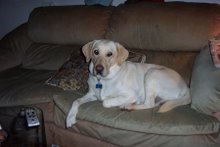
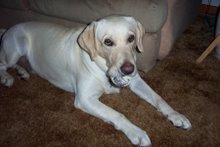
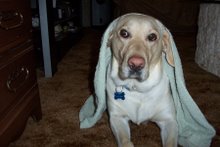
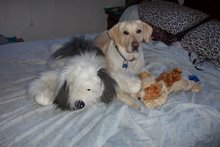
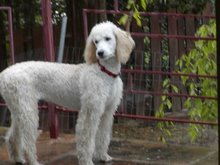
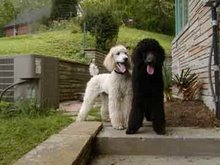
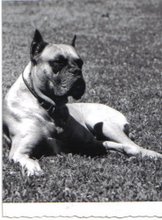
I submitted this post on the Herald Dispatch's Dog Blog - 6/19/07.
I feed BilJac dry kibble and brown rice every feeding. Brown rice has much more fiber than white. You can also add a bouillon cube to add flavor. Remember, feeding only rice with nothing hard, like dry dog food, will cause your dog's stool to be loose. Boiling the chicken is the best way to fix it. You are boiling off all toxins that may be on the raw chicken. You can also add cooked carrots and a small amt. of green beans or peas. But always make sure you have some dry kibble. For the geriatric dogs that can not chew, the brown rice will fulfill most of the fiber requirements. Most importantly, rinse all vegetables before cooking. ***"An ounce of prevention is worth a pound of cure."***
Cheesey Dog Cookies.
2 cups All-Purpose flour -- un-sifted
1 1/4 cups cheddar cheese -- shredded
2 cloves Garlic -- finely chopped
1/2 cup Vegetable oil
4 tablespoons Water -- (4 to 5)
Combine everything except water. Whisk in food processor until
consistency of cornmeal. Then add water until mixture forms a ball.
Roll it into 1/2" thickness and cut into shapes. Bake on ungreased
cookie sheets about 10 min. (depending on size of shapes) at 400.
Cool and store in refrigerator.
Biscuits For Dogs.
1 cup oatmeal -- uncooked
1/3 cup margarine
1 tablespoon beef bouillon granules
5 1/2 cups hot water
1 tablespoon garlic powder -- optional
3/4 cup powdered milk
3/4 cup cornmeal
3 cups whole wheat flour
1 whole egg -- beaten
Pour hot water over oatmeal, margarine, and bouillon; let stand for 6
min. Stir in milk, cornmeal, and egg. Add flour, 1/2 c. at a time;
mix well after each addition. Knead 3 - 4 min., adding more flour it
necessary to make a very STIFF dough. Roll or pat dough to 1/2"
thickness. Cut into dog bone shapes with cookie cutter. Bake at 325
degrees for 50 min. on baking parchment Allow to cool and dry out
until hard. Store in container.
ANTI-FLEA COOKIES.
2 cups unbleached white flour
1/2 cup wheat germ
1/2 cup brewer's yeast from the health food store
2 cloves minced garlic
3 tablespoons vegetable oil
1 cup chicken or beef stock
Combine the flour, wheat germ, and yeast in a bowl. Mix the
oil and garlic and slowly add to the flour mixture, alternately
with the chicken stock. Continue until all of the ingredients are
incorporated into a smooth dough. Roll out on a lightly floured
surface until 1/4 inch thick. Do it in batches if you're not used
to working with dough. Use a 2-inch-round cookie cutter to cut
into biscuits. Put on a greased cookie sheet and bake at 400
degrees F for about 20 to 25 minutes, until browned.
Cool in the oven and leave for a few hours to dry out.
ANTI-FLEA FOOD ADDITIVE.
This is a simple additive to your dog’s food to keep the fleas away.
1/4 cup cottage cheese
Vitamin E 1001 U
1/4 teaspoon garlic powder
1 Tbl bacon grease
Sprinkle of Brewer’s Yeast
APPLE CINNAMON DOGGIE COOKIES.
5 ounces dried apples
1 teaspoon cinnamon
1 tablespoon parsley flakes
1 tablespoon garlic powder
1 cup ice water
1/2 cup corn oil plus 1 tablespoon
5 cups flour
1/2 cup carnation powdered milk
2 eggs
Preheat oven to 350 degrees F.
Place in a food processor the dried apples and finely chop.
Place the apples, cinnamon, parsley, garlic powder, water, oil,
flour, dry milk and eggs in a large bowl and mix well until
dough forms. On a lightly floured surface, roll out the dough
to a 1/4-inch thick. Cut into desired shapes and place on cookie
sheets and bake for 20 to 25 minutes.
I sometimes roll the dough into 1-inch logs and cut it into 1-
inch pieces.
Mix all the ingredients and add to food daily.
APPLE POOCH PIE.
1 tsp vanilla
1 egg
1 Fuji apple (peeled, cored and finely grated)
2 Tbl. olive oil
2 Tbl. milk
1 tsp brown sugar
1 tsp cinnamon
3 cups all purpose flour
Grate the Fuji apple into a large bowl. Add vanilla, egg, olive
oil and milk. In a separate bowl, combine the brown sugar,
cinnamon and flour. Gradually add the dry ingredients to the
wet ingredients until completely mixed (you want it to form a
stiff ball of dough). You may need to adjust the amount of milk
to get the right consistency. Roll the dough out on a lightly
floured surface until it is approximately 1/4 inch thick. Cut
into cute shapes with the cookie cutter of your choice and bake
at 350 degrees for 12 to 15 minutes or until golden brown. For
a softer cookie, remove immediately, cool, then refrigerate in
an air tight container. For a crisp cookie, turn off the oven and
leave the cookies in it for an hour or two before refrigerating in
an air tight container.
APPLE TREATS.
2 cups whole wheat flour
2 cups rye flour
1/3 cup cornmeal
1 egg beaten
1 tablespoon safflower oil
1 apple (grated)
1/2 teaspoon cinnamon
1 - 1 1/2 cups cold water
Combine all ingredients in a bowl, except the apple and water.
Grate apple into mixture and add part of the water. Turn out
on a floured surface and incorporate more water if the dough
is too stiff while kneading for 2 minutes or more. Roll out to a
thickness of 1/4". Use a knife to score the dough vertically and
then horizontally so you have squares.
Don't cut right through the dough. Place on a non-stick cookie
sheet and bake at 325* for 1 hour or until golden brown.
BABY FOOD DOG COOKIES.
3 jars baby food
1/4 cup cream of wheat cereal
1/4 cup dry milk
Combine all ingredients together, mixing well.
Roll into 1-inch balls and place on a greased baking sheet.
Flatten each ball with a fork.
Bake at 350*F (175*C) for 15 minutes or until lightly browned.
Cool on wire rack.
BACON BITES (for doggies).
3 cups whole wheat flour
1/2 cup milk
1 egg
1/4 cup bacon fat or vegetable oil
1 tablespoon garlic powder
3 or 4 slices bacon, crumbled
1/2 cup cold water
Mix ingredients together thoroughly. Roll out on a floured
surface to 1/2 to 1/4 inch thickness. Bake for 35 to 40 minutes
at 325 degrees F.
BACON DOG BISCUITS.
5 cups whole wheat flour
10 tablespoons melted bacon fat
1 cup milk
1/2 cup water
2 large eggs
1/4 teaspoon onion or garlic powder
1 teaspoon salt
Mix all ingredients well. Pinch off pieces of the dough and roll
them into 2-inch balls and place on a well-greased baking
sheet.
Bake at 350*F (175*C) for 35 to 40 minutes. Cool on wire rack.
BANANA BISCOTTI BONES.
Although these are treats for your favorite four-legged friend,
humans like them too!
5 cups flour
1/4 to 1/2 cup chopped peanuts
1/2 teaspoon baking soda
1 egg, slightly beaten
1/4 cup vegetable oil
1-1/2 cups pureed bananas
2 teaspoons vanilla extract
Water
Preheat the oven to 325 degrees F and set a rack on the middle
level. Have ready one or two ungreased nonstick baking sheets.
Mix the flour, peanuts and baking soda together in a large bowl.
Gradually stir in the remaining ingredients, except the water, until
lumpy but blended.
Add enough water, a teaspoon at a time, to make a stiff dough.
Knead by hand until thoroughly mixed. Or blend everything in a
food processor.
For very large biscotti, form the dough into 2 logs, each about 2-1/2
inches high, placing one on each baking sheet. Flatten each log so
that it is 6 inches wide and 1 inch high. For medium-size biscotti,
form 4 logs, 2 on each sheet, and flatten each into loaves that are 3
inches wide and 1 inch high. Bake for 30 minutes. Remove to wire
racks and let rest for 10 minutes.
Leave the oven on. Transfer the logs to a cutting board and slice
into 1/2- to 3/4-inch pieces. (It's easiest to slice them on the
diagonal, using a serrated bread knife.) Return the slices to the
baking sheets and bake for about 20 minutes longer, turning once,
until they are golden brown. Cool on racks. Store in a tightly closed
tin at room temperature. Makes 30 to 60 dog (or people) biscuits.
BANANA BITES.
2-1/4 cups whole wheat flour
1/2 cup nonfat dry milk
1 large egg
1/3 cup mashed ripe banana
1/4 cup vegetable oil
1 beef bouillon cube dissolved in 1/2 cup hot water
1 tablespoon brown sugar
Mix all ingredients until will blended. Knead for 2 minutes on
a floured surface. Roll to 1/4-inch thickness.
Use a 2-1/2-inch bone-shaped cookie cutter (or any one you
prefer) and place on ungreased baking sheets.
Bake at 300*F (150*C) for 30 minutes. Cool on wire rack.
BARKING BROWNIES.
1-1/4 pounds beef or chicken livers
2 cups wheat germ
2 tbl. whole wheat flour
1 cup cooked barley
2 eggs
3 tbl. peanut butter
1 garlic clove
1 tbl. olive oil
1 tsp. salt
Preheat oven to 350*
Liquefy liver and garlic in a blender. When the mixture is
smooth; add eggs and peanut butter. Blend until smooth.
In a separate mixing bowl combine wheat germ, whole wheat
flour, and cooked barley. Add processed liver mixture, olive
oil, and salt. Mix well. Spread mixture in a greased 9 by 9 inch
baking dish.
Bake for 20 minutes or until done. Cut into portion sizes.
Freeze or refrigerate leftovers.
BASIC DOG TREATS.
1-3/4 cups whole wheat flour
1-1/4 cups oatmeal
1-1/2 tablespoons vegetable oil
1 cup warm water
Options: 1/3 cup finely grated cheese,
1/4 cup peanut butter
Mix the dry ingredients together. Then mix the wet ingredients
together. Blend both mixtures until a firm dough is achieved.
Shape dough into an oblong roll, wrap in plastic wrap, and
chill for 1 hour.
Preheat oven to 300 degrees F. Lightly grease sheet pan.
Slice roll into 1/4-inch slices, place on sheet pan and bake for
about 1 hour or until treats are done, checking after 45
minutes, and then every 5 minutes thereafter.
Let them cool before giving to your best friend.
BEAGLE BAGELS.
2-1/2 cups all-purpose flour
1/2 cup whole wheat flour
1 teaspoon garlic powder
1/4 teaspoon baking powder
1/4 teaspoon baking soda
1/2 cup finely chopped carrots
1/2 cup chopped spinach
1 large egg, beaten
1 teaspoon vegetable oil
3/4 cup water
In a large mixing bowl whisk together the first 5 ingredients.
Stir in the carrots and spinach.
Combine the egg, oil and water together and add to the flour
mixture, mixing well. Turn dough out onto a floured work
surface and knead for 3 to 5 minutes.
Shape pieces of dough into 1-1/2-inch sized balls. Flatten, then
poke hole in center, forming bagel-like shapes.
Bake at 350*F (175*C) for 45 to 50 minutes. Cool on wire.
BEAGLE BISCOTTI.
2-1/2 cups whole wheat flour
2-1/2 cups unbleached all-purpose flour
1/2 teaspoon baking soda
1 egg
1/4 cup oil
1 cup peanut butter
2 teaspoons vanilla extract
Cold water
1 cup carob chips
Combine flours and baking soda in a bowl and stir with a
whisk. Add egg, oil, peanut butter and vanilla and stir with a
wooden spoon until lumpy. Add carob chips. Slowly add cold
water 1 teaspoon at a time until a stiff dough forms. Do not
over-mix.
Form dough into 2-inch diameter logs. Place on lightly greased
baking sheets and flatten logs to 1 inch high and about 6 to 7
inches long. Bake at 325 degrees F for 30 minutes. Remove
from oven and cool 20 minutes.
With a serrated knife, cut logs into 1/2-inch slices. Return slices
to cookie sheet and bake at 325 degrees F for 20 minutes, or
until golden. Cool and store in airtight tins or plastic bags.
BEEF BURGERS FOR DOGS.
This recipe is a "sure-fire sure to please your dog" dog treat!
4 oz diced stew beef
2 egg yolks
1/2 tsp flour
a little gravy (if required)
Boil 2 cups water and throw in the diced beef and cook 20
minutes. A fork should sink easily into the meat. Drain water
from meat.
Put meat, yolks and flour in food processor and process until
well mixed. Let cool.
Roll out the mixture on waxed paper to 1/8 inch thick and cut
with cookie cutters or into bite-sized morsels. Broil for a few
minutes on each side until hard.
Cool and serve.
BEEFY DOG BONE BISCUITS.
3 eggs
3 tablespoons soy flour
3 tablespoons wheat germ
3 tablespoons nonfat dry milk powder
3 beef bouillon cubes dissolved in 6 tablespoon hot water
1 tablespoon Worcestershire sauce
3 cups whole wheat flour
Preheat oven to 350 degrees F.
Beat eggs slightly in large mixing bowl. Stir in soy flour, wheat
germ, dry milk, bouillon, and Worcestershire. Add flour and
work into a stiff crumbly dough with your hands.
Divide dough into two balls. Divide each ball into 12 pieces. Pat
each piece into a 3-inch rectangle, 1/2-inch thick, on ungreased
cookie sheet. Using a biscuit cutter or knife, trim to the shape
of a dog bone. Bake for 25 minutes.
Turn biscuits over with a spatula and bake 25 minutes longer.
BEEF GARLIC BONES.
6-1/2 cups rye flour
1-1/2 cups water
1 tablespoon garlic
4 tablespoons parsley
2 cups no/low salt beef broth
Mix all ingredients together in large bowl (make sure to skim
all fat and oils from beef broth before adding to mixture). You
can add flour or water as needed, until a firm but sticky dough
is formed. Knead dough on a rye-floured surface until smooth.
Roll out to 1/4 inch thickness and cut into desired shapes. Bake
at 350 degrees F for 25 minutes or until edges are browned. Let
cool overnight for extra crunchy cookies!
Chewy Cheesy Chihuahua Pizza
Crust:
2 cups cake flour
1 1/4 cups whole wheat flour
1/4 cup olive oil
1 egg
1 cup water
1 teaspoon baking soda
Sauce Toppings:
1 tomato
1 cup tomato puree
1 clove garlic
1/4 cup parmesan cheese -- grated
1/2 teaspoon oregano
1/2 teaspoon basil
2/3 cup cooked rice
CRUST: Mix all ingredients together. Knead on a lightly floured
surface. Spray a regular sized, 12 " pizza pan with nonstick spray.
Next, spread the dough to the edges of the pan, forming a lip around
the ends. Set aside.
Sauce & Toppings: In a food processor, blend tomato, tomato puree
and garlic. Spoon the mixture over the pizza crust. Sprinkle the
cheese
and spices evenly over sauce. Cut the pizza into slices with a pizza
cutter or sharp knife.
Bake in a 325 degree oven for 25 minutes. Take out and sprinkle rice
evenly over pizza. Return to oven and bake 25 minutes more.
Yield: 1 - 12 in. pizza
Pet Party Mix
2 cups Cheerios®
2 cups Chex mix
2 teaspoons gravy, dry mix, brown
1/2 cup Bacos®
2 cups Shredded Wheat® -- spoon size
1/2 cup melted butter -- or margarine
1/2 cup American Cheese -- grated
1 pieces Beef Jerky -- dog treats (pupperoni, Jerky Treats, etc.)
1. Preheat oven to 275 .
2. Pour melted butter/margarine into a 33x23 cm baking pan. Stir in
cheese,bacon bits, and gravy mix. Add cereal and stir until all
pieces
are coated.
3. Heat until crisp, approx. 45 min.
4. Let cool and store in tightly sealed container.
Potatoes Au Canine
3 cups boiled potatoes -- sliced
2 tablespoons vegetables -- grated
1/2 cup Creamed cottage cheese
1 tablespoon Nutritional Yeast
2 tablespoons Grated carrots
1/4 cup Whole milk
1/4 cup Grated cheese
Layer in a casserole dish the first 5 ingredients. Then pour the
milk on top of all; sprinkle with cheese. Bake about 15 minutes at
350 until cheese melts and slightly browns. Serve cool.
Notes: As a potato substitute, you can use 3 cups of cooked oatmeal
Snickerpoodles Dog Treats
1/2 cup vegetable oil
1/2 cup shortening
1 cup honey
2 eggs
3 3/4 cups white flour
2 teaspoons cream of tartar
1 teaspoon baking soda
1/2 cup cornmeal
2 teaspoons cinnamon
Mix vegetable oil, shortening and honey together until smooth. Add
eggs and beat well. Blend in flour, baking soda and cream of tartar.
Knead dough until mixed well. Shape dough by rounded teaspoons into
balls. Mix the cornmeal and cinnamon together in a bowl and roll
balls in mixture. Place 2 inches apart on a cookie sheet that has
been sprayed with a nonstick spray. Press the balls down with a
fork twice going in 2 different directions or press with your
favorite stamp.
Bake 8 minutes at 400. Remove from baking sheet and cool on a rack.
Pasta recipe. form into the desired ravioli shape and size. Cover
with damp cloth and set aside.
In a bowl, mix yogurt, whole wheat flour and eggs. Add salmon and
parsley mix a few more moments.
Depending on ravioli size, place 1 to 4 teaspoons in center of
each, moisten edges and fold.
Ravioli can be boiled or baked. If boiling, place in rapid boiling
water for 10 to 15 minutes or till done. If baking pre-heat oven to
375, place ravioli on a baking sheet, put in oven for 20 to 25
minutes.
Note: use leftover meat such as beef, chicken, lamb etc. Also
shredded veggies like carrots, sweet potato, etc. or chopped
veggies such as green beans, broccoli, kale etc. raw oat meal and
cooked rice or cooked barley, can be used in place of meat.
Traildog Biscuits
1 1/2 cups flour
1 1/2 cups whole wheat flour
1 tsp. garlic powder
1 cup rye flour
1 egg -- beaten1 cup oats
1/2 cup vegetable oil
1 cup cornmeal
1 3/4 cups beef broth -- or chicken
1/4 cup liver powder -- available in health food stores
Preheat oven to 300F. Mix all dry ingredients in a large bowl. Add
egg, oil, and beef broth. Mix the dough, adding enough additional
flour to make a dough that can be rolled.
On a floured surface, roll to 1/2" thickness, then cut into shapes
or squares. Prick with a fork. Bake for 2 hours. Turn the oven off,
and let biscuits stand in oven overnight to harden. Store in
airtight container.
Vizsla Stew
2 cups barley
1/2 cup wild rice
9 cups chicken broth
4 cups rabbits -- boned, *See Note
1/2 cup kale -- chopped fine
1/2 cup asparagus -- chopped fine
1/2 cup lima beans -- chopped fine
1/2 cup carrots -- chopped fine
1 cup potato -- chopped fine
4 cloves garlic -- chopped fine
1/3 cup canola oil
1 cup yogurt, skim milk
In a large pot, place the bones and chicken broth. Bring to a rapid
boil.
Add the long cooking Wild Rice and Barley, reduce heat to a simmer
and cover. After 20 minutes and the rabbit, cook another 30 minutes.
Wash and chop the vegetables, place in a mixing bowl, add canola
oil and yogurt, mix.
Allow Barley and Wild Rice to cool. Remove bones. Drain liquid if
needed. Pour into the mixing bowl and mix well.
Refrigerate or freeze leftovers in portions in separate containers.
*Note: 2 rabbits, 4 to 6 pounds, bone the rabbit and cube to the
size for your dog. Add the bones to the chicken broth.
Note: frozen vegetables may be used, run under cold water to defrost.
Beef and Rice Moochies
1 jar babyfood, dinner, vegetables and beef, strained
2 1/2 cups flour, all-purpose
1 cup whole wheat flour
1 cup rice
1 package unflavored gelatin
1 whole egg
2 tablespoons vegetable oil
1 cup powdered milk
1 package yeast
1/4 cup warm water
1 beef bouillon cube
Dissolve yeast in warm water. Mix dry ingredients in large bowl.
Add yeast, egg, oil, baby food and dissolved beef bouillon. Mix well.
Mixture will be very dry, knead with hands until it forms a ball.
Roll out on floured surface to 1/4 inch thickness, cut in 1 or 2
inch circles. Bake on un-greased cookie sheet 30 minutes at 300
degrees. Store in refrigerator.
Chicken Flavored Dog Biscuits
2 1/2 teaspoons dry yeast
1/4 cup warm water
1 teaspoon salt -- optional
1 egg
1 cup chicken broth -- slightly warmed
1 cup whole wheat flour
1/2 cup rye flour -- optional
1/2 cup cornmeal
1 cup cracked wheat
1 1/2 cups all-purpose flour
In a large bowl, dissolve yeast in warm water. Add salt, one beaten
egg, and the warmed chicken broth. Add all flour except the
all-purpose flour and mix well. Slowly add all-purpose flour until
a stiff dough is formed and it can be kneaded by hand.
Knead for only a couple minutes, just enough to get the dough to
hold together. Roll out dough about 1/4" thick and cut with cookie
cutters, Place biscuits on a large cookie tray and place directly
in a 300 degree oven, they don't need to rise. Bake for 45 min. and
then turn off the oven.
You can let them sit in the oven overnight and in the morning they
will be real hard and good for your dog's teeth. You could also
vary this recipe by adding milk for a milk-bone type biscuit or
shortening for a little extra fat.
Try different liquids and even honey or molasses, Check with your
veterinarian for any other nutritional suggestions.
Classic Canine Cookies
4 cups whole wheat flour
1/4 cup cornmeal
1/4 cup cooked rice
1 egg
2 tablespoons vegetable oil
Juice from a small orange
1 2/3 cups water
Mix all ingredients together well. Turn out onto a lightly floured surface and knead. Roll out dough to about 1/8 inch thickness and cut out desired
shapes... doggy bones, paws, balls, etc.
Dipping Sauce:
#1
3 cups vanilla chips
1 Tbsp. spinach powder
1 tsp. garlic powder
1 tsp. vegetable oil
#2
3 cups carob chips
1 tsp. vegetable oil
1 tsp. turmeric powder
Melt chips in a double boiler or microwave. Add oils and seasonings. Dip tips of cookies, when cooled, into desired sauce and place on a pan lined with wax paper until set.
Dog Oil Supplement
1/4 cup olive oil
1/4 cup canola oil
1/4 cup cod liver oil
1/4 cup flax seed oil
Place oils in brown bottle and shake well. Store in refrigerator.
Add two teaspoons to the dogs food each day. Can be add to dry food
as well.
Safflower and Sunflower oil may used as well.
Ellie's Dog Loaf
2 1/8 cups water
2 cups brown rice
2 large potatoes
2 large carrots
1 1/8 pounds pumpkin
2 cloves garlic
3/4 bunch silver beet
1 cup whole meal pasta -- or Soya pasta
2 cups rolled oats
1 cup whole meal flour
1 1/8 pounds mince (or liver or fish)
3 eggs
Boil the rice in water for 10 - 15 minutes and chop the veggies (I
put them through the food processor) Add the veggies and pasta to
the rice and cook for 10 minutes. Turn off the heat and leave to
cool (not vital if you're like me and in a rush!) Add mince, eggs,
herbs, rolled oats and flour and mix together. Add more oats or
flour if mixture is sticky (should be like a fruit cake mix).
Spoon into oiled and floured loaf tins and bake in a hot oven 180
degrees CENTIGRADE for 1 hour.
Remove from tins ,turn oven off and return loaves to oven for 5 -
10 minutes to firm bottom crust. Take out of oven, leave to cool and use immediately or wrap in foil and freeze.
Makes about 3 - 4 loaves.
Glazed Beagle Biscuits
2 teaspoons beef bouillon granules
1/3 cup Canola Oil
1 cup boiling water
2 cups rolled oats
3/4 cup cornmeal
1/2 cup milk
1 cup grated cheese
1 egg -- beaten
1 cup rye flour
2 cups white flour
Add bouillon and oil to boiling water then add oats. Let mixture
stand for a few minutes. Stir in the cornmeal, milk, cheese, and
egg. Slowly stir in the flours. Knead on a lightly floured surface until the dough is smooth and no longer sticky. Roll out to about 1/4 inch thick and cut
into bone shapes. Place on a greased baking sheet. Spoon topping over biscuits. Turn them over and repeat with other side. Bake at 325 for 45 minutes or until lightly browned on bottom.
Turn off the oven and leave biscuits in until cool.
Homemade Liver Treats
1 cup whole wheat flour
1 cup cornmeal
1/2 cup wheat germ
1 teaspoon garlic powder
1 pound beef liver
Pre-heat oven to 350.
Liquefy liver in blender, add dry ingredients. Grease cookie sheet.
Drop teaspoonfuls of mixture onto cookie sheet and flatten with
bottom of glass dipped in water and cornmeal. Bake for 15-20
minutes. You may store baked or unbaked dough in freezer.
2 cups Whole wheat flour
1/3 cup Butter -- melted
1 Egg -- beaten
6 tablespoons Water
1/4 cup liver -- dried or jerky-style treats -- chopped
Preheat oven to 350 degrees. Combine flour, butter, egg, and water.
Mix well. Blend in liver bits. Turn onto a greased baking pan. Bake
20 to 25 minutes. Cool and cut.
Lhasa Apso Lamb
1 pound lamb, ground -- cooked
2 cups cooked brown rice
2 cups cooked white rice1 cup yogurt, skim milk
4 cloves garlic -- crushed
1/4 cup green beans, frozen -- chopped
1/4 cup carrots, frozen -- chopped
1/4 cup kale, frozen -- chopped
Cook Lamb and drain off excess fat if desired. Defrost frozen
veggies, but don't cook them and chop to desired size.
In a large bowl mix cooked lamb, cooked rice, chopped vegetables,
garlic and yogurt.
Slightly heat if desired to serve.
Refrigerate or freeze portions in zip lock bags. Should yield 3 to
6 servings.
Meatball Mania
1/2 pound ground beef
2 tablespoons grated cheese
1 carrot -- finely grated
1/2 teaspoon garlic powder
1/2 cup bread crumbs -- w/w is best
1 egg -- beaten
1/2 tablespoon tomato paste
Preheat oven to 350 degrees. Combine all ingredients together; mix
thoroughly. Roll into meatballs - whatever size is appropriate for
your dog. Place on a cookie sheet sprayed with non-fat cooking spray. Bake
for 15-20 minutes, or until they are brown and firm. Cool and store in the fridge or freezer.
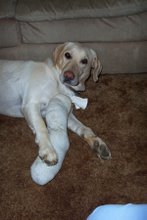
Kallee and Tamara
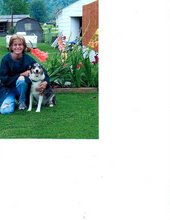
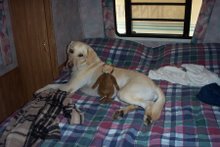
A Beautiful Summer Day.
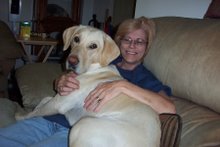
Madam Kallee, CTD, CGC - 1994-2005 - Certified Therapy Dog and a Canine Good Citizen
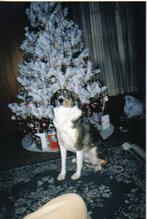
I am so pretty!
Kallee, T.D.I., CGC - Certified Therapy Dog and a Canine Good Citizen - 1994-2005

I loved to pose for the camera.
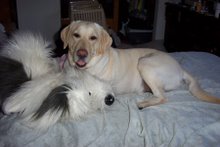
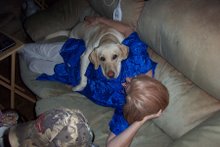
Hat Girl.

The things I do for my mom!
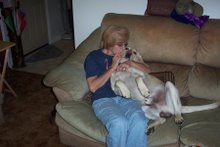
Happiness.

Bubby knows how to scratch a tummy.
Best of Friends.

Mine! No, Mine!, No Mine!!!
Whew !

Bubby wears me out!
This is the Life.

Just relaxing with bubby.
Kallee and Mr. Monkey
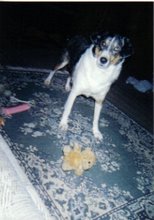
See Mr. Monkey? Wanna play?
Miss Cool.
I loved to wear my shades.
Wednesday, May 30, 2007


Tuesday, May 29, 2007
Essential Equipment For Your Dog.
The dog's basic equipment requirements are simple. It needs to be properly identified, safely controlled, securely housed, nutritiously fed, and kept mentally and physically active and alert. Choose a collar, and walking and training leashes, according to your dog's weight, strength, and level of activity. In some circumstances, a head halter or body harness is advisable. Provide your dog with its own bed - this is its own personal space. Dogs are generally content to use crates as beds, provided they have been trained to do so from early puppyhood. Use sturdy, hygienic food and water bowls, and provide a limited number of well-made toys for your dog's amusement, for playing either on its own or with you. Inexpensive, easy-to-clean, soft nylon collars are excellent for growing puppies, and can be replaced with larger models as a dog grows. Rolled leather collars cause less damage to the hair on the neck than flat ones. Attach an ID tag with your name, address, city, state, zip and most importantly, your phone number. You should include your cell phone number, too, if you have one. Augment this with temporary contact information when you take your dog on a trip. Use a reliable, strong, short leash for walking your dog. During training, use a long training leash to make sure your dog responds to your commands. If your dog is unreliable off its leash, use the long training leash for exercise, as well. A head halter is excellent for controlling a powerful dog. It should not be used with a dog with very short legs - its nose would be pulled too close to the ground when it surges ahead. Body harnesses eliminate tension on the neck, especially in the area of the windpipe. Well-designed muzzles prevent scavenging and reduce the risk of bites.
Immediate Needs: Quality equipment is usually an excellent investment. It is not likely to be damaged and will last a long time. The most immediate needs for a newly acquired dog are food and water bowls, a bed, a collar and leash, and an ID tag with a telephone contact number. For health as well as practical reasons, avoid using your own tableware for feeding your dog. Provided sturdy, shatterproof, nonslipping food and water bowls, as puppies love to play with them. It is useful to place these on a mat that absorbs water that might splash while the dog is drinking. Consider buying a special can-opener and knife and fork for preparing your dog's food. Bedding should be comfortable and easy to clean. Wicker baskets are attractive, but easily chewed, especially by puppies, and extremely difficult to clean when they get soiled. Beds made of molded plastic are easy to clean. They appeal to dogs because they provide secure "walls" to lie against. Bean-bag beds are very attractive to dogs, since they provide both comfort and insulation. They usually have a removable cover that is machine washable. Finally, a useful piece of puppy equipment is a crate, which provides the dog with a safe space to keep out of trouble.
Equipment for control: When selecting appropriate collars and leashes, your dog's temperament and size are important considerations. Your local veterinary clinic or dog-training club will provide experienced advice on what is best for your dog. In virtually all outdoor situations, you will need a soft, light training leash - these are often made of cotton or nylon mesh. Available in various lengths, they can be geared to the size of your dog and the level of training you have reached. Start with a 6-ft. (2m) leash and use this both indoors and outdoors to ensure that your dog responds to commands. For exercise, a body harness may be appropriate for breeds with delicate windpipes, such as the Yorkshire Terrier, Italian Greyhound, Chihuahua, and Whippet, or for breeds with thick necks, like the Pug. Head halters act much like horse halters and are extremely useful for controlling large, enthusiastic young dogs. When the dog surges ahead, its momentum pulls on the halter and draws its head downward. The dog stops pulling on its own.
Crates and Playpens:
A Safe Space: A crate is an ideal den for a dog. Puppies should learn that it is a comfortable and secure bed and personal territory. By training a puppy to eat, play, and sleep in a crate, you train it to accept and enjoy staying in its den while you're in the car or when the dog is home alone. Crate training provides the solution to a variety of behavior problems before they happen.
Practical Play Area: A playpen is an expanded version of a crate, useful for puppies that are not yet house trained. When a puppy is left temporarily unattended, soiling accidents in the home are avoided if it is restricted to a newspaper lined playpen. Never use a playpen or crate as punishment - both are meant to be enjoyed.
Immediate Needs: Quality equipment is usually an excellent investment. It is not likely to be damaged and will last a long time. The most immediate needs for a newly acquired dog are food and water bowls, a bed, a collar and leash, and an ID tag with a telephone contact number. For health as well as practical reasons, avoid using your own tableware for feeding your dog. Provided sturdy, shatterproof, nonslipping food and water bowls, as puppies love to play with them. It is useful to place these on a mat that absorbs water that might splash while the dog is drinking. Consider buying a special can-opener and knife and fork for preparing your dog's food. Bedding should be comfortable and easy to clean. Wicker baskets are attractive, but easily chewed, especially by puppies, and extremely difficult to clean when they get soiled. Beds made of molded plastic are easy to clean. They appeal to dogs because they provide secure "walls" to lie against. Bean-bag beds are very attractive to dogs, since they provide both comfort and insulation. They usually have a removable cover that is machine washable. Finally, a useful piece of puppy equipment is a crate, which provides the dog with a safe space to keep out of trouble.
Equipment for control: When selecting appropriate collars and leashes, your dog's temperament and size are important considerations. Your local veterinary clinic or dog-training club will provide experienced advice on what is best for your dog. In virtually all outdoor situations, you will need a soft, light training leash - these are often made of cotton or nylon mesh. Available in various lengths, they can be geared to the size of your dog and the level of training you have reached. Start with a 6-ft. (2m) leash and use this both indoors and outdoors to ensure that your dog responds to commands. For exercise, a body harness may be appropriate for breeds with delicate windpipes, such as the Yorkshire Terrier, Italian Greyhound, Chihuahua, and Whippet, or for breeds with thick necks, like the Pug. Head halters act much like horse halters and are extremely useful for controlling large, enthusiastic young dogs. When the dog surges ahead, its momentum pulls on the halter and draws its head downward. The dog stops pulling on its own.
Crates and Playpens:
A Safe Space: A crate is an ideal den for a dog. Puppies should learn that it is a comfortable and secure bed and personal territory. By training a puppy to eat, play, and sleep in a crate, you train it to accept and enjoy staying in its den while you're in the car or when the dog is home alone. Crate training provides the solution to a variety of behavior problems before they happen.
Practical Play Area: A playpen is an expanded version of a crate, useful for puppies that are not yet house trained. When a puppy is left temporarily unattended, soiling accidents in the home are avoided if it is restricted to a newspaper lined playpen. Never use a playpen or crate as punishment - both are meant to be enjoyed.
Monday, May 21, 2007
Crate Training.
I posted this in the Herald Dispatch's Dog blog. Here is the correct method to crate train. All dogs are den animals. The crate becomes their sanctuary, or den. You start out by placing the crate in the bedroom, next to the bed, and right before bed, you take the puppy out. Praise greatly when the puppy potty's. Take the dog back in, put in crate, along with a favorite toy, and go to bed. Ignore the crying, they will stop. First thing in the a.m., you take the puppy out, praise after the potty, come in and feed. After they finish, wait 10-15 min. and take them back out. Same routine. Put crate in a place where the puppy can see the door you come in, put puppy in just as you get ready to leave the house. Don't put puppy in and then hang around for 20 min. When you come home, take puppy out, immediately go outside, praise and then go about your after work routine. Same routine as before for nighttime. Soon, you will be able to leave the door to the crate open and the dog loose in the house. They will go into the crate to sleep while you are gone. Put a super soft towel or bed in the crate and a few bits of kibble and a small amt. of water. Too much food and water in the crate when you start the training, will only make the dog have to potty sooner. Always remember, 99%(dogs), will not potty where they sleep and eat. So, when purchasing a crate, make sure that the dog can stand and turn around, but not enough room that they can go to the back of the crate and potty. And, never, never use the crate as punishment. This is their own little cave. Their alone place. I call this there hidey hole.
Monday, April 30, 2007
Forms You Receive When You Purchase A Purebred Dog.
The first paper you should receive from the breeder when you pick up your puppy is called the AKC Registration Application. This form is filled out by the person(s) selling you the puppy. You fill in the appropriate information and send it to the address on the application. Read this application very carefully. Here is a breakdown of the application line by line. The first section is called the Litter Information section. This should have typed, not printed, the Breed, Date of Birth, Sire or father and the Dam or the mother, the breeders name and the litter owner's name. The second section is called the Payment Information. This tell you how much it cost to register your dog and gives you a choice of getting a trace of 3 generations of your dogs family and a training video and a subscription to AKC Family Dog Magazine, or just the linage trace. And you can give your credit card info to pay for it. The next section is where you get to name your dog. On a personal note: My stepson wanted to name our dog Chance. Well, I looked at his papers and his father's name was SunnyBurkes Major General B. So I tracked down the breeder of him and asked her if I could use any part of his name for Chance. She told me I could use any part except the SunnyBurke. So, we named him Major B Chance. That is always a nice way to let people know a little bit about your dog's heritage. The next section is Permission To Use An AKC Registered Kennel Name; required if being used as part of this dog's name. Next we have where to register the sex of your dog. Next is the Check to request Limited Registration. This means that this dog is not to be used for breeding, and entry into dog events is restricted. And last on the front part of the application is the Color. Depending on the breed, you will be given choices that fit your dog and you enter the number in the boxes. It is also the to enter the markings of your dog.
Now for the back of the application.
Litter Owner Information: There are 2 boxes that the litter owner can check. They are as follows; box 1 says "I(we) still own this dog and apply for registration and have to have ownership recorded in my(our) name(s). **NOTE: Please sign on the line above your pre-printed name to complete this application. Box 2 says "I(we) transferred this dog directly to the owner listed in the New Owner(s) section below. **NOTE: Please sign on the line above your pre-printed name to certify the transfer. Under that is a statement that the breeder acknowledges by signing on the line below it, that the information appearing on this application is correct and that they are in good standing with American Kennel Club, A.K.C. With other information stated in it. The next section is the New Owner Information. The first line is the date of transfer, then the new owners name, address, city, state, zip, phone number and email address if applicable. Also, if you are co-owning the puppy with someone, the next line is for their information. Then the signature line for the new owner and co-owner if applicable. The last part is Instruction, requirements, and General Information. Read thoroughly all information before sending in your application, as any missing or wrong information will cause a long delay in getting your puppy registered with A.K.C. Any questions you have can be answered at their website, www.akc.org. Or you can call M-F 8:30am-5:00pm EST at 919-233-9767 and speak with a representative and they will be glad to help. Also you can get downloadable forms from the website.
Now for the back of the application.
Litter Owner Information: There are 2 boxes that the litter owner can check. They are as follows; box 1 says "I(we) still own this dog and apply for registration and have to have ownership recorded in my(our) name(s). **NOTE: Please sign on the line above your pre-printed name to complete this application. Box 2 says "I(we) transferred this dog directly to the owner listed in the New Owner(s) section below. **NOTE: Please sign on the line above your pre-printed name to certify the transfer. Under that is a statement that the breeder acknowledges by signing on the line below it, that the information appearing on this application is correct and that they are in good standing with American Kennel Club, A.K.C. With other information stated in it. The next section is the New Owner Information. The first line is the date of transfer, then the new owners name, address, city, state, zip, phone number and email address if applicable. Also, if you are co-owning the puppy with someone, the next line is for their information. Then the signature line for the new owner and co-owner if applicable. The last part is Instruction, requirements, and General Information. Read thoroughly all information before sending in your application, as any missing or wrong information will cause a long delay in getting your puppy registered with A.K.C. Any questions you have can be answered at their website, www.akc.org. Or you can call M-F 8:30am-5:00pm EST at 919-233-9767 and speak with a representative and they will be glad to help. Also you can get downloadable forms from the website.
Saturday, April 28, 2007
Tidbit Corner.
So far, I have stayed with the total information aspect of a blog. But, I found some interesting tidbits from a magazine I get from my vet, Dr. Wayne Maass, owner of Guyan Animal Hospital, sends a copy of the magazine, Healthy Pet, along with a reminder when it is time to get your pet's annual shots. Really a pretty cool idea, I think. Chance thinks the world of "Doc", as I call him. I used to call my old vet, Dr. Bill Core, "doc", too. You have to have a good relationship with the person you are trusting you pet to. Well enough of that. On to the "good stuff."
Will Ferrell's dog sniffs out scripts.
We all how funny Will Ferrell is and how much delight his movies bring us, but do we know the process he goes through when choosing exactly which screenplay he wants to commit to? Perhaps he reads the screenplay, mulls it over, asks his wife for a second opinion, maybe he has a friend or agent break it down. Well, apparently, Mr. Ferrell does have a number of people read his scripts, but then he has his very own way of making the final decision. He has recently been quoted as saying, "I have my dog look at the screenplay, just kind of sniff it, and if he gives me a certain look, then I'll read it." The only problem? "Sometimes I don't know if he's giving me the look or he's just hungry."
Fast Bites: 3 Brave Pooches
Dog nabs suspected Burglar: A Sacramento police dog did his part to stop crime from rising in his hometown. This crime-fighting canine sniffed out a burglar in action, latched his teeth onto the thief's pants, and held on until backup arrived.
Dog Has His Day in Court: Henry, a black chihuahua, recently took the stand at the Third District Court in Salt Lake City. Animals are usually banned from courtrooms, but an exception was made in this case because of the abuse accusations launched against Henry's hideous owners, and scars Henry bore as proof.
Dog Thwarts Carjacker: A man who stole a car in Australia and later took refuge from the police under a bed was found and detained by a dog who didn't like the smell of the man's boots. The dog clamped down on the soul and waited for the police to show up.
A Credit Card for a Cat?
Australia has been the home of many strange and wonderful things, but this story just might be the cat's pajamas. It seems that an Australian woman, Katherine Campbell, wanted to test her bank's identity security system, so she applied for a "secondary" credit card for her cat. The Bank of Queensland not only approved the application but issued the credit card in the cat's name, Messiah. Campbell was agog: "I just couldn't believe it. People need to be aware of this, and banks need to have better security!" A spokesperson for the bank offered, "The cat's credit card has been canceled. We apologize as this should not have happened."
Barbara Walter Goes Bow Wow:
Why are so many people throwing talk show host and news veteran Barbara Walters into the soup? Well, it seems that she proclaimed in a very public way, with a very straight face, that her beloved Havanese dog, Cha-Cha, responded verbally to her words of affection by actually saying "I love you, Barbara." Okay, to make matters worse (or better, depending on whose furry sofa you sit), Barbara further asserted that she will bring on her hit TV show The View a corroborating witness who actually heard her pooch pound out those syllables.
Hemingway's Six-Toed Cats:
If you visit Key West, Florida, you can tour the residence where Ernest Hemingway wrote and found inspiration. You may also come across 50 or so six-toed cats meandering inside the house and grounds. These polydactyl(more than the normal number of toes or fingers)are all descendants of a cat the novelist received as a gift in the 1930's. Recently, USDA has stepped in, saying the cats need to be caged. But, there's no need. Hemingway made sure his cats were protected: He built high walls and provided them with an enclosed habitat where they could freely live and breed. The USDA should know better. Never go against Papa.
Will Ferrell's dog sniffs out scripts.
We all how funny Will Ferrell is and how much delight his movies bring us, but do we know the process he goes through when choosing exactly which screenplay he wants to commit to? Perhaps he reads the screenplay, mulls it over, asks his wife for a second opinion, maybe he has a friend or agent break it down. Well, apparently, Mr. Ferrell does have a number of people read his scripts, but then he has his very own way of making the final decision. He has recently been quoted as saying, "I have my dog look at the screenplay, just kind of sniff it, and if he gives me a certain look, then I'll read it." The only problem? "Sometimes I don't know if he's giving me the look or he's just hungry."
Fast Bites: 3 Brave Pooches
Dog nabs suspected Burglar: A Sacramento police dog did his part to stop crime from rising in his hometown. This crime-fighting canine sniffed out a burglar in action, latched his teeth onto the thief's pants, and held on until backup arrived.
Dog Has His Day in Court: Henry, a black chihuahua, recently took the stand at the Third District Court in Salt Lake City. Animals are usually banned from courtrooms, but an exception was made in this case because of the abuse accusations launched against Henry's hideous owners, and scars Henry bore as proof.
Dog Thwarts Carjacker: A man who stole a car in Australia and later took refuge from the police under a bed was found and detained by a dog who didn't like the smell of the man's boots. The dog clamped down on the soul and waited for the police to show up.
A Credit Card for a Cat?
Australia has been the home of many strange and wonderful things, but this story just might be the cat's pajamas. It seems that an Australian woman, Katherine Campbell, wanted to test her bank's identity security system, so she applied for a "secondary" credit card for her cat. The Bank of Queensland not only approved the application but issued the credit card in the cat's name, Messiah. Campbell was agog: "I just couldn't believe it. People need to be aware of this, and banks need to have better security!" A spokesperson for the bank offered, "The cat's credit card has been canceled. We apologize as this should not have happened."
Barbara Walter Goes Bow Wow:
Why are so many people throwing talk show host and news veteran Barbara Walters into the soup? Well, it seems that she proclaimed in a very public way, with a very straight face, that her beloved Havanese dog, Cha-Cha, responded verbally to her words of affection by actually saying "I love you, Barbara." Okay, to make matters worse (or better, depending on whose furry sofa you sit), Barbara further asserted that she will bring on her hit TV show The View a corroborating witness who actually heard her pooch pound out those syllables.
Hemingway's Six-Toed Cats:
If you visit Key West, Florida, you can tour the residence where Ernest Hemingway wrote and found inspiration. You may also come across 50 or so six-toed cats meandering inside the house and grounds. These polydactyl(more than the normal number of toes or fingers)are all descendants of a cat the novelist received as a gift in the 1930's. Recently, USDA has stepped in, saying the cats need to be caged. But, there's no need. Hemingway made sure his cats were protected: He built high walls and provided them with an enclosed habitat where they could freely live and breed. The USDA should know better. Never go against Papa.
Toxic Plants
Aloe
- Amaryllis
- Andromeda Japonica
- Asian Lily (Liliaceae)
- Asparagus Fern
- Australian Nut
- Autumn Crocus
- Avocado
- Azalea
B
- Bird of Paradise
- American Bittersweet
- European Bittersweet
- Branching Ivy
- Buckeye
- Buddist Pine
C
- Caladium
- Calla Lily
- Castor Bean
- Ceriman (aka Cutleaf Philodendron)
- Charming
Diffenbachia
- Chinaberry Tree
- Chinese Evergreen
- Christmas Rose
- Clematis
- Cordatum
- Corn Plant (aka Cornstalk Plant)
- Cornstalk Plant (aka Corn Plant)
- Cutleaf Philodendron (aka Ceriman)
- Cycads
- Cyclamen
D
- Daffodil
- Day Lily
- Devil's Ivy
- Dumb Cane
- Deadly Nightshade (See Nightshade)
E
- Easter Lily
- Elephant Ears
- Emerald Feather (aka Emerald Fern)
- Emerald Fern (aka Emerald Feather)
- English Ivy
F
- Fiddle-Leaf Philodendron
- Flamingo Plant
- Florida Beauty
- Foxglove
- Fruit Salad Plant
G
- Glacier Ivy
- Gladiolas
- Glory Lily
- Gold Dieffenbachia
- Gold Dust Dracaena
- Golden Pothos
- Green Gold Nephthysis
H
- Hahn's self branching English Ivy
- Heartleaf Philodendron
- Heavenly Bamboo
- Holly
- Horsehead Philodendron
- Hurricane Plant
- Hyacinth
- Hydrangea
I
- Iris
J
- Japanese Show Lily
- Japanese Yew (aka Yew)
- Jerusalem Cherry
Back to Top
K
- Kalanchoe
L
- Lace Fern
- Lacy Tree
- Lily of the Valley
M
- Macadamia Nut
- Madagascar Dragon Tree
- Marble Queen
- Marijuana
- Mauna Loa Peace Lily (aka Peace Lily)
- Mexican Breadfruit
- Mistletoe "American"
- Morning Glory
- Mother-in-Law
N
- Narcissus
- Needlepoint Ivy
- Nephthytis
- Nightshade
O
- Oleander
- Onion
- Orange Day Lily
P
- Panda
- Peace Lily (aka Mauna Loa Peace Lily)
- Philodendron Pertusum
- Plumosa Fern
- Precatory Bean
Q
- Queensland Nut
R
- Red Emerald
- Red Lily
- Red-Margined Dracaena (aka Straight-Margined Dracaena)
- Red Princess
- Rhododendron
- Ribbon Plant (Dracaena sanderiana)
- Rubrum Lily
S
- Saddle Leaf Philodendron
- Sago Palm
- Satin Pothos
- Schefflera
- Spotted Dumb Cane
- Stargazer Lily
- Striped Dracaena
- Sweetheart Ivy
- Swiss Cheese Plant
T
- Taro Vine
- Tiger Lily
- Tomato Plant
- Tree Philodendron
- Tropic Snow Dumbcane
- Tulip
V
- Variable Dieffenbachia
- Variegated Philodendron
W
- Warneckei Dracaena
- Wood Lily
Y
- Yesterday, Today, Tomorrow
- Yew (aka Japanese Yew)
- Yucca
source: www.aspca.com
- Amaryllis
- Andromeda Japonica
- Asian Lily (Liliaceae)
- Asparagus Fern
- Australian Nut
- Autumn Crocus
- Avocado
- Azalea
B
- Bird of Paradise
- American Bittersweet
- European Bittersweet
- Branching Ivy
- Buckeye
- Buddist Pine
C
- Caladium
- Calla Lily
- Castor Bean
- Ceriman (aka Cutleaf Philodendron)
- Charming
Diffenbachia
- Chinaberry Tree
- Chinese Evergreen
- Christmas Rose
- Clematis
- Cordatum
- Corn Plant (aka Cornstalk Plant)
- Cornstalk Plant (aka Corn Plant)
- Cutleaf Philodendron (aka Ceriman)
- Cycads
- Cyclamen
D
- Daffodil
- Day Lily
- Devil's Ivy
- Dumb Cane
- Deadly Nightshade (See Nightshade)
E
- Easter Lily
- Elephant Ears
- Emerald Feather (aka Emerald Fern)
- Emerald Fern (aka Emerald Feather)
- English Ivy
F
- Fiddle-Leaf Philodendron
- Flamingo Plant
- Florida Beauty
- Foxglove
- Fruit Salad Plant
G
- Glacier Ivy
- Gladiolas
- Glory Lily
- Gold Dieffenbachia
- Gold Dust Dracaena
- Golden Pothos
- Green Gold Nephthysis
H
- Hahn's self branching English Ivy
- Heartleaf Philodendron
- Heavenly Bamboo
- Holly
- Horsehead Philodendron
- Hurricane Plant
- Hyacinth
- Hydrangea
I
- Iris
J
- Japanese Show Lily
- Japanese Yew (aka Yew)
- Jerusalem Cherry
Back to Top
K
- Kalanchoe
L
- Lace Fern
- Lacy Tree
- Lily of the Valley
M
- Macadamia Nut
- Madagascar Dragon Tree
- Marble Queen
- Marijuana
- Mauna Loa Peace Lily (aka Peace Lily)
- Mexican Breadfruit
- Mistletoe "American"
- Morning Glory
- Mother-in-Law
N
- Narcissus
- Needlepoint Ivy
- Nephthytis
- Nightshade
O
- Oleander
- Onion
- Orange Day Lily
P
- Panda
- Peace Lily (aka Mauna Loa Peace Lily)
- Philodendron Pertusum
- Plumosa Fern
- Precatory Bean
Q
- Queensland Nut
R
- Red Emerald
- Red Lily
- Red-Margined Dracaena (aka Straight-Margined Dracaena)
- Red Princess
- Rhododendron
- Ribbon Plant (Dracaena sanderiana)
- Rubrum Lily
S
- Saddle Leaf Philodendron
- Sago Palm
- Satin Pothos
- Schefflera
- Spotted Dumb Cane
- Stargazer Lily
- Striped Dracaena
- Sweetheart Ivy
- Swiss Cheese Plant
T
- Taro Vine
- Tiger Lily
- Tomato Plant
- Tree Philodendron
- Tropic Snow Dumbcane
- Tulip
V
- Variable Dieffenbachia
- Variegated Philodendron
W
- Warneckei Dracaena
- Wood Lily
Y
- Yesterday, Today, Tomorrow
- Yew (aka Japanese Yew)
- Yucca
source: www.aspca.com
Thursday, April 26, 2007
Rimadyl and Arthritis
Dog Owner Information About Rimadyl® (carprofen)
Rimadyl® (pronounced "Rim-a-dill") for Osteoarthritis and Post-Surgical Pain
Generic name: carprofen ("car-pro-fen")
This summary contains important information about Rimadyl. You should read this information before you start giving your dog Rimadyl and review it each time the prescription is refilled. This sheet is provided only as a summary and does not take the place of instructions from your veterinarian. Talk to your veterinarian if you do not understand any of this information or if you want to know more about Rimadyl.
What is Rimadyl?
Rimadyl is a non-steroidal anti-inflammatory drug (NSAID) that is used to reduce pain and inflammation (soreness) due to osteoarthritis and pain following surgery in dogs. Rimadyl is a prescription drug for dogs. It is available as a caplet and chewable tablet and is given to dogs by mouth, or in an injectable formula administered by veterinarians.
Osteoarthritis (OA) is a painful condition caused by "wear and tear" of cartilage and other parts of the joints that may result in the following changes or signs in your dog:
Limping or lameness
Decreased activity or exercise (reluctance to stand, climb stairs, jump or run, or difficulty in performing these activities)
Stiffness or decreased movement of joints
Surgical pain (e.g., for surgeries such as spays, ear procedures or orthopedic repairs) can be controlled when your veterinarian administers Rimadyl before the procedure. Then, your veterinarian may prescribe Rimadyl treatment for your dog for several days after going home.
What kind of results can I expect when my dog is on Rimadyl for OA?
While Rimadyl is not a cure for osteoarthritis, it can relieve the pain and inflammation of OA and improve your dog’s mobility.
Response varies from dog to dog but can be quite dramatic.
In most dogs, improvement can be seen in a matter of days.
If Rimadyl is discontinued or not given as directed, your dog's pain and inflammation may come back.
Who should not take Rimadyl?
Your dog should not be given Rimadyl if he/she:
Has had an allergic reaction to carprofen, the active ingredient of Rimadyl.
Has had an allergic reaction to aspirin or other NSAIDs (for example etodolac or phenylbutazone) such as hives, facial swelling, or red or itchy skin.
Rimadyl should be given to dogs only.
Cats should not be given Rimadyl. Call your veterinarian immediately if your cat receives Rimadyl. People should not take Rimadyl. Keep Rimadyl and all medicines out of reach of children. Call your physician immediately if you accidentally take Rimadyl.
How to give Rimadyl to your dog.
Rimadyl should be given according to your veterinarian’s instructions. Your veterinarian will tell you what amount of Rimadyl is right for your dog and for how long it should be given. Rimadyl should be given by mouth and may be given with or without food.
What to tell/ask your veterinarian before giving Rimadyl.
Talk to your veterinarian about:
What tests might be done before Rimadyl is prescribed?
How often your dog may need to be examined by your veterinarian.
The risks and benefits of using Rimadyl.
If your dog is prescribed Rimadyl for osteoarthritis, ask your vet about:
The signs of OA you have observed (for example limping, stiffness).
The importance of weight control and exercise in the management of OA.
Tell your veterinarian if your dog has ever had the following medical problems:
Experienced side effects from Rimadyl or other NSAIDs, such as aspirin
Digestive upset (vomiting and/or diarrhea)
Liver disease
Kidney disease
A bleeding disorder (for example, Von Willebrand’s disease)
Tell your veterinarian about:
Any other medical problems or allergies that your dog has now or has had.
All medicines that you are giving your dog or plan to give your dog, including those you can get without a prescription.
If your dog is pregnant, nursing or if you plan to breed your dog.
What are the possible side effects that may occur in my dog during Rimadyl therapy?
Rimadyl, like other drugs, may cause some side effects. Serious but rare side effects have been reported in dogs taking NSAIDs, including Rimadyl. Serious side effects can occur with or without warning, and in rare situations result in death.
The most common NSAID-related side effects generally involve the stomach (such as bleeding ulcers), and liver or kidney problems. Look for the following side effects that can indicate your dog may be having a problem with Rimadyl or may have another medical problem:
Decrease or increase in appetite
Vomiting
Change in bowel movements (such as diarrhea, or black, tarry or bloody stools)
Change in behavior (such as decreased or increased activity level, incoordination, seizure or aggression)
Yellowing of gums, skin, or whites of the eyes (jaundice)
Change in drinking habits (frequency, amount consumed)
Change in urination habits (frequency, color, or smell)
Change in skin (redness, scabs, or scratching)
It is important to stop therapy and contact your veterinarian immediately if you think your dog has a medical problem or side effect from Rimadyl therapy. If you have additional questions about possible side effects, talk to your veterinarian.
Can Rimadyl be given with other medicines?
Rimadyl should not be given with other NSAIDs (for example, aspirin, etodolac, deracoxib, meloxicam, tepoxalin) or steroids (for example, cortisone, prednisone, dexamethasone, triamcinolone).
Tell your veterinarian about all medicines you have given your dog in the past, and any medicines that you are planning to give with Rimadyl. This should include other medicines that you can get without a prescription. Your veterinarian may want to check that all of your dog's medicines can be given together.
What do I do in case my dog eats more than the prescribed amount of Rimadyl?
Contact your veterinarian immediately if your dog eats more than the prescribed amount of Rimadyl.
source: www.rimadyl.com
Rimadyl® (pronounced "Rim-a-dill") for Osteoarthritis and Post-Surgical Pain
Generic name: carprofen ("car-pro-fen")
This summary contains important information about Rimadyl. You should read this information before you start giving your dog Rimadyl and review it each time the prescription is refilled. This sheet is provided only as a summary and does not take the place of instructions from your veterinarian. Talk to your veterinarian if you do not understand any of this information or if you want to know more about Rimadyl.
What is Rimadyl?
Rimadyl is a non-steroidal anti-inflammatory drug (NSAID) that is used to reduce pain and inflammation (soreness) due to osteoarthritis and pain following surgery in dogs. Rimadyl is a prescription drug for dogs. It is available as a caplet and chewable tablet and is given to dogs by mouth, or in an injectable formula administered by veterinarians.
Osteoarthritis (OA) is a painful condition caused by "wear and tear" of cartilage and other parts of the joints that may result in the following changes or signs in your dog:
Limping or lameness
Decreased activity or exercise (reluctance to stand, climb stairs, jump or run, or difficulty in performing these activities)
Stiffness or decreased movement of joints
Surgical pain (e.g., for surgeries such as spays, ear procedures or orthopedic repairs) can be controlled when your veterinarian administers Rimadyl before the procedure. Then, your veterinarian may prescribe Rimadyl treatment for your dog for several days after going home.
What kind of results can I expect when my dog is on Rimadyl for OA?
While Rimadyl is not a cure for osteoarthritis, it can relieve the pain and inflammation of OA and improve your dog’s mobility.
Response varies from dog to dog but can be quite dramatic.
In most dogs, improvement can be seen in a matter of days.
If Rimadyl is discontinued or not given as directed, your dog's pain and inflammation may come back.
Who should not take Rimadyl?
Your dog should not be given Rimadyl if he/she:
Has had an allergic reaction to carprofen, the active ingredient of Rimadyl.
Has had an allergic reaction to aspirin or other NSAIDs (for example etodolac or phenylbutazone) such as hives, facial swelling, or red or itchy skin.
Rimadyl should be given to dogs only.
Cats should not be given Rimadyl. Call your veterinarian immediately if your cat receives Rimadyl. People should not take Rimadyl. Keep Rimadyl and all medicines out of reach of children. Call your physician immediately if you accidentally take Rimadyl.
How to give Rimadyl to your dog.
Rimadyl should be given according to your veterinarian’s instructions. Your veterinarian will tell you what amount of Rimadyl is right for your dog and for how long it should be given. Rimadyl should be given by mouth and may be given with or without food.
What to tell/ask your veterinarian before giving Rimadyl.
Talk to your veterinarian about:
What tests might be done before Rimadyl is prescribed?
How often your dog may need to be examined by your veterinarian.
The risks and benefits of using Rimadyl.
If your dog is prescribed Rimadyl for osteoarthritis, ask your vet about:
The signs of OA you have observed (for example limping, stiffness).
The importance of weight control and exercise in the management of OA.
Tell your veterinarian if your dog has ever had the following medical problems:
Experienced side effects from Rimadyl or other NSAIDs, such as aspirin
Digestive upset (vomiting and/or diarrhea)
Liver disease
Kidney disease
A bleeding disorder (for example, Von Willebrand’s disease)
Tell your veterinarian about:
Any other medical problems or allergies that your dog has now or has had.
All medicines that you are giving your dog or plan to give your dog, including those you can get without a prescription.
If your dog is pregnant, nursing or if you plan to breed your dog.
What are the possible side effects that may occur in my dog during Rimadyl therapy?
Rimadyl, like other drugs, may cause some side effects. Serious but rare side effects have been reported in dogs taking NSAIDs, including Rimadyl. Serious side effects can occur with or without warning, and in rare situations result in death.
The most common NSAID-related side effects generally involve the stomach (such as bleeding ulcers), and liver or kidney problems. Look for the following side effects that can indicate your dog may be having a problem with Rimadyl or may have another medical problem:
Decrease or increase in appetite
Vomiting
Change in bowel movements (such as diarrhea, or black, tarry or bloody stools)
Change in behavior (such as decreased or increased activity level, incoordination, seizure or aggression)
Yellowing of gums, skin, or whites of the eyes (jaundice)
Change in drinking habits (frequency, amount consumed)
Change in urination habits (frequency, color, or smell)
Change in skin (redness, scabs, or scratching)
It is important to stop therapy and contact your veterinarian immediately if you think your dog has a medical problem or side effect from Rimadyl therapy. If you have additional questions about possible side effects, talk to your veterinarian.
Can Rimadyl be given with other medicines?
Rimadyl should not be given with other NSAIDs (for example, aspirin, etodolac, deracoxib, meloxicam, tepoxalin) or steroids (for example, cortisone, prednisone, dexamethasone, triamcinolone).
Tell your veterinarian about all medicines you have given your dog in the past, and any medicines that you are planning to give with Rimadyl. This should include other medicines that you can get without a prescription. Your veterinarian may want to check that all of your dog's medicines can be given together.
What do I do in case my dog eats more than the prescribed amount of Rimadyl?
Contact your veterinarian immediately if your dog eats more than the prescribed amount of Rimadyl.
source: www.rimadyl.com
Subscribe to:
Posts (Atom)