This post will be on-going. I am going to introduce you to each AKC registered breed.
Sporting Dogs:
The Brittany Spaniel was named for the French province in which it originated, the Brittany was, from 1934 to 1982, registered by the American KennelClub as the spaniel, Brittany. Although until then called a spaniel, in its manner of working game the Brittany is setterlike. In appearance it is smaller than the setters but leggier than the spaniels, with a short tail and a characteristic high ear set. Effective September 1, 1982, its official AKC name was changed to Brittany.
While it is generally conceded that the basic stock for all bird dogs is the same, most of the actual facts concerning the development and spread of the various breeds are lost in antiquity. Early written records are confusing. Dogs are referred to as being of Bretagne or Brittania, which may have referred to the British Isles rather than the French province, for Brittany was called Armorique until the 5Th century. Oppian, who lived about 150 A.D., wrote of the uncivilized people of Brittany (or Britain?) and reported that their dogs' scenting ability surpassed all others, a characteristic many present-day Brittanys retain.
It would seem probable that the dogs of Brittany and Wales had the same progenitors and developed along similar paths, quite possibly interbreeding. The two lands are geographically close and there was much commerce between them. One need only look at today's Welsh Springer and Brittany to recognize their similar physical characteristics.
The first accurare records to pinpoint the actual Brittany-type dog are the paintings and tapestries of the 17Th century. The frequency with which this type appears suggest it was fairly common. Oudry (1686-1745) shows a liver and white dog pointing partridge and this same type of dog is common in the Flemish paintings of the school of Jan Steen. Other painter show this same type of dog, so it must have been common along the northern coast of France and in Holland, even stretching into Germany where it developed into the Wachtelhund, modern breed much like the Brittany in appearance and ability.
Legend has it that the first tailless ancestor of the modern Brittany was bred about the mid-1800s at Pontou, a little town situated in the Valley of Douron, the result of a cross between a white-and-mahogany bitch owned by an old hunter of the region, and a lemon-and-white dog brought to Brittany by an English sportsman for the woodcock shooting. Of two tailless specimens produced in this litter, only one was considered worth keeping. His work in the field has been described as wonderful because of it he became a popular stud. All his litters contained puppies either without tails or with short stubs.
There is nothing written before 1850 that can be interpreted unequivocally as referring to the Brittany. In that year the Reverend Davies wrote of hunting in Carhaix with small bob-tailed dogs not as smooth as the Pointer, that worked well in the brush. They pointed, retrieved their game well and were particularly popular with poachers, as the nature of that profession required that the dogs be easy to handle. The description fits the Brittany to perfection.
It was speculated (and in at least one case confirmed) that matings of the native spaniels of Brittany were made around 1900 with English pointing dogs whose owners vacationed in France primarily for the woodcock shooting. These matings were believed to have been effective in intensifying the pointing qualities of the spaniel while the basic features of the dogs remained essentially Breton.
The Brittany's became a recognized breed when, in 1907, Boy, and orange-and-white, was registered as the first l'epagneul Breton (queue courte naturelle), a nomenclature that was soon shortened to simply l'epagneul Breton. Prior to this date, Brittany's had competed in classes for miscellaneous French Spaniels.
The first standard was outlined in 1907. This early standard required that the tail always be short at birth and that, in order to discourage further cross-breedings, black-and-white dogs be disqualified. The requirement for the natural bob-tail was soon dropped.
The breed was introduced into the United States in 1931 and officially recognized by the American kennel Club in 1934. The first standard was a direct translation from the French and not particularly comprehensible. The first major accomplishment of the American Brittany Club upon its formation in 1942 was to replace the original standard with a clear and concise one.
The Brittany's steady gain in popularity in the United States has been due to its merits as a shooting dog. Its smaller size and natural proclivity for hunting close fill the need of the modern American bird hunter. Its superb nose and desire to please are tow of its major assets. Its size makes it better adapted to city living than some of the larger bird dogs, and its close range makes it more adaptable to today's hunting areas, crisscrossed with numerous roads and fences.
Many American Brittany breeders have strived to maintain the dual concept, i.e. to breed a dog that is good looking as well as being a good hunter. The most popular former competition has been in field trials, sponsored by the parent club and its many chapters. Interest in showing Brittany's was initially somewhat limited, but there has been an upsurge over recent years. In the first 30 years of competition in this country, over 150 dogs of the breed gained the coveted title of Dual Champion (a champion in both the field and show).
Official Standard for the Brittany:
General Appearance-compact, closely knit dog of medium size, a leggy dog having the appearance, as well as the agility, of a great ground coverer. Strong, vigorous, energetic and quick in movement. Ruggedness, without clumsiness, is a characteristic of the breed. He/she can be tailless, or has a tail docked to approximately 4(four) inches.
Size, Proportion, Substance of the Brittany:
Height - 17 1/2 to 20 1/2 inches, measured from the ground to the highest point of the shoulders. Any Brittany measuring under 17 1/2 inches or over 20 1/2 inches shall be disqualified from a dog show or competition.
Weight - Should weigh between 20 and 40 pounds.
Proportion - So leggy is he that his height at the shoulders is the same as the length of his body.
Body Length - Approximately the same as the height when measured at the shoulders. Body length is measured from the point of the forechest to the rear of the rump. A long body should be heavily penalized.
Substance - Not too light in bone, yet never heavyboned or cumbersome.
Head:
Expression - Alert and eager, but with the soft expression of a bird dog.
Eyes - Well set in head. Well protected from briars by a heavy, expressive eyebrow. A prominent, full or popeye should be heavily penalized. It is a serious fault in a dog that must face briars. Skull well chiseled under the eyes, so that the lower lid is not pulled back to form a pocket or haw that would catch seeds, dirt and weed dust. Preferences should be for the darker colored eyes, though lighter shades of amber should not be penalized. Light and mean-looking eyes should be heavily penalized.
Ears - Set high, above the level of the eyes. Short or triangular, rather than pendulous, reaching about half the length of the muzzle. Should lie flat and close to the head, with the tip rounded very slightly. Ears well covered with dense, but relatively short hair, and with little fringe.
Skull - Medium length, rounded, very slightly wedge-shaped, but evenly made. Width not quite as wide as the length, and never so broad as to appear coarse, or so narrow as to appear racy. Well defined, but gently sloping stop. Median line rather indistinct. The occiput only apparent to the touch. Lateral walls well rounded. The Brittany should never be "appleheaded" and he should never have an indented stop.
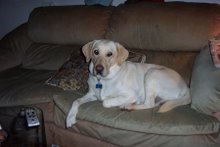
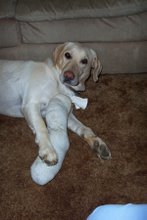
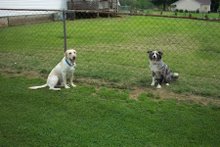
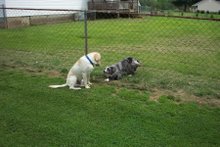
Kallee and Tamara
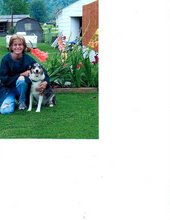
A Beautiful Summer Day.
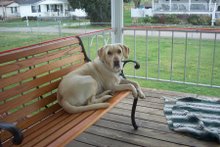
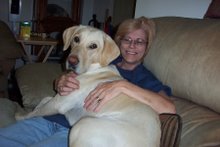
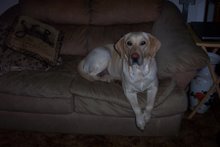
Madam Kallee, CTD, CGC - 1994-2005 - Certified Therapy Dog and a Canine Good Citizen
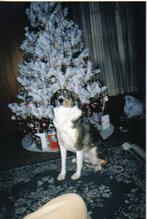
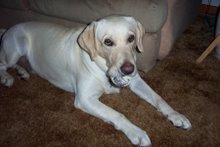
I am so pretty!
Kallee, T.D.I., CGC - Certified Therapy Dog and a Canine Good Citizen - 1994-2005

I loved to pose for the camera.
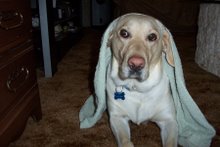
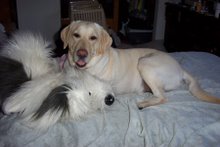
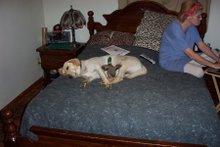
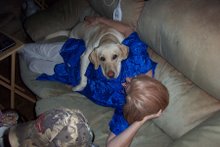
Hat Girl.

The things I do for my mom!
Happiness.

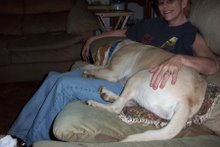
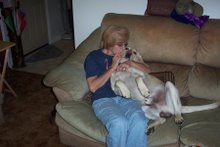
Bubby knows how to scratch a tummy.
Best of Friends.

Mine! No, Mine!, No Mine!!!
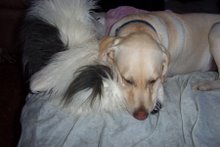
Whew !

Bubby wears me out!
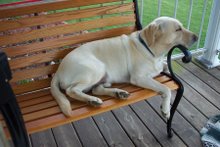
This is the Life.

Just relaxing with bubby.
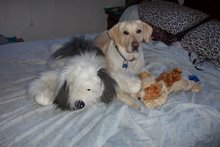
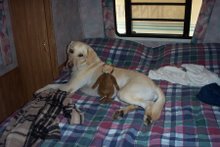
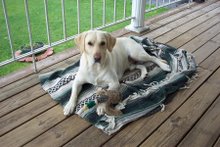
Kallee and Mr. Monkey
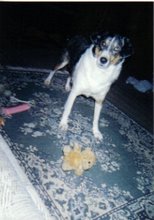
See Mr. Monkey? Wanna play?
Miss Cool.
I loved to wear my shades.
Showing posts with label breeds of dogs. Show all posts
Showing posts with label breeds of dogs. Show all posts
Sunday, June 17, 2007


Monday, June 11, 2007
Random Bred and Purposefully Cross Bred Dogs.
***NOTE***I got this idea from the Herald Dispatch's Dog Blog. Some of this information was posted by me as I felt this was a good subject to expand on. Thank you.
Cross Breed Dogs on Purpose:
What is a Labradoodle? In 1989 Wally Conron of Kew, Australia, began crossing the Labrador Retriever and the Standard Poodle, trying to create a guide dog suitable for blind people allergic to dog hair. This is a classic example of logical, planned breeding - the aim is to create a new "breed" with the best attributes of the originals. It is still too early to say whether this particular cross - between the Labrador Retriever and the Poodle, using the Standard Poodle, as it is comparable in height, will be successful. Wally Conron's objective is to breed assistance dogs that do not shed. Labradoodle guide dogs have been successfully trained and placed in Australia and Hawaii, but so far the nonshedding characteristics of the Poodle have not been fixed in the breed. When it comes to temperament, though, it appears to be a successful combination.
There is also the Bichon/Yorkie cross. The Cockerpoo - a cross between the American Cocker Spaniel and the Miniature Poodle - is growing in popularity. Like other crosses, the first dogs were the result of unplanned matings, but more recently, as numbers increased, matings between Cockerpoos have become planned. The Poodle is evident, both in the face and coat texture, and in the personality of this new "breed." Like the Poodle, the Cockerpoo is an intent observer, not given to the hyperactive excesses of many American Cocker Spaniels. An added bonus is that the Cockerpoo has a much lower incidence of skin problems than the American Cocker Spaniel. Then there is the Bull Boxer. This is a cross between the Boxer and the Staffordshire Bull Terrier. The resulting dogs of this cross have characteristics that make them in some ways superior to their parents. While Boxers seldom outgrow puppy behavior until they are over 3 yrs. old, Bull Boxer puppies mature earlier. Although many Staffordshire are unreliable with small animals, this cross is less inclined to chase; it has also inherited the Staffie's gregarious nature. It is possible that this crossing reduces the Boxer's predisposition to skin cancer and the Staffordshire's predisposition to heart disease. More and more crosses are coming. Unfortunately, until the breeders of these dogs get it right, more and more litters of puppies are being born with slipping knee caps and other genetic faults. So, the ones paying the price for breeders to play Darwin, is being brought into a world where they will have to be euthanized early in life because of a genetic defect, that was caused by a human.
Random Bred Dogs: Referred to by different names at different times - mongrels, mutts, or strays - random-bred dogs all share a characteristic trait. They have not been bred for an exclusive purpose and are therefore far less likely to suffer from a wide range of inherited medical problems, such as blindness, heart disease, and hip dysplasia, that occur with distressing frequency in certain purebred dogs. However, random-bred dogs are also inexpensive and plentiful. As a result, they are valued less by society than purebred dogs, even though the companionship they provide is just as rewarding.
Genetic and Environmental Influences: A dog's personality is determined by many factors, the most important two being genetics and early environment. Genetics are profoundly influential - breeding dogs of similar temperament is more likely to produce dogs of like temperament than breeding dogs of random temperaments. This, of course, is the basis of selective breeding - if you choose a specific breed it is more likely that you will acquire a dog with known behavior than if you choose a random-bred dog. Genetics, however, do not determine the whole personality. Early environment is very critical. Random-bred puppies raised properly in a family environment grow to become reliable adults. Unfortunately, random-bred dogs are often the results of unplanned litters, and owners sometime disregard or even discard them. These individuals consistently show a high level of anxiety related behavior problems.
Feral and Stray Dogs: Feral dogs breed randomly; they eat, breed, give birth, and survive outside homes, but depend upon the detritus of human habitation for survival. Few feral dogs exist in North America and Northern Europe, but they are common in Central and South America, in parts of the Balkans and the former Soviet empire, in Turkey and the Middle East, and in Africa and Asia. Although they breed randomly, they often breed true to type - if their breeding were brought under human control, regional random-bred dogs would be re-designated into categories of purebred dogs. Stray dogs are different. Unlike feral dogs, they are raised in homes and often return to them after a day of wandering. However, random-bred dog's desire to wander is no stronger than that of purebred dogs. It is lack of human responsibility that produces this kind of behavior.
Acquiring A Random-Bred Dog: The best place to acquire a randomly-bred dog is from a neighbor or from a friend's litter of puppies. The mother's temperament, and possibly also the father's, can be observed. By selecting a puppy, you eliminate the unknown variables of early learning that can be so dramatically affect later temperament. Random-bred dogs make up the majority of dogs in most countries. They certainly form the vast majority in dog shelters, which always have a surplus needing homes. Some organizations that train service dogs for people with a variety of disabilities rescue random-bred dogs that have been brought to shelters and find that they readily respond to both standard obedience training and complicated sound-responding-training. These "throwaways" are now in service as dedicated helpers. Eventual adult size can be difficult to estimate with some random-bred puppies, and can vary dramatically among members of the same litter. So, too, can coat length and texture. Random-bred dogs are less expensive to buy than purebred dogs, but this can be curiously detrimental to their well-being. When a substantial investment is made in the purchase of a dog, owners typically wish to protect that investment. One result is that the dog is likely to receive good veterinary care. Random-bred dogs are just as susceptible to infectious disease, but because they are inexpensive to buy they may not always receive the same degree of care. Bearing this in mind, good dog shelters now charge reasonable adoption fees for random-bred dogs and screen potential buyers for responsible attitudes.
Temperament Testing: There is no doubt that dogs have been housed in animal shelters have more temperament and behavior problems than dogs that remain in stable homes. Pragmatically, this means that random-bred dogs have a higher potential for problems that are caused by a lack of socialization and training, including destructiveness, fear biting, excessive barking, and simple bad manners. When you are considering offering your home to a rescued dog, ask the shelter staff whether they have carried out temperament testing. If not, do your own tests with the dog, concentrating on areas that apply to your family and circumstances. For example, if you have children, take them with you to the shelter and observe the dog's reaction to them. By carrying out a few simple tests, you can roughly determine the personality of any dog.
Grooming: Always keep in mind that the more hair, the more maintenance. Your smooth coated dogs only require a bath, nails and ears cleaned out. Your coated breeds will need grooming. This entails a trip to a groomer and brushing daily at home to keep the dog mat free. Most groomers have cute styles for the random-bred dog.
Cross Breed Dogs on Purpose:
What is a Labradoodle? In 1989 Wally Conron of Kew, Australia, began crossing the Labrador Retriever and the Standard Poodle, trying to create a guide dog suitable for blind people allergic to dog hair. This is a classic example of logical, planned breeding - the aim is to create a new "breed" with the best attributes of the originals. It is still too early to say whether this particular cross - between the Labrador Retriever and the Poodle, using the Standard Poodle, as it is comparable in height, will be successful. Wally Conron's objective is to breed assistance dogs that do not shed. Labradoodle guide dogs have been successfully trained and placed in Australia and Hawaii, but so far the nonshedding characteristics of the Poodle have not been fixed in the breed. When it comes to temperament, though, it appears to be a successful combination.
There is also the Bichon/Yorkie cross. The Cockerpoo - a cross between the American Cocker Spaniel and the Miniature Poodle - is growing in popularity. Like other crosses, the first dogs were the result of unplanned matings, but more recently, as numbers increased, matings between Cockerpoos have become planned. The Poodle is evident, both in the face and coat texture, and in the personality of this new "breed." Like the Poodle, the Cockerpoo is an intent observer, not given to the hyperactive excesses of many American Cocker Spaniels. An added bonus is that the Cockerpoo has a much lower incidence of skin problems than the American Cocker Spaniel. Then there is the Bull Boxer. This is a cross between the Boxer and the Staffordshire Bull Terrier. The resulting dogs of this cross have characteristics that make them in some ways superior to their parents. While Boxers seldom outgrow puppy behavior until they are over 3 yrs. old, Bull Boxer puppies mature earlier. Although many Staffordshire are unreliable with small animals, this cross is less inclined to chase; it has also inherited the Staffie's gregarious nature. It is possible that this crossing reduces the Boxer's predisposition to skin cancer and the Staffordshire's predisposition to heart disease. More and more crosses are coming. Unfortunately, until the breeders of these dogs get it right, more and more litters of puppies are being born with slipping knee caps and other genetic faults. So, the ones paying the price for breeders to play Darwin, is being brought into a world where they will have to be euthanized early in life because of a genetic defect, that was caused by a human.
Random Bred Dogs: Referred to by different names at different times - mongrels, mutts, or strays - random-bred dogs all share a characteristic trait. They have not been bred for an exclusive purpose and are therefore far less likely to suffer from a wide range of inherited medical problems, such as blindness, heart disease, and hip dysplasia, that occur with distressing frequency in certain purebred dogs. However, random-bred dogs are also inexpensive and plentiful. As a result, they are valued less by society than purebred dogs, even though the companionship they provide is just as rewarding.
Genetic and Environmental Influences: A dog's personality is determined by many factors, the most important two being genetics and early environment. Genetics are profoundly influential - breeding dogs of similar temperament is more likely to produce dogs of like temperament than breeding dogs of random temperaments. This, of course, is the basis of selective breeding - if you choose a specific breed it is more likely that you will acquire a dog with known behavior than if you choose a random-bred dog. Genetics, however, do not determine the whole personality. Early environment is very critical. Random-bred puppies raised properly in a family environment grow to become reliable adults. Unfortunately, random-bred dogs are often the results of unplanned litters, and owners sometime disregard or even discard them. These individuals consistently show a high level of anxiety related behavior problems.
Feral and Stray Dogs: Feral dogs breed randomly; they eat, breed, give birth, and survive outside homes, but depend upon the detritus of human habitation for survival. Few feral dogs exist in North America and Northern Europe, but they are common in Central and South America, in parts of the Balkans and the former Soviet empire, in Turkey and the Middle East, and in Africa and Asia. Although they breed randomly, they often breed true to type - if their breeding were brought under human control, regional random-bred dogs would be re-designated into categories of purebred dogs. Stray dogs are different. Unlike feral dogs, they are raised in homes and often return to them after a day of wandering. However, random-bred dog's desire to wander is no stronger than that of purebred dogs. It is lack of human responsibility that produces this kind of behavior.
Acquiring A Random-Bred Dog: The best place to acquire a randomly-bred dog is from a neighbor or from a friend's litter of puppies. The mother's temperament, and possibly also the father's, can be observed. By selecting a puppy, you eliminate the unknown variables of early learning that can be so dramatically affect later temperament. Random-bred dogs make up the majority of dogs in most countries. They certainly form the vast majority in dog shelters, which always have a surplus needing homes. Some organizations that train service dogs for people with a variety of disabilities rescue random-bred dogs that have been brought to shelters and find that they readily respond to both standard obedience training and complicated sound-responding-training. These "throwaways" are now in service as dedicated helpers. Eventual adult size can be difficult to estimate with some random-bred puppies, and can vary dramatically among members of the same litter. So, too, can coat length and texture. Random-bred dogs are less expensive to buy than purebred dogs, but this can be curiously detrimental to their well-being. When a substantial investment is made in the purchase of a dog, owners typically wish to protect that investment. One result is that the dog is likely to receive good veterinary care. Random-bred dogs are just as susceptible to infectious disease, but because they are inexpensive to buy they may not always receive the same degree of care. Bearing this in mind, good dog shelters now charge reasonable adoption fees for random-bred dogs and screen potential buyers for responsible attitudes.
Temperament Testing: There is no doubt that dogs have been housed in animal shelters have more temperament and behavior problems than dogs that remain in stable homes. Pragmatically, this means that random-bred dogs have a higher potential for problems that are caused by a lack of socialization and training, including destructiveness, fear biting, excessive barking, and simple bad manners. When you are considering offering your home to a rescued dog, ask the shelter staff whether they have carried out temperament testing. If not, do your own tests with the dog, concentrating on areas that apply to your family and circumstances. For example, if you have children, take them with you to the shelter and observe the dog's reaction to them. By carrying out a few simple tests, you can roughly determine the personality of any dog.
Grooming: Always keep in mind that the more hair, the more maintenance. Your smooth coated dogs only require a bath, nails and ears cleaned out. Your coated breeds will need grooming. This entails a trip to a groomer and brushing daily at home to keep the dog mat free. Most groomers have cute styles for the random-bred dog.
Subscribe to:
Posts (Atom)