What size dog would fit into your family lifestyle? Large or small? Small dogs almost invariably need as much exercise as large breeds, but can get their exercise in more confined locations. Some small dogs, such as terriers, need more exercise more regularly than do some large breeds, such as the St. Bernard and Irish Wolfhound. Although many breeds of small dogs were created solely for companionship,
not all of them are equally companionable. Aggression in small dogs becomes almost comical because of size; however, some small breeds, particularly small terriers and the Chihuahua, can be aggressive as any other dogs, or more so. Small dogs are ideal for apartments or compact homes with limited space, but still need daily physical and mental exercise and stimulation. While the yapping and barking of small dogs acts as a good deterrent to criminals, larger dogs are more impressive. This is one of the main reasons why large dogs are so popular. However, a large breed takes up more physical space in the home. A giant breed can be overwhelming especially in a small home, but are often less fickle about their diet. There are four (4) sizes of dogs: Toy, Standard, Large and Giant.
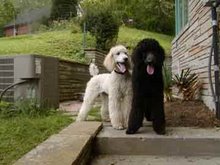
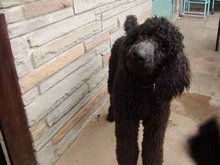
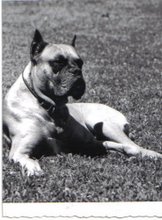
Size is not an indicator of temperament. Large breeds like the Doberman Pinscher and German Shepherd can be more puppy-like and dependant than smaller breeds such as the Fox Terrier. Large breeds, especially those with dense coats, are not very suitable for people who care a lot about how their house looks. The choice of coat texture depends upon where you live and on your willingness to groom your dog. Dogs with thick, dark coats are not suitable for hot, sunny climates. Similarly, sparse, short, smooth coats offer little insulation in cold, wet climates. Smooth coats like the Boxer's need only intermittent maintenance. Lush, dense coats such as the Afghan's need daily brushing and combing. Dogs with nonshedding coats, like Poodle's, are the most suitable for people with allergies.
Pedigree or Mongrel? Deciding whether to acquire a purebred or random-bred dog is as much an ethical decision as it is a practical one. The advantages of acquiring a purebred dog are numerous. There are hundreds of different breeds, with different mental and physical characteristics. The choice is daunting, but with careful selection you can choose a breed that is most suitable for your needs and lifestyle. Most important, you are bringing a known quantity into you home. There is a range of behaviors within each breed, but statistically you know that a member of a breed is more likely to develop according to the norm than otherwise. You know its attributes and deficits, and even its potential life expectancy. The main disadvantage of purebred dogs is that by creating breeds - groups of dogs with similar conformation and behavior - we accidentally concentrate deleterious genes as well. It results in a relatively high potential for inherited disease. This can be manifested in skin allergies; in other circumstances, it means serious heart disease, as in the Doberman's or Cavalier King Charles Spaniel. A random-bred dog, by the very randomness of its breeding, is less likely to suffer from inherited disease than a purebred dog. Its final adult size, feeding, grooming requirements, and temperament are, however, unknown. Although society places more value on purebred dogs because they cost more, it is random-bred dogs that are most often in need of good homes.
Acquiring a Dog. Dogs can be acquired from breeders, pet shops (remember, a reputable breeder does not sell their dogs in pet shops. These usually come from puppy mills), shelters, breed rescue groups, friends, through vets, or straight off the street. Some sources are better than others. Knowledgeable breeders often know more than almost anyone else about the behavior of their breed. They are generally frank about the breeds advantages and disadvantages, although some breeders may gloss over the potential problems inherent in their breed. Commercial breeding establishment that sell dogs as a primary business venture are often less reliable than breeders that are affiliated with breed clubs. Good breeders employ vets to do preventive medical examinations to vaccinate and eliminate any parasites contracted from the parents. Dog shelters often carry out medical exams, neutering programs, and behavioral evaluations of their dogs (explaining each dog's assets and potential problems), as well as keeping track of dogs for which they have found homes. Breed rescue groups are usually excellent, and often very protective of their charges. Friends are an excellent source of dogs, especially if you know the dog or its parents. So too are local vets, who usually know behavioral as well as medical backgrounds.
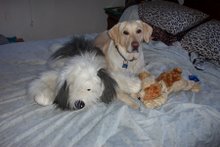
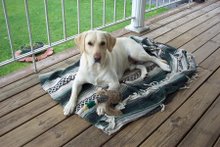
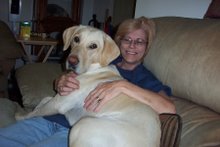
Kallee and Tamara
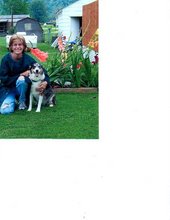
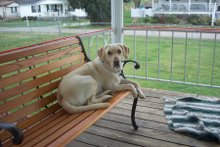
A Beautiful Summer Day.
Madam Kallee, CTD, CGC - 1994-2005 - Certified Therapy Dog and a Canine Good Citizen
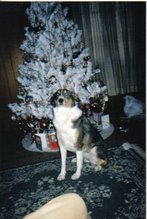
I am so pretty!
Kallee, T.D.I., CGC - Certified Therapy Dog and a Canine Good Citizen - 1994-2005

I loved to pose for the camera.
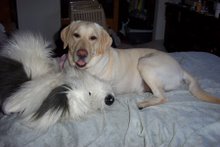
Hat Girl.

The things I do for my mom!
Happiness.

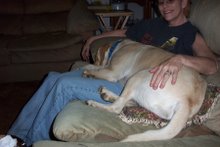
Bubby knows how to scratch a tummy.
Best of Friends.

Mine! No, Mine!, No Mine!!!
Whew !

Bubby wears me out!
This is the Life.

Just relaxing with bubby.
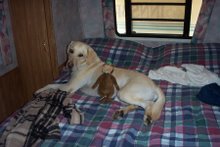
Kallee and Mr. Monkey
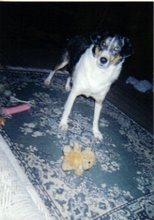
See Mr. Monkey? Wanna play?
Miss Cool.

I loved to wear my shades.
Showing posts with label buying a dog. Show all posts
Showing posts with label buying a dog. Show all posts
Wednesday, April 11, 2007


Purchasing a Dog.
Puppy or adult, that is the question. The primary advantage of acquiring an adult dog is that it usually arrives house trained. You also know its final size and personality. Although it may have a delightful temperament with you, there is the possibility that it has hidden behavioral problems such as a dislike of children. If you plan to get an adult dog, carry out these simple tests to learn more about its personality. Watch the dog's behaviour as you approach it; put it on a leash and take it for a walk among people. A park is a great place to do this test. Walk it past a dog and a child it has not met. Another good test is to open an umbrella in its presence to see if it is easily frightened. A skittish dog could possibly bite out of fear, known as a "fear biter." Another test is to tell your dog to sit. Leave it alone with a toy for approximately 10 minutes. This is a reward test to see how your dog reacts to being given a toy for doing something you asked of it. This will let you know if a toy is a good reward, or if you need to try a treat, such as a doggie biscuit, or my dog Chance's favorite, Biljac soft treats. These treats are made of pure chicken liver. Chance would jump off a building for a Biljac. These simple tests will help you make a rough evaluation of its temperament and anticipate any potential problems that might arise.
Puppies are still at the impressionable early-learning stage of life, but even eight-week-old pups of the same litter each have their own distinct personalities. The shyest individuals cling to their mother or cringe in corners, while the boldest march confidently forward to inspect you. These are the extremes of temperament within the litter. Choose accordingly to what you want from a dog.
Male or Female? Even in pre-pubertal puppies, there are sex differences in behavior. Male puppies have "masculinized" brains, affecting the surge of testosterone just before birth. Females remain behaviorally neutral until puberty. There are distinct differences in behavior in both sexes. Males are more likely to try to be dominate over their owners, act aggressively with other dogs, defend their territories, and be generally more active. To a lesser extent, they are more playful, more destructive, and likely to be snappy with children. The females are easier to obedience train and house train. They also demand more affection. There is no difference between the sexes in excitability, nervous barking, or defensive barking. Male dogs are more likely to urine mark territory and to wander. Females have 2 heat cycles twice a year that involve blood-tinged discharges that last about a week. Remember, a female is in heat for a total of 21 days. It takes 1 week for her to come in, the second week, she is in her full cycle, last week, she is going out of her cycle.
Just because the discharge has stopped, doesn't mean she is out of her cycle. And, of course, spaying and neutering your dog will reduce of eliminate many of these behavioural differences.
Subscribe to:
Posts (Atom)