Whether sniffing out bombs or patrolling bases, military working dogs (MWDs) assist their human counterparts in ways that only a canine can. The military has developed other instruments to detect the presence of dangerous chemicals and bomb making substances, “but nothing that compares to a dog,” says Sergeant John Dornstadter Jr. of the Multi-National Division and a Military Working Dog Assistant Program Manager in Baghdad. “The MWDs are typically more productive at finding hidden things because they use their sense of smell alone without the sense of sight, sound or touch. A soldier has no other means while searching an area other than to physically see or touch,” putting them at risk because they must get much closer to something in order to thoroughly investigate.
The best dogs for the job, says Dornstadter, have an excellent sense of smell, a strong play/prey drive, some aggressiveness and the ability to learn. Most MWDs begin training between one to three years of age and after several months of rigorous schooling are paired up with their handler. For Dornstadter and his dog, Benni, who have been together two years now, it was a fairly easy process; a good grooming and a few days of playing fetch. But some have to work a little harder to form that special bond. “I have also seen handlers who have slept outside of their MWD’s kennel just for the dog to become more comfortable and accustomed to them,” says Dornstadter.
Once out in the field the MWDs are eager to put their new skills to use and earn the reward of a job well done, in Benni’s case a rubber chew toy. Most MWDs are rewarded with a toy or play rather than food, as army veterinarians keep them on a strict diet. But what’s makes Benni and other dogs so uniquely suited for this type of work is not just their sense of smell; it’s their ability to react consistently to a stimulus. While human beings judge and react to a situation based on reasoning, what they think it means, a dog will simply react.
A well-trained dog will respond to a particular stimulus the same way each and every time, allowing the handler to know exactly what it senses. The military dogs’ work is invaluable in helping soldiers quickly assess a situation and determine possible dangers. In the field that time can often equate to safety and lives. When it comes down to it, not even the latest in technology can come close to man’s best friend, “There really is no comparison to the amount of time they save,” says Seargent Dornstadter.
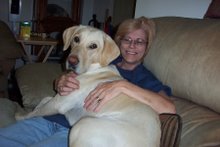
Kallee and Tamara
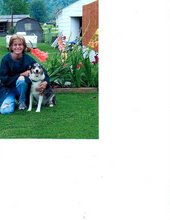
A Beautiful Summer Day.
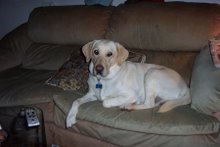
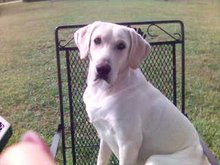
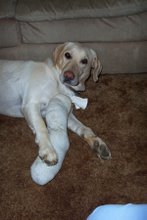
Madam Kallee, CTD, CGC - 1994-2005 - Certified Therapy Dog and a Canine Good Citizen
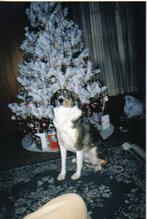
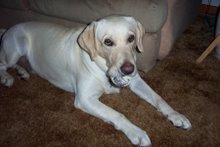
I am so pretty!
Kallee, T.D.I., CGC - Certified Therapy Dog and a Canine Good Citizen - 1994-2005

I loved to pose for the camera.
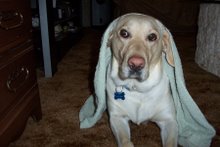
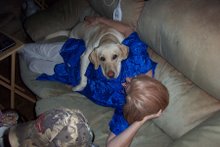
Hat Girl.

The things I do for my mom!
Happiness.

Bubby knows how to scratch a tummy.
Best of Friends.

Mine! No, Mine!, No Mine!!!
Whew !

Bubby wears me out!
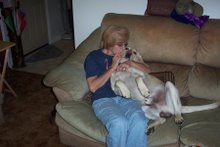
This is the Life.

Just relaxing with bubby.
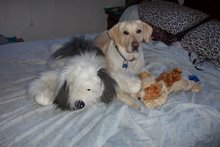
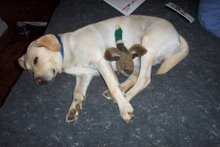
Kallee and Mr. Monkey
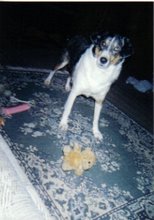
See Mr. Monkey? Wanna play?
Miss Cool.

I loved to wear my shades.
Showing posts with label military. Show all posts
Showing posts with label military. Show all posts
Tuesday, February 19, 2008


Friday, December 21, 2007
Slain Marine's Dog Adopted By His Family.
ALBANY, Ga. (AP) — A military working dog wounded in Iraq during a rocket attack that killed its Marine handler was adopted Friday by the slain Marine’s family. The adoption of Lex, an 8-year-old German Shepherd, by the family of fallen Marine Cpl. Dustin Lee marked the first time the U.S. military has granted early retirement to a working dog so it could live with a former handler’s family, officials said.
“Nobody can do anything to replace the void in this family,” said Col. Christian Haliday, commander of the Marine Corps Logistics Base in Albany, where Lee and Lex were assigned. “We hope Lex can bring a small piece of his spirit and help maintain his memory.” On hand for the ceremony at the base were the Marine’s parents, Jerome and Rachael Lee, his sister, Mattie, 16, and brother, Cameron, 12, of Quitman, Miss.
“It’s not going to bring back my brother, but it’s something close to it,” said Mattie Lee as she played with Lex after the ceremony. Lee’s family planned to take the bomb-sniffing dog home on Saturday. Military officials initially told the family that Lex had another two years of service before he could be adopted.
But the family lobbied for months — even enlisting the aid of a North Carolina congressman — and the adoption came exactly nine months after the 20-year-old Marine was killed and his dog wounded on March 21 in Iraq’s Anbar Province. 2nd Lt. Caleb Eames, spokesman for the Albany base, said Lee and Lex were sitting outside at a forward operating base in Karmah when they were hit by shrapnel from a 73mm rocket explosion.
“A part of Dustin is in Lex,” said the fallen Marine’s father. “To have Lex at home is a part of having Dustin at home.” Rachael Lee said she believes her son’s spirit will live on through the dog because of their close bond and because they were together during the final moments of her son’s life. “It was blood on blood,” she said. “We can’t get Dustin back, but we have Lex.”
While Marines tried to treat Lee’s wounds, another dog handler was sent to take Lex for treatment, said Staff Sgt. Dana Brown, the regional kennel master for the pair in Iraq. “Lex, from my understanding, was kind of laying on him or near him, protecting him,” Brown said in an interview from the Quantico Marine Base in Virginia. “He just didn’t want to leave him. He knew he belonged there and something was wrong.
Even though he was hurting, he knew he was supposed to stay by his handler.” Brown flew back with Lex to Camp Lejeune, N.C., where the dog’s wounds were treated and she accompanied Lex to Lee’s funeral in April. After 12 weeks of treatment for shrapnel wounds in the shoulder and back, Lex was declared fit for duty and returned to his permanent home at the Albany base.
Brown said Lee and Lex stood out among more than 40 bomb-sniffing dog teams under her supervision, and they performed so well she chose them and one other team to be embedded full-time with specialized units — a Marine reconnaissance unit in Lee’s case. It was Lex’s second tour in Iraq, the first with another handler. “He was cocky,” Brown said of Lee. “He knew he was good and he and his dog were unstoppable.”
Lee joined the Marines after graduating from high school in 2004. His father said his desire to become a dog handler came from the Marine’s mother, who worked with search-and-rescue dogs when Lee was a boy. After completing military police and dog handler training, Lee was assigned to the Albany base in southwestern Georgia. He adopted his first partner, Doenja, and sent him home to Mississippi last year when that 11-year-old dog began losing his sight and had to retire. “Lex is in wonderful shape,” said Eames. “He’s fully operational. His most important mission now is making this wonderful family very happy.”
“Nobody can do anything to replace the void in this family,” said Col. Christian Haliday, commander of the Marine Corps Logistics Base in Albany, where Lee and Lex were assigned. “We hope Lex can bring a small piece of his spirit and help maintain his memory.” On hand for the ceremony at the base were the Marine’s parents, Jerome and Rachael Lee, his sister, Mattie, 16, and brother, Cameron, 12, of Quitman, Miss.
“It’s not going to bring back my brother, but it’s something close to it,” said Mattie Lee as she played with Lex after the ceremony. Lee’s family planned to take the bomb-sniffing dog home on Saturday. Military officials initially told the family that Lex had another two years of service before he could be adopted.
But the family lobbied for months — even enlisting the aid of a North Carolina congressman — and the adoption came exactly nine months after the 20-year-old Marine was killed and his dog wounded on March 21 in Iraq’s Anbar Province. 2nd Lt. Caleb Eames, spokesman for the Albany base, said Lee and Lex were sitting outside at a forward operating base in Karmah when they were hit by shrapnel from a 73mm rocket explosion.
“A part of Dustin is in Lex,” said the fallen Marine’s father. “To have Lex at home is a part of having Dustin at home.” Rachael Lee said she believes her son’s spirit will live on through the dog because of their close bond and because they were together during the final moments of her son’s life. “It was blood on blood,” she said. “We can’t get Dustin back, but we have Lex.”
While Marines tried to treat Lee’s wounds, another dog handler was sent to take Lex for treatment, said Staff Sgt. Dana Brown, the regional kennel master for the pair in Iraq. “Lex, from my understanding, was kind of laying on him or near him, protecting him,” Brown said in an interview from the Quantico Marine Base in Virginia. “He just didn’t want to leave him. He knew he belonged there and something was wrong.
Even though he was hurting, he knew he was supposed to stay by his handler.” Brown flew back with Lex to Camp Lejeune, N.C., where the dog’s wounds were treated and she accompanied Lex to Lee’s funeral in April. After 12 weeks of treatment for shrapnel wounds in the shoulder and back, Lex was declared fit for duty and returned to his permanent home at the Albany base.
Brown said Lee and Lex stood out among more than 40 bomb-sniffing dog teams under her supervision, and they performed so well she chose them and one other team to be embedded full-time with specialized units — a Marine reconnaissance unit in Lee’s case. It was Lex’s second tour in Iraq, the first with another handler. “He was cocky,” Brown said of Lee. “He knew he was good and he and his dog were unstoppable.”
Lee joined the Marines after graduating from high school in 2004. His father said his desire to become a dog handler came from the Marine’s mother, who worked with search-and-rescue dogs when Lee was a boy. After completing military police and dog handler training, Lee was assigned to the Albany base in southwestern Georgia. He adopted his first partner, Doenja, and sent him home to Mississippi last year when that 11-year-old dog began losing his sight and had to retire. “Lex is in wonderful shape,” said Eames. “He’s fully operational. His most important mission now is making this wonderful family very happy.”
Subscribe to:
Posts (Atom)