Parenting your puppy:
Owning a puppy is great fun but there are also great responsibilities. We look at the ways in which you can best care for your puppy and how you can be a responsible puppy owner. Like all worthwhile things in life, owning a puppy involves responsibilities as well as pleasures. The pleasures are obvious and the responsibilities need to be considered. Your responsibilities are not just to your puppy but also to other people and the environment.
Training:
A well-trained and disciplined pup is an asset to his owner, so make sure he receives at least some basic obedience training. A puppy that is taught a few simple rules will become a well-adjusted and well-behaved family pet. Similar to children, you can teach puppies manners and the rules of the household. From the time you bring your new puppy home, teach him not to bite – even in play. Also, teach him that unnecessary barking is not allowed. Always make your puppy obeys the command “Sit” before being petted or fed. The key to training your pup is to realize that he really does want to please you. Praise and reward your puppy for appropriate behaviour and use a stern “No” when you wish to correct his behavior. As your puppy grows you should seek assistance with more formal training. Contact your local obedience club for details about their training classes. Joining such a club is inexpensive and not only provides instruction on training your puppy to obey basic commands such as stay, down and come, but a training club also allows your puppy to socialize with other dogs. Training will make your puppy a more pleasurable companion and it may also one day save his life.
Grooming:
Regular grooming is necessary to keep your puppy looking and feeling his best. Puppies that are naturally longhaired or densely coated require brushing more frequently than shorthaired puppies. Some breeds require regular professional clipping. Puppies should be accustomed to being brushed and combed from an early age. Your veterinarian can assist with cutting your puppy’s nails and cleaning his teeth, or can show you how to do it yourself. It is your responsibility to make sure that your puppy is vaccinated, wormed, de-fleaed and given regular health checks. If you are not planning to breed your puppy it is advisable to have him neutered by the age of six months, as this can help him live longer and cut down on future health problems.
Neighborhood friendly puppy:
Puppies that are allowed to bark excessively disturb the neighborhood, and neighbors will be unlikely to investigate a disturbance should anything agitate your pup. Constant barking can often be a sign of boredom. As a rule, puppies need regular physical and mental stimulation. When walking your puppy, always keep him leashed and observe all local regulations. Comply with the canine registration regulations, and be sure that your pup wears his registration tag and identification at all times. He should never be allowed to wander or roam. The consequences can be severe, ranging from a fine from your local government to your puppy becoming lost or even injured or killed by a motor vehicle. As a responsible puppy owner you must ensure that your pup does not soil parks, gardens, beaches or streets. Give your puppy every opportunity to relieve himself in his own yard before being taken for a walk. Accidents may happen from time to time and it is your responsibility to be prepared by carrying plastic bags or commercially available “pooper-scoopers” to clean up and dispose of the mess.
Prevention:
Unfortunately, puppies sometimes do get lost. You can help prevent this by making sure your puppy always wears a collar and an identification tag with your telephone number. Get your puppy microchipped as a further precaution against losing him. Your veterinarian can do this for you. Confine your puppy during thunderstorms and firework displays. If he does get lost, check with your neighbors, your local veterinary clinics, shelters and other animal welfare organizations. Check with these organizations in the neighboring areas as well, as lost animals may travel some distance. If you are planning a holiday, you will need to consider how best to care for your puppy while you are absent from home. Your veterinarian may be able to recommend a reputable kennel. You should make arrangements well in advance if you intend to board your puppy during common holiday periods. His vaccinations will need to be up-to-date. If you are only absent for a few days you may be able to arrange for a neighbor or a home feeding service to visit and feed your puppy. Never leave your puppy in the car, as cars can become very hot, even on moderately warm days, and he could die from heat exhaustion. By making sure that your puppy is well looked after, well-behaved and that you respect other people’s wishes, you are acting as a responsible puppy parent. This will not only benefit you and your puppy, but you are doing your bit for the reputation of other dog and puppy owners as well.
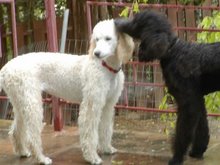
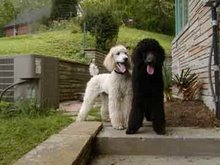
Kallee and Tamara
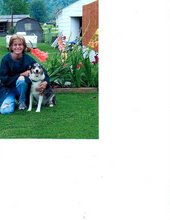
A Beautiful Summer Day.
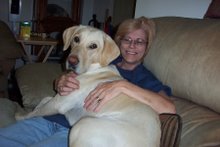
Madam Kallee, CTD, CGC - 1994-2005 - Certified Therapy Dog and a Canine Good Citizen
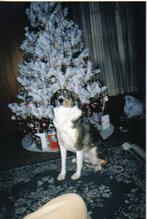
I am so pretty!
Kallee, T.D.I., CGC - Certified Therapy Dog and a Canine Good Citizen - 1994-2005

I loved to pose for the camera.
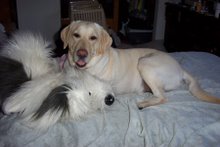
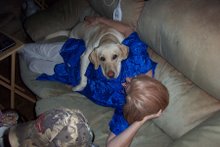
Hat Girl.

The things I do for my mom!
Happiness.

Bubby knows how to scratch a tummy.
Best of Friends.

Mine! No, Mine!, No Mine!!!
Whew !

Bubby wears me out!
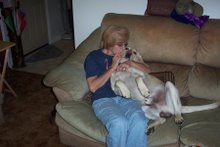
This is the Life.

Just relaxing with bubby.
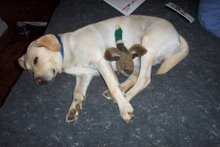
Kallee and Mr. Monkey
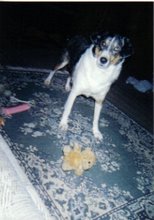
See Mr. Monkey? Wanna play?
Miss Cool.
I loved to wear my shades.
Showing posts with label puppy training. Show all posts
Showing posts with label puppy training. Show all posts
Thursday, December 6, 2007


Tuesday, June 26, 2007
How To Stop Your New Puppy From Biting.
Puppies love to bite.
They do it naturally but it is something that they must be taught
not to do. This needs to be addressed while they are young because dog bites
can lead to all sorts of problems including legal action. It may seem fun and funny to have a puppy biting but a full-grown dog can do a lot of damage, particularly to children if they are in the habit of biting. Dogs have immense strength in their jaws and even a playful nip can do permanent damage to a child. Generally, puppies are taught to control their biting from their mothers but in most cases we get puppies as pets that have been taken from their mothers at a very young age and it is up to us to teach them as puppies not to bite. By letting your dog socialize with other dogs from a young age they will quickly learn from their elders, provided they have been taught well, that the desire to bite needs to be curbed to avoid retaliation and an ensuing fight.
The sooner the puppy is taught not to bite by the owner or by interaction with other dogs, the less aggressive they will become as they grow older and the more pleasant they will be to live with. Taking a puppy to a dog training school will allow it to interact with other dogs where it will quickly be corrected for any misbehavior. Puppies should generally learn to interact with other dogs within the first three months of their life. The longer this is left the more difficult it becomes for your dog to socialize correctly and they can become dangerous later in life. As with children, the sooner your puppy can learn correct behavior patterns the better they will be in the long term. It is also wise to get the puppy to behave correctly in the presence of other animals including cats and any other pets that they might come in contact with over their life. There are many items that are available from the pet stores and vets that can give your puppy suitable satisfaction to chew and bite upon. This will allow your puppy to learn what is right and what is not right to bite.
They do it naturally but it is something that they must be taught
not to do. This needs to be addressed while they are young because dog bites
can lead to all sorts of problems including legal action. It may seem fun and funny to have a puppy biting but a full-grown dog can do a lot of damage, particularly to children if they are in the habit of biting. Dogs have immense strength in their jaws and even a playful nip can do permanent damage to a child. Generally, puppies are taught to control their biting from their mothers but in most cases we get puppies as pets that have been taken from their mothers at a very young age and it is up to us to teach them as puppies not to bite. By letting your dog socialize with other dogs from a young age they will quickly learn from their elders, provided they have been taught well, that the desire to bite needs to be curbed to avoid retaliation and an ensuing fight.
The sooner the puppy is taught not to bite by the owner or by interaction with other dogs, the less aggressive they will become as they grow older and the more pleasant they will be to live with. Taking a puppy to a dog training school will allow it to interact with other dogs where it will quickly be corrected for any misbehavior. Puppies should generally learn to interact with other dogs within the first three months of their life. The longer this is left the more difficult it becomes for your dog to socialize correctly and they can become dangerous later in life. As with children, the sooner your puppy can learn correct behavior patterns the better they will be in the long term. It is also wise to get the puppy to behave correctly in the presence of other animals including cats and any other pets that they might come in contact with over their life. There are many items that are available from the pet stores and vets that can give your puppy suitable satisfaction to chew and bite upon. This will allow your puppy to learn what is right and what is not right to bite.
Wednesday, March 28, 2007
Eli Update
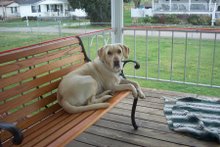
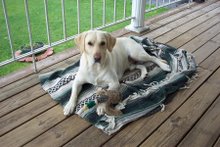
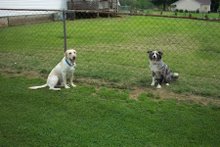
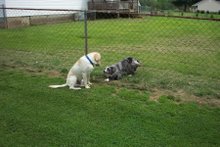
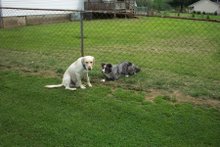
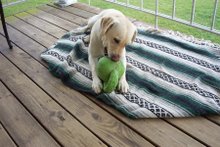
Hey everyone. Just a little update on my favorite new student. Eli is coming along well. Today, my husband, Charles gave Eli a small stuffed football. He took it and immediately ran up on his porch and got in his chair. Then he came back to the fence and tried to get Chance to play with him. Chance could be less bothered by this "whippersnapper." Unfortunately, Chance is extremely jealous, of anything or anyone that takes my attention from him. I have done this by keeping him with me constantly and always having a hand on him, whether I am petting him or just laying my hand on him. I did the same thing with Kallee, but she was more tolerant of people and things. If I leave Chance inside when I go over next door to work Eli, he stands on the love seat and looks out the window and whines. If I leave him outside, he runs the fence and barks. I can give him the signal for "no bark", and he will quit, but will resume shortly thereafter. We are working on this. More to come. Picture coming soon.
Wednesday, March 7, 2007
Update on Eli.
Well everyone, I got to work Eli yesterday. Wow, what a bundle of love. He is absolutely cute. That is all I can say. Just cute! We had play time for about 5 minutes and then we started to work on what the word "easy" means. I use this word when a puppy or adult dog gets a bit too rowdy. We are also working on not jumping up on everyone. He is just so happy to see someone. I use the 4 on the floor method. If Eli keeps 4 paws on the floor, he gets love and a small treat. If he jumps up, he is told NO, and I don't touch him. He is doing great with that. I can tell him "Eli, 4 on the floor", and he will immediately drop to 4 feet. We have a long way to go, though. Well, I will be updating Eli's progress as we learn something new.
Subscribe to:
Posts (Atom)