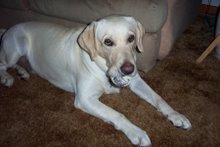
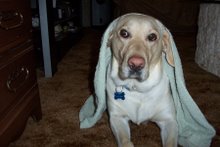
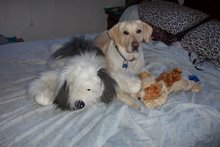
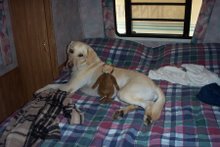
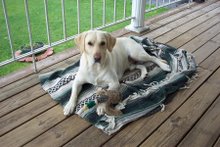
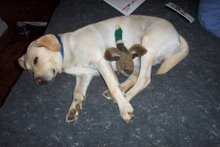
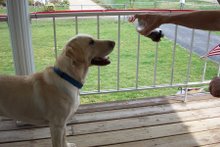
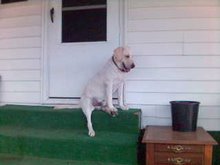
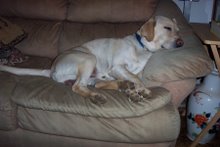
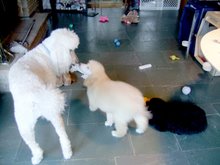
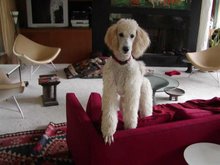
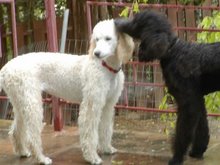
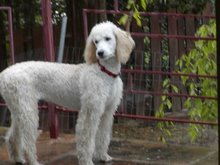
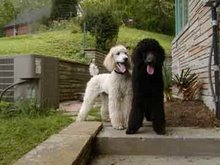
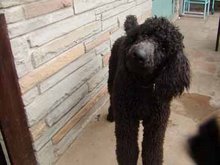
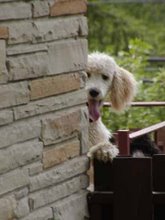
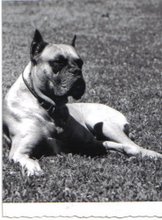
Kallee and Tamara
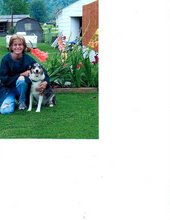
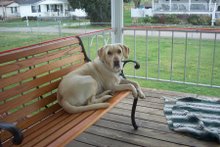
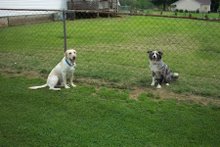
A Beautiful Summer Day.
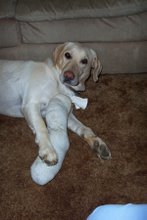
Madam Kallee, CTD, CGC - 1994-2005 - Certified Therapy Dog and a Canine Good Citizen
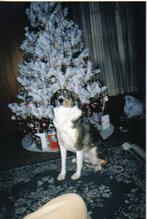
I am so pretty!
Kallee, T.D.I., CGC - Certified Therapy Dog and a Canine Good Citizen - 1994-2005

I loved to pose for the camera.
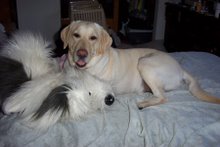
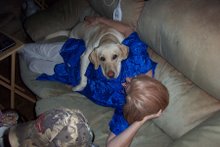
Hat Girl.

The things I do for my mom!
Happiness.

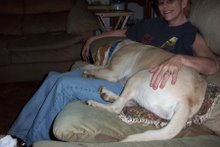
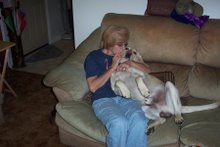
Bubby knows how to scratch a tummy.
Best of Friends.

Mine! No, Mine!, No Mine!!!
Whew !

Bubby wears me out!
This is the Life.

Just relaxing with bubby.
Kallee and Mr. Monkey
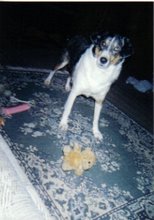
See Mr. Monkey? Wanna play?
Miss Cool.
I loved to wear my shades.
Showing posts with label training. Show all posts
Showing posts with label training. Show all posts
Tuesday, September 25, 2007
How long should your dog-training sessions be?
There are many different factors that come into play when determining how long your dog training sessions should be. Just as people have many and varied personalities, the same is true for dogs - even within a breed. Many people recommend that you do a personality analysis before getting your dog to determine which breed will be most suitable in your life. Very often, however, we choose dogs based on other different factors at the time. The various different breeds of dogs have different personality traits and you need to work with these when training your dog to get the best results. The age of the dog also determines the ability to be trained. While young puppies generally have a shorter attention span they haven't learned the bad habits of older dogs and in most cases are easiest to train. When training young puppies it is a good idea to have shorter training sessions, and to end the training sessions with a bit of fun and playtime. When you mix a little fun with the training, you always get better results, and you will also be more likely to continue with the dog training for longer. As an owner and their dog progress along with training, both parties will find it far more enjoyable as the results will improve and the obvious rewards that both the dog and the owner receive from one another will bond the relationship even further. There's nothing quite like dog training to start off a lifetime relationship in the best manner possible. Dog training is the best investment you can ever make for your pet.


Tuesday, September 11, 2007
Reward Training
Reward training your dog.
Reward training is quite possibly one of the oldest methods of training dogs, dating back to the days when people started trying to domesticate wild animals. It is probably the method of dog training that most of us are familiar with, and it is a natural instinct to reward the dog when they perform the task that we have asked of them. Some people prefer to use a combination of the reward training methods and the leash and collar training to get the best out of their dog in the least time. Some dogs respond better to reward training than leash and collar training so your decision might depend on what method you see working the best with your dog. Reward training for dogs, has seen a remarkable increase in popularity over recent years with many people finding this as their preferred method of training their new puppies. There is no definitive answer as to what the best type of dog training is, as some dogs respond better to one technique than others. There are certainly some advanced techniques that are taught in the top dog training manuals that will ensure you train your dog, faster and easier than trying to do so on your own. Most dogs will respond to some extent, to either method of training, and any training is certainly better than none, even if you only teach your dog the most basic commands. Reward training is even used for dogs that work in the military and police. Those dogs that are used for scent detection and tracking are also often trained using some form of reward training. Generally, reward training is in the form of some type of food reward.
Reward training is quite possibly one of the oldest methods of training dogs, dating back to the days when people started trying to domesticate wild animals. It is probably the method of dog training that most of us are familiar with, and it is a natural instinct to reward the dog when they perform the task that we have asked of them. Some people prefer to use a combination of the reward training methods and the leash and collar training to get the best out of their dog in the least time. Some dogs respond better to reward training than leash and collar training so your decision might depend on what method you see working the best with your dog. Reward training for dogs, has seen a remarkable increase in popularity over recent years with many people finding this as their preferred method of training their new puppies. There is no definitive answer as to what the best type of dog training is, as some dogs respond better to one technique than others. There are certainly some advanced techniques that are taught in the top dog training manuals that will ensure you train your dog, faster and easier than trying to do so on your own. Most dogs will respond to some extent, to either method of training, and any training is certainly better than none, even if you only teach your dog the most basic commands. Reward training is even used for dogs that work in the military and police. Those dogs that are used for scent detection and tracking are also often trained using some form of reward training. Generally, reward training is in the form of some type of food reward.
Tuesday, September 4, 2007
Separation Anxiety.
Many people are unaware that separation anxiety even exists with their dog. There are many different traits that can be seen in a dog due to separation anxiety. When we leave home for work each day, most people are unaware of what their dog is experiencing, and for many of them it is separation anxiety. We assume that because the dog appears to be happy when we arrive home at the end of the day, that it has been happy all day long. In many instances, the dog could have had quite a traumatic day. Many dogs are concerned that when their owner leaves, they might not be coming back. They have no way of knowing that we will be back in eight or nine hours. The stress that this causes for a dog can lead to destructive behavior where they will chew everything in sight. Other dogs might express their stress by soiling the house. Either way, if you come home from work and find that your well-trained dog has done something out of the ordinary you need to consider whether it has had a stressful day or not, and certainly not reprimand it until you know what the circumstances have been. If you sense your dog has been stressed during the day, you might like to consider giving it more toys to stop it from becoming bored, or better still, have somebody call in and visit at some stage throughout the day so it knows that it is not alone. Exercising your dog in the morning before you leave is a good idea because it is more likely to sleep during the day. Another method to reassure your dog that you will be coming back when you leave, is to do several smaller trips in the course of a few days or weeks, where the dog becomes more and more accustomed to you leaving and returning at different intervals. By slowly extending these hours of separation, your dog will become accustomed to it, thereby eliminating separation anxiety.
Tuesday, August 28, 2007
How to stop your dog from chewing.
Stopping your dog from chewing everything in sight.
It is only natural for dogs to want to chew. It is a natural instinct, but they need to be trained what they can and can't chew without causing problems. While they might feel the need to sharpen their teeth you certainly don't want them to be doing that on your furniture. It is a lot cheaper to invest some money in suitable toys that thedog can chew or get their teeth cleaned professionally than to replace expensive household items. The simplest method of training a dog not to chew everything in sight is to confine it to a small area where only those things that it should be allowed to chew are present. The dog will then become accustomed to the smell of those things that it is allowed to chew and then when it is allowed out into the household where other items are present you can teach it not to chew items such as furniture, shoes, clothing, etc. It is also possible to teach an old dog not to chew items by using the same techniques although it is harder if it has been doing this for many years of its life. It is always preferable to teach your dog the lessons they need to know as soon as possible as training gets harder with the age of the dog. If the dog is going to be left inside for extended periods while
you're not around it is wise to remove any items that you don't want it to chew until it is fully trained. Until that time, the dog should be content with suitable chewing toys.
It is only natural for dogs to want to chew. It is a natural instinct, but they need to be trained what they can and can't chew without causing problems. While they might feel the need to sharpen their teeth you certainly don't want them to be doing that on your furniture. It is a lot cheaper to invest some money in suitable toys that thedog can chew or get their teeth cleaned professionally than to replace expensive household items. The simplest method of training a dog not to chew everything in sight is to confine it to a small area where only those things that it should be allowed to chew are present. The dog will then become accustomed to the smell of those things that it is allowed to chew and then when it is allowed out into the household where other items are present you can teach it not to chew items such as furniture, shoes, clothing, etc. It is also possible to teach an old dog not to chew items by using the same techniques although it is harder if it has been doing this for many years of its life. It is always preferable to teach your dog the lessons they need to know as soon as possible as training gets harder with the age of the dog. If the dog is going to be left inside for extended periods while
you're not around it is wise to remove any items that you don't want it to chew until it is fully trained. Until that time, the dog should be content with suitable chewing toys.
Tuesday, August 21, 2007
The "Come" Command.
The Command to Come when Called.
One of the most basic and important commands that you will need to teach your dog is to come when called. No matter what else happens, if you have taught your dog this command you will always be able to maintain control whether at home or in public. Should your dog ever get off it's leash or escape from your property you will know that when you call it that it will come back and this certainly makes life a lot easier for the dog owner. For working dogs, this is a vital skill as a handler needs to know that at any time they can get the dog back beside them and ready for their next command. When you are comfortable that your dog knows the commands of 'stay' and 'come' you no longer have to be as concerned that it needs to be kept on a leash at all times. This allows both the owner and the dog to have a lot more freedom. Generally, this command of 'come' is incorporated when teaching the dog to stay, as these two lessons work hand-in-hand with one another. The dog is first taught to stay and then the owner will teach the dog to come, while still on an extended leash. After gaining success in getting the dog to come, while still on a leash, the owner can then teach it to do so without the leash. Obviously for an untrained animal this would be better taught in an enclosed area until the dog has learned to respond to that command.
One of the most basic and important commands that you will need to teach your dog is to come when called. No matter what else happens, if you have taught your dog this command you will always be able to maintain control whether at home or in public. Should your dog ever get off it's leash or escape from your property you will know that when you call it that it will come back and this certainly makes life a lot easier for the dog owner. For working dogs, this is a vital skill as a handler needs to know that at any time they can get the dog back beside them and ready for their next command. When you are comfortable that your dog knows the commands of 'stay' and 'come' you no longer have to be as concerned that it needs to be kept on a leash at all times. This allows both the owner and the dog to have a lot more freedom. Generally, this command of 'come' is incorporated when teaching the dog to stay, as these two lessons work hand-in-hand with one another. The dog is first taught to stay and then the owner will teach the dog to come, while still on an extended leash. After gaining success in getting the dog to come, while still on a leash, the owner can then teach it to do so without the leash. Obviously for an untrained animal this would be better taught in an enclosed area until the dog has learned to respond to that command.
Tuesday, August 7, 2007
How to stop your dog from jumping on people.
Jumping on People.
No matter how much we might enjoy our pet jumping up to greet us,
there are many people who dislike having a strange dog coming up
and jumping on them. For many people it can be a frightening experience as not everyone is a dog lover. Besides that, many people just don't want dirty paw marks over their clothing. It can also create major problems if a large dog were to jump up on a child or an elderly person. Dogs will generally jump up on people because they are overly excited and pleased to see them - even if that person is a stranger.
Many people inadvertently encourage this behavior by rewarding the dog with attention after the dog has jumped up on them. The dog then seeks similar reward from other people whether they like it or not. This is detrimental to the proper training of the dog and all members of the family must realize that they're doing more harm than good by encouraging their dog to jump up on people. Consistency is important in all forms of dog training, where members of the dog's family will need to exercise discipline and accept that training will be all the more difficult if the dog is allowed to continue with this behavior. Failure to do so will lead to confusion with the pet not knowing what is right or wrong. An alternative to having your dog jump up on you and other people is to teach it to sit and lift it's paw when greeting you for a handshake or similar tricks where the dog will be rewarded with attention.
No matter how much we might enjoy our pet jumping up to greet us,
there are many people who dislike having a strange dog coming up
and jumping on them. For many people it can be a frightening experience as not everyone is a dog lover. Besides that, many people just don't want dirty paw marks over their clothing. It can also create major problems if a large dog were to jump up on a child or an elderly person. Dogs will generally jump up on people because they are overly excited and pleased to see them - even if that person is a stranger.
Many people inadvertently encourage this behavior by rewarding the dog with attention after the dog has jumped up on them. The dog then seeks similar reward from other people whether they like it or not. This is detrimental to the proper training of the dog and all members of the family must realize that they're doing more harm than good by encouraging their dog to jump up on people. Consistency is important in all forms of dog training, where members of the dog's family will need to exercise discipline and accept that training will be all the more difficult if the dog is allowed to continue with this behavior. Failure to do so will lead to confusion with the pet not knowing what is right or wrong. An alternative to having your dog jump up on you and other people is to teach it to sit and lift it's paw when greeting you for a handshake or similar tricks where the dog will be rewarded with attention.
Wednesday, July 25, 2007
Unwanted Urination.
Preventing Unwanted Urination.
There are a number of reasons why dogs have problems with
inappropriate urination and in some cases defecation.
Unfortunately most dog owners don't understand why this happens and
are unsure what to do. It can even happen to dogs that have been trained and housebroken. Many dog owners who are unable to address the problem simply take
their dog to the pound as they assume there is no alternative to
the problem that they are unable to solve.
Unwanted urination is a very common problem that many dog owners
face and is more common than most people would assume. You will need to eliminate any medical reasons first, as there could be bladder infections that are causing the urination, but aside from that there are other reasons why dogs will urinate.
One of the most common reasons for a dog to lose control of it's
bladder is from excitement and you will generally see this happen a
lot more with puppies. With puppies this is a lack of bladder control that will generally stop, as they get older.
Puppies are often unaware that they are urinating when they get
excited and to reprimand them for doing this will cause confusion. To get angry with your dog for excitement urination can lead to other problems where the dog will begin to urinate from submissiveness rather than excitement thereby creating another
problem that will need to be addressed.
With excitement urination the best cure is prevention and that is
achieved by not allowing your dog to get overly excited. And the best way to stop your dog getting over excited in certain circumstances is to expose him/her to those situations more often until they no longer get excited to the extent that they urinate.
Puppies will eventually grow out of excitement urination as they
develop better bladder control. Submissive urination is something that is common in the wild, where dogs, being pack animals, show their submissiveness to the leader
of the pack by lowering themselves and urinating.
Where a dog is showing signs of submissive urination this is
effectively a sign of insecurity and is very often associated with
dogs that have been abused. It can be difficult to correct submissive urination and quite often the best method is to ignore what is happening and focus on
developing a better relationship with your pet and help to build
it's self confidence.
There are a number of reasons why dogs have problems with
inappropriate urination and in some cases defecation.
Unfortunately most dog owners don't understand why this happens and
are unsure what to do. It can even happen to dogs that have been trained and housebroken. Many dog owners who are unable to address the problem simply take
their dog to the pound as they assume there is no alternative to
the problem that they are unable to solve.
Unwanted urination is a very common problem that many dog owners
face and is more common than most people would assume. You will need to eliminate any medical reasons first, as there could be bladder infections that are causing the urination, but aside from that there are other reasons why dogs will urinate.
One of the most common reasons for a dog to lose control of it's
bladder is from excitement and you will generally see this happen a
lot more with puppies. With puppies this is a lack of bladder control that will generally stop, as they get older.
Puppies are often unaware that they are urinating when they get
excited and to reprimand them for doing this will cause confusion. To get angry with your dog for excitement urination can lead to other problems where the dog will begin to urinate from submissiveness rather than excitement thereby creating another
problem that will need to be addressed.
With excitement urination the best cure is prevention and that is
achieved by not allowing your dog to get overly excited. And the best way to stop your dog getting over excited in certain circumstances is to expose him/her to those situations more often until they no longer get excited to the extent that they urinate.
Puppies will eventually grow out of excitement urination as they
develop better bladder control. Submissive urination is something that is common in the wild, where dogs, being pack animals, show their submissiveness to the leader
of the pack by lowering themselves and urinating.
Where a dog is showing signs of submissive urination this is
effectively a sign of insecurity and is very often associated with
dogs that have been abused. It can be difficult to correct submissive urination and quite often the best method is to ignore what is happening and focus on
developing a better relationship with your pet and help to build
it's self confidence.
Monday, March 19, 2007
Bathing Your Dog - This Is For Abused Or Non-Abused Dogs.
If you have a dog that has cropped or ears that stand up, put cotton balls in the ears to prevent water entering the ear canal. If you have a dog with fall ears or drop ears, hold the ear closed by taking your hand and placing it completely over the ear
Sunday, March 4, 2007
Training Eli.
Hello everyone. I just wanted to post that I was getting ready to start working a 4 mo. old Australian Shepherd tomorrow, 3/5/07. His name is Eli, and he is so, so cute, it almost a crime. His mom wanted me to work with him to get him calmed down. He is about 14-15 wks. old and that is a good age to start a pup. He seems really intelligent. Well, I will have a new post each time I work him.
Tuesday, February 13, 2007
Hello
Hey everyone, my name is Tamara and I love dogs. This blog will be open to all dog talk, but will be reviewed before posting. I am a retired Certified Master Groomer and am still Nationally and Internationally certified. I am a graduate of Nash Academy of Animal Arts in Lexington, KY. I have competed and was a member of Groom Team USA in 1995, earning medals for my creative grooming and hand-scissoring. I can answer most grooming questions, but I am not a vet. If I can't answer your questions, I will try to steer you toward a person(s) who can. I am currently working a 2 yr. old yellow lab named Major B Chance. He is getting ready to certify for his Therapy Dog Certification, with Therapy Dogs International, and has completed his basic obedience and is in advanced now. He trains at Timbral Pet Services,Barboursville, WV, with Tim Childers, the owner and Certified Master Trainer. He is spoiled and loved beyond belief. Hope to hear from you dog lovers soon.
Tamara
Tamara
Subscribe to:
Posts (Atom)