Animal Shelters.
A brief guide to America's shelters, who is taking credit for what, and where your donations go. Wayne Cavanaugh (President of the United Kennel Club)
Did you ever get mail from the "humane society"? Donation solicitations, Christmas cards, free address labels? Was it from the Humane Society of the United States (HSUS), the American Humane Association (AHA), or the American Society for the Prevention of Cruelty to Animals (ASPCA)? Did you ever wonder who they are and what they do? What about during disaster relief efforts, did you
ever wonder where to send your donations?
Don't know the answers to these questions? You are not alone. Even among the most dedicated dog lovers there is huge misunderstanding and confusion when it comes to our nation's shelters and the SAS – that is, the Shelter Alphabet Soup, that comes with them.
In the late 1990's, a group called the California Coalition of Animal Advocates convened to try to find answers to issues dog-related population issues. Their work included a study to find out who and where the animal shelters were in America. It sounded easy enough until they discovered that a national list of shelters did not exist, and, contrary to popular opinion, there wasn't a "humane society" or any other type of organization that oversaw all of America's shelters!
So who, what, and where are the nation's shelters? Who are these big fund-raising groups, and how are they related to shelters? Where do they get their money, and who is running them? To start, the coalition funded a study to create shelter list of every shelter in America. They knew it would always be changing and would never be complete, but they also knew it would be a lot better than what existed, which was nothing. They hired university graduate students to do the only thing that would work – the students called every town, municipality, city, village, township, hamlet and county in America and asked if they had a shelter, what they called it and who ran it. The answers were interesting and the list was compiled. Today, there is still no national organization overseeing or coordinating America's shelters.
Here are some facts that most people do not realize.
The Humane Society of the Untied States (HSUS) does not operate a single animal shelter in America or anywhere else. That's right, not one. Makes you wonder how many people send them money thinking they were the local animal shelter.
The American Society for the Prevention of Cruelty to Animals (ASPCA) does operate a shelter and an animal hospital - they are both in New York City. That's it, a New York City shelter only. It is a highly regarded shelter, but New York clearly isn't the nationwide shelter list some people think of when they think of the ASPCA. To be fair, the ASPCA does humane work all over the nation, but as far as operating shelters, well, no.
The American Humane Association (AHA) operates no shelters, but does have about 300 shelters that are affiliated and agree to maintain AHA standards of care at their shelters.
What about the SPCA? Is there a national organization called the SPCA (society for the prevention of cruelty to animals)? Nope. Sorry. "SPCA" is simply a term, or abbreviation, used for most any animal shelter but it is NOT a nationwide organization. It's a generic for what we say instead of "dog pound", "animal shelter", or "humane society".
Now you can see the confusion! When national groups use words like humane society, or letters such as SPCA in their name, people think they are giving to their local shelter. But they, of course, are not.
So who runs the local shelter in your town? It could be anyone from volunteers, to your local government, to a private party. Many rural areas simply have a person, with a few extra kennel runs, who the town pays to house the strays. In more populated areas where actual dedicated buildings exists, the shelters are funded by any combination of tax dollars, donations, adoptions fees and dog license fees. (It is interesting to note that the shelters house dogs and cats, but since hardly anyone licenses cats, the dog license fees pay the bills for both dogs and cats.)
These shelters are named anything from the "SPCA of Whatever County" to the "Humane Society of Whatever Township", but are not affiliated with either national group, the ASPCA or HSUS. Within a county or state, the shelters may meet for educational purposes or to share information but not as a member of a national fund raising group that operates and fund shelters.
So what does the ASPCA, HSUS, and AHA do with all of their money if it is not going to your local shelter? Each has their own agenda. They all advertise, use money to raise money, and draft and lobby for legislation. Some may agree with none, all, or some of what they support. The AHA has the contract to oversee and ensure the safety all animals used while filming a movie. They have done so for years
and have done an admirable job. However, they are also opposed to hunting. So are the ASPCA and, obviously, HSUS. Do they help protect animals? Yes, they do. But does their agenda agree with your individual ideas and philosophy? Hang on, you better check. Check a lot. Go to their websites. Call them. Dig deeper into their agendas. See what legislation and advertising campaigns they are spending donated money on.
HSUS for example, in addition to the troubled PAWS legislation, is also spending donations on a new campaign to prevent America's youth from hunting before they are 18 years old. (For those familiar with the PAWS bill, this is typical HSUS – set limits first then adjust them to extinction!) These campaigns and laws are often being funded by well intended people who think they are giving to their local shelter! But you now know that is not true.
With Hurricane Katrina, watch the big PR money being spent by some of these groups, and other dog organizations, as they exploit the hurricane victims by trying to raise money that goes who knows where. Is that money all going to relief? Let's hope so. We have heard that good money is starting to get spent in the hurricane ravaged areas. Or is some going to fund anti-hunting and anti- breeding legislation? It almost seems as though where some see despair and horror, others see a PR opportunity, so who knows?
The bottom line is that there are thousands of shelters in America, all of which are individually operated and funded locally. They always need resources and support. Then, there are large groups who raise money by using the goodwill of words like "humane" and "cruelty" in their national name. To add another layer of concern, while your local independent shelter is not run by HSUS, AHA, or the ASPCA (unless you are in New York City), you really have no idea what the mission of your local shelter is. Your job is to ask.
There are many, many excellent and worthy local shelters that need your donations and will use them directly to help dogs. But before you open your wallet, ask what will be done with your money.
Consider donating food and supplies which can't be as easily used to pay government lobbyists. Ask what they believe in. Then ask yourself what you believe in and where you draw the line. We should and we must help those less fortunate. We must not forget the people and the dogs who need help from the hurricane. We must do so from our hearts, though, and not to take credit or exploit the situation. And we must make sure our efforts are in line with our private individual beliefs.
From the Dog Press
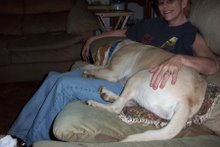
Kallee and Tamara

A Beautiful Summer Day.
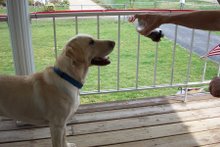
Madam Kallee, CTD, CGC - 1994-2005 - Certified Therapy Dog and a Canine Good Citizen

I am so pretty!
Kallee, T.D.I., CGC - Certified Therapy Dog and a Canine Good Citizen - 1994-2005

I loved to pose for the camera.
Hat Girl.

The things I do for my mom!
Happiness.

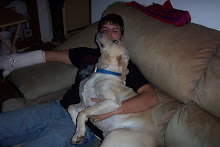
Bubby knows how to scratch a tummy.
Best of Friends.

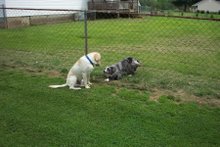
Mine! No, Mine!, No Mine!!!
Whew !

Bubby wears me out!
This is the Life.

Just relaxing with bubby.
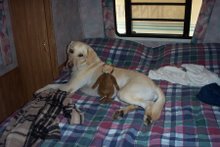
Kallee and Mr. Monkey

See Mr. Monkey? Wanna play?
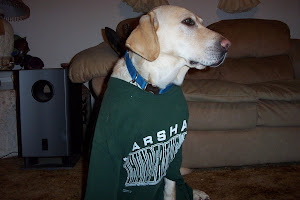
Miss Cool.

I loved to wear my shades.
Monday, August 6, 2007


Sunday, August 5, 2007
Difference between animal rights and animal welfare.
COMMITTEE AGAINST ANIMAL RIGHTS EXTREMISM Many commonsense, compassionate people who love their animals do not understand the true nature of the animal rights movement. They care about their animals and want to insure they are treated humanely. Because they have been misled into believing that the movement is about something else (helping animals), they "think" they are for animal rights. What they actually believe in is animal welfare, from a responsible animal ownership perspective. They own and love animals and care for them and do not want to see any animal abused.
--------------------------------------------------------------------------------
interaction at all between animals and human beings.
Animal Rights Vs. Animal Welfare
Animal WELFARE is about humane treatment of animals; in fact, animal welfare is essentially synonymous with the original humane movement begun in England in the l840's.
Animal RIGHTS is claiming animals have legal rights, as people do, and the most basic animal right is the right not to be owned or used for any purpose at all by human beings.
Animal WELFARE supporters aim for a balance between owning and using animals as humanely as possible and allowing owners and breeders their rights to own, use, and breed animals.
Animal RIGHTS supporters aim to end all ownership, use, and breeding of all animals. They envision a world in which no animals are left anywhere, because, allegedly, man has so mis-treated animals, man no longer deserves to have animals. If it is not possible to end the existence of all animals by sterilization, then at least, all animals should be set free to make their way in the wilderness. Anything less than that is slavery.
Animal RIGHTS people do NOT believe in animal welfare. On the contrary, they are not interested in so-called humane treatment of animals, because they believe there should be no interaction at all between animals and human beings.
Roberta Pliner
Permission to cross-post or quote anywhere, but give authorship credit and pet-law list credit.
--------------------------------------------------------------------------------
interaction at all between animals and human beings.
Animal Rights Vs. Animal Welfare
Animal WELFARE is about humane treatment of animals; in fact, animal welfare is essentially synonymous with the original humane movement begun in England in the l840's.
Animal RIGHTS is claiming animals have legal rights, as people do, and the most basic animal right is the right not to be owned or used for any purpose at all by human beings.
Animal WELFARE supporters aim for a balance between owning and using animals as humanely as possible and allowing owners and breeders their rights to own, use, and breed animals.
Animal RIGHTS supporters aim to end all ownership, use, and breeding of all animals. They envision a world in which no animals are left anywhere, because, allegedly, man has so mis-treated animals, man no longer deserves to have animals. If it is not possible to end the existence of all animals by sterilization, then at least, all animals should be set free to make their way in the wilderness. Anything less than that is slavery.
Animal RIGHTS people do NOT believe in animal welfare. On the contrary, they are not interested in so-called humane treatment of animals, because they believe there should be no interaction at all between animals and human beings.
Roberta Pliner
Permission to cross-post or quote anywhere, but give authorship credit and pet-law list credit.
Thursday, August 2, 2007
Red Cross CPR Class for Pets.
I found this article and thought it very informative.
Little-known Red Cross class teaches first aid, CPR for pets
By Sophia Maines
Monday, May 29, 2006
There may come a day when Fido needs more than a belly rub.
And because emergencies happen, the Douglas County Chapter of the American Red Cross offers a little-known course on Pet First Aid and CPR.
“A lot of people don’t realize you can give CPR to an animal,” said Wendy Leedy, the course’s instructor.
Though some might not think of it, being a pet owner can require bandaging a wound, addressing a snake bite or even performing mouth-to-mouth resuscitation.
“If you treat your animals like they’re a part of the family, then it’s important to know what to do to save their life,” said Midge Grinstead, executive director of the Lawrence Humane Society.
A small but dedicated group of dog owners and pet professionals is taking part in Red Cross classes, Leedy said.
Fewer than 10 participated in the April session. The course runs about four hours and costs $25. The next class is set for 5:30 p.m. June 26.
The chapter is one of the few in the region to offer the courses, Leedy said.
“We saw it as a unique opportunity to provide a service that is not currently being provided,” she said.
Leedy said she knows some might chuckle at the course that has students practicing CPR on a stuffed dog and cat — specialized with a tube connected to their snout or nose for practice rescue breathing.
Those who take the course, Leedy said, are “die-hard” pet lovers. The classes are popular with private pet owners as well as people who work with animals.
It offers basic pet First Aid, plus training in how to deal with poisoning, insect and animal bites, bone and joint injury, burns, shock, heat stroke and frost bite. Students also learn rescue breathing and dealing with a pet that’s choking.
“The biggest thing people walk away with is a sense of being prepared to respond to an emergency,” Leedy said.
More than a dozen Humane Society employees recently took the course.
“We all know what we’re doing with animals,” said Grinstead. “I just wanted to make sure they knew where to do the compressions and how to breathe in the snout.”
The chances of reviving a dog using CPR alone aren’t great, said Norma Gottstein, a veterinarian at Gentle Care Animal Hospital. But the sooner you start helping an animal, she said, the better its chances.
Cedric Devin, owner of Christal K-9 Inc., a pet grooming business, said he’s taken the training and used it to help a dog who had a door shut on its tail.
“I’ve had real-world experience where that class paid off for me,” he said.
But he wonders whether all pet owners should attempt major maneuvers on their own.
“If you don’t know what you’re doing, you could end up doing more damage,” he said. “The tough question to answer is: where’s that fine line between what a vet should do and what a pet owner should do? Where do we look for someonemore knowledgeable?”
Leedy said she tells her pet CPR students the same she tells those students learning CPR for humans: you shouldn’t exceed the scope of your training.
Grinstead said she’s performed CPR on pets six times over the last decade and saved four of the animals.
Though similar in some ways, CPR on pets is different from CPR on humans.
“With people, I think it’s easier,” Grinstead said. “You can pinch their nose. You know how the body works better than you do with a dog.”
And with pets, there can be fears about germs or getting bitten.
“For a lot of people, it’s a hard decision right away to know what to do,” she said.
Denise Van Sickel of Lawrence Pet Friends, a pet-sitting service, has had to rescue a dog.
“My own dog choked on a piece of rawhide,” she said.
Van Sickel used the Heimlich maneuver on her dog. The emergency was akin to an incident involving a person, she said.
“It’s just as scary,” she said. “Your adrenaline gets going. You go into panic mode.”
Van Sickel said she’s not sure whether her dog could have coughed up the rawhide on her own.
“I like to think I made a difference,” she said.
Little-known Red Cross class teaches first aid, CPR for pets
By Sophia Maines
Monday, May 29, 2006
There may come a day when Fido needs more than a belly rub.
And because emergencies happen, the Douglas County Chapter of the American Red Cross offers a little-known course on Pet First Aid and CPR.
“A lot of people don’t realize you can give CPR to an animal,” said Wendy Leedy, the course’s instructor.
Though some might not think of it, being a pet owner can require bandaging a wound, addressing a snake bite or even performing mouth-to-mouth resuscitation.
“If you treat your animals like they’re a part of the family, then it’s important to know what to do to save their life,” said Midge Grinstead, executive director of the Lawrence Humane Society.
A small but dedicated group of dog owners and pet professionals is taking part in Red Cross classes, Leedy said.
Fewer than 10 participated in the April session. The course runs about four hours and costs $25. The next class is set for 5:30 p.m. June 26.
The chapter is one of the few in the region to offer the courses, Leedy said.
“We saw it as a unique opportunity to provide a service that is not currently being provided,” she said.
Leedy said she knows some might chuckle at the course that has students practicing CPR on a stuffed dog and cat — specialized with a tube connected to their snout or nose for practice rescue breathing.
Those who take the course, Leedy said, are “die-hard” pet lovers. The classes are popular with private pet owners as well as people who work with animals.
It offers basic pet First Aid, plus training in how to deal with poisoning, insect and animal bites, bone and joint injury, burns, shock, heat stroke and frost bite. Students also learn rescue breathing and dealing with a pet that’s choking.
“The biggest thing people walk away with is a sense of being prepared to respond to an emergency,” Leedy said.
More than a dozen Humane Society employees recently took the course.
“We all know what we’re doing with animals,” said Grinstead. “I just wanted to make sure they knew where to do the compressions and how to breathe in the snout.”
The chances of reviving a dog using CPR alone aren’t great, said Norma Gottstein, a veterinarian at Gentle Care Animal Hospital. But the sooner you start helping an animal, she said, the better its chances.
Cedric Devin, owner of Christal K-9 Inc., a pet grooming business, said he’s taken the training and used it to help a dog who had a door shut on its tail.
“I’ve had real-world experience where that class paid off for me,” he said.
But he wonders whether all pet owners should attempt major maneuvers on their own.
“If you don’t know what you’re doing, you could end up doing more damage,” he said. “The tough question to answer is: where’s that fine line between what a vet should do and what a pet owner should do? Where do we look for someonemore knowledgeable?”
Leedy said she tells her pet CPR students the same she tells those students learning CPR for humans: you shouldn’t exceed the scope of your training.
Grinstead said she’s performed CPR on pets six times over the last decade and saved four of the animals.
Though similar in some ways, CPR on pets is different from CPR on humans.
“With people, I think it’s easier,” Grinstead said. “You can pinch their nose. You know how the body works better than you do with a dog.”
And with pets, there can be fears about germs or getting bitten.
“For a lot of people, it’s a hard decision right away to know what to do,” she said.
Denise Van Sickel of Lawrence Pet Friends, a pet-sitting service, has had to rescue a dog.
“My own dog choked on a piece of rawhide,” she said.
Van Sickel used the Heimlich maneuver on her dog. The emergency was akin to an incident involving a person, she said.
“It’s just as scary,” she said. “Your adrenaline gets going. You go into panic mode.”
Van Sickel said she’s not sure whether her dog could have coughed up the rawhide on her own.
“I like to think I made a difference,” she said.
Tuesday, July 31, 2007
How to pick a groomer or boarding and training facility.
The reason I am writing this post is to let people know what questions to ask when shopping around for a new groomer for your pet, or a boarding facility for vacations where you can't take your pet and finally, a training facility to help your pet become not only a member of your "pack", but also a member of society's "pack." If you find yourself in the position of having to find another groomer, trainer or boarding facility, here are a few questions to ask.
GROOMING:
1. How long has the groomer been grooming?
2. Did they go to a grooming school?
3. Are they certified by National Dog Groomer's Assoc. of America or any other Assoc. and do you drug test?
4. May I stay while my dog gets its groom?
5. May I schedule a time to come and look at the area where my pet will be groomed, bathed and dried?
6. Do you use muzzles on certain breeds, even if not needed?
7. Do you use organic products when bathing?
TRAINING:
1. Is the trainer a certified master trainer?
2. Where did they get there training and certification?
3. Do you use pinch collars to train?
4. May I schedule a time to come and view the training area, and see some of your training dogs?
5. Do you have group classes and one-on-one training? What about keeping the dog for a certain amt. of time for training?
BOARDING:
1. What are your rates?
a. Do you require up-to-date vaccinations including Bordatella?
2. Do you kennel dogs together that come in together?
3. Do you have indoor/outdoor runs?
4. How many times are the dogs let out to potty?
5. Do I need to bring my own food, bowls, and bedding?
6. May I schedule a time to come and view the boarding area and play/outside area?
7. Do you bathe the dog before pick up, or do I have to request that?
8. At anytime are strange dogs put together?
9. Do you give medications if brought.
10. Do your kennel personnel know animal CPR?
GROOMING:
1. How long has the groomer been grooming?
2. Did they go to a grooming school?
3. Are they certified by National Dog Groomer's Assoc. of America or any other Assoc. and do you drug test?
4. May I stay while my dog gets its groom?
5. May I schedule a time to come and look at the area where my pet will be groomed, bathed and dried?
6. Do you use muzzles on certain breeds, even if not needed?
7. Do you use organic products when bathing?
TRAINING:
1. Is the trainer a certified master trainer?
2. Where did they get there training and certification?
3. Do you use pinch collars to train?
4. May I schedule a time to come and view the training area, and see some of your training dogs?
5. Do you have group classes and one-on-one training? What about keeping the dog for a certain amt. of time for training?
BOARDING:
1. What are your rates?
a. Do you require up-to-date vaccinations including Bordatella?
2. Do you kennel dogs together that come in together?
3. Do you have indoor/outdoor runs?
4. How many times are the dogs let out to potty?
5. Do I need to bring my own food, bowls, and bedding?
6. May I schedule a time to come and view the boarding area and play/outside area?
7. Do you bathe the dog before pick up, or do I have to request that?
8. At anytime are strange dogs put together?
9. Do you give medications if brought.
10. Do your kennel personnel know animal CPR?
Wednesday, July 25, 2007
Unwanted Urination.
Preventing Unwanted Urination.
There are a number of reasons why dogs have problems with
inappropriate urination and in some cases defecation.
Unfortunately most dog owners don't understand why this happens and
are unsure what to do. It can even happen to dogs that have been trained and housebroken. Many dog owners who are unable to address the problem simply take
their dog to the pound as they assume there is no alternative to
the problem that they are unable to solve.
Unwanted urination is a very common problem that many dog owners
face and is more common than most people would assume. You will need to eliminate any medical reasons first, as there could be bladder infections that are causing the urination, but aside from that there are other reasons why dogs will urinate.
One of the most common reasons for a dog to lose control of it's
bladder is from excitement and you will generally see this happen a
lot more with puppies. With puppies this is a lack of bladder control that will generally stop, as they get older.
Puppies are often unaware that they are urinating when they get
excited and to reprimand them for doing this will cause confusion. To get angry with your dog for excitement urination can lead to other problems where the dog will begin to urinate from submissiveness rather than excitement thereby creating another
problem that will need to be addressed.
With excitement urination the best cure is prevention and that is
achieved by not allowing your dog to get overly excited. And the best way to stop your dog getting over excited in certain circumstances is to expose him/her to those situations more often until they no longer get excited to the extent that they urinate.
Puppies will eventually grow out of excitement urination as they
develop better bladder control. Submissive urination is something that is common in the wild, where dogs, being pack animals, show their submissiveness to the leader
of the pack by lowering themselves and urinating.
Where a dog is showing signs of submissive urination this is
effectively a sign of insecurity and is very often associated with
dogs that have been abused. It can be difficult to correct submissive urination and quite often the best method is to ignore what is happening and focus on
developing a better relationship with your pet and help to build
it's self confidence.
There are a number of reasons why dogs have problems with
inappropriate urination and in some cases defecation.
Unfortunately most dog owners don't understand why this happens and
are unsure what to do. It can even happen to dogs that have been trained and housebroken. Many dog owners who are unable to address the problem simply take
their dog to the pound as they assume there is no alternative to
the problem that they are unable to solve.
Unwanted urination is a very common problem that many dog owners
face and is more common than most people would assume. You will need to eliminate any medical reasons first, as there could be bladder infections that are causing the urination, but aside from that there are other reasons why dogs will urinate.
One of the most common reasons for a dog to lose control of it's
bladder is from excitement and you will generally see this happen a
lot more with puppies. With puppies this is a lack of bladder control that will generally stop, as they get older.
Puppies are often unaware that they are urinating when they get
excited and to reprimand them for doing this will cause confusion. To get angry with your dog for excitement urination can lead to other problems where the dog will begin to urinate from submissiveness rather than excitement thereby creating another
problem that will need to be addressed.
With excitement urination the best cure is prevention and that is
achieved by not allowing your dog to get overly excited. And the best way to stop your dog getting over excited in certain circumstances is to expose him/her to those situations more often until they no longer get excited to the extent that they urinate.
Puppies will eventually grow out of excitement urination as they
develop better bladder control. Submissive urination is something that is common in the wild, where dogs, being pack animals, show their submissiveness to the leader
of the pack by lowering themselves and urinating.
Where a dog is showing signs of submissive urination this is
effectively a sign of insecurity and is very often associated with
dogs that have been abused. It can be difficult to correct submissive urination and quite often the best method is to ignore what is happening and focus on
developing a better relationship with your pet and help to build
it's self confidence.
Saturday, July 21, 2007
Voice your opinion about Michael Vick's dog fighting ring.
http://blog.myspace.com/thehumanesociety
In the Herald Dispatch, they have a "dog" blog, and the blogger finally has some really useful information! Use the above address and click on the link to send a letter to the NFL about Michael Vick's involvement in dog fighting. The NFL has not suspended him, but suspended PacMan Jones before he was found guilty for an incident that didn't involve cruelty to animals. What makes Vick so special. He abuses animals. Dog fighting is a "sport" that is unfortunately gaining popularity in the US. Use your words to tell the NFL that their treatment of this situation is unacceptable.
In the Herald Dispatch, they have a "dog" blog, and the blogger finally has some really useful information! Use the above address and click on the link to send a letter to the NFL about Michael Vick's involvement in dog fighting. The NFL has not suspended him, but suspended PacMan Jones before he was found guilty for an incident that didn't involve cruelty to animals. What makes Vick so special. He abuses animals. Dog fighting is a "sport" that is unfortunately gaining popularity in the US. Use your words to tell the NFL that their treatment of this situation is unacceptable.
Tuesday, July 3, 2007
Boredom
Dogs are a lot like children. They need stimulation or they will get bored and we all know the trouble children can be when they get bored. Bored dogs are generally unhappy dogs and they are also the dogs that are most likely to get into trouble with other animals and humans. The happiest dogs are often the working dogs as they not only have a purpose in life but they also get the praise and regular
attention of their owners. Even simply getting your dog some toys of it's own to play with can add a lot of fun and happiness to it's life, but more importantly
getting the dog involved in family activities will have a positive
effect on it's mental state and happiness. Dogs love to be taken for walks or a run along the beach. They get to look at a different environment and interact with
strangers and other dogs. This social interaction is very important for the overall well being of your dog and it is something that needs to be done on a
regular basis. One of the benefits of dog training schools is the fact that your
dog will get to interact with other dogs, however training your dog
at home also has it's benefits as you will be learning each others
personalities when working closely together and your dog will still
get the opportunity to socialize with other dogs when you take it
for walks in the park and similar activities. Anytime you spend with your dog will increase the bond between you.
attention of their owners. Even simply getting your dog some toys of it's own to play with can add a lot of fun and happiness to it's life, but more importantly
getting the dog involved in family activities will have a positive
effect on it's mental state and happiness. Dogs love to be taken for walks or a run along the beach. They get to look at a different environment and interact with
strangers and other dogs. This social interaction is very important for the overall well being of your dog and it is something that needs to be done on a
regular basis. One of the benefits of dog training schools is the fact that your
dog will get to interact with other dogs, however training your dog
at home also has it's benefits as you will be learning each others
personalities when working closely together and your dog will still
get the opportunity to socialize with other dogs when you take it
for walks in the park and similar activities. Anytime you spend with your dog will increase the bond between you.
Subscribe to:
Posts (Atom)