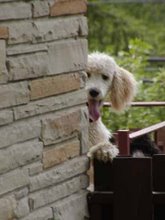
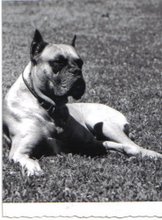
The reason I am writing this post is to let people know what questions to ask when shopping around for a new groomer for your pet, or a boarding facility for vacations where you can't take your pet and finally, a training facility to help your pet become not only a member of your "pack", but also a member of society's "pack." If you find yourself in the position of having to find another groomer, trainer or boarding facility, here are a few questions to ask.
GROOMING:
1. How long has the groomer been grooming?
2. Did they go to a grooming school?
3. Are they certified by National Dog Groomer's Assoc. of America or any other Assoc. and do you drug test?
4. May I stay while my dog gets its groom?
5. May I schedule a time to come and look at the area where my pet will be groomed, bathed and dried?
6. Do you use muzzles on certain breeds, even if not needed?
7. Do you use organic products when bathing?
TRAINING:
1. Is the trainer a certified master trainer?
2. Where did they get there training and certification?
3. Do you use pinch collars to train?
4. May I schedule a time to come and view the training area, and see some of your training dogs?
5. Do you have group classes and one-on-one training? What about keeping the dog for a certain amt. of time for training?
BOARDING:
1. What are your rates?
a. Do you require up-to-date vaccinations including Bordatella?
2. Do you kennel dogs together that come in together?
3. Do you have indoor/outdoor runs?
4. How many times are the dogs let out to potty?
5. Do I need to bring my own food, bowls, and bedding?
6. May I schedule a time to come and view the boarding area and play/outside area?
7. Do you bathe the dog before pick up, or do I have to request that?
8. At anytime are strange dogs put together?
9. Do you give medications if brought.
10. Do your kennel personnel know animal CPR?
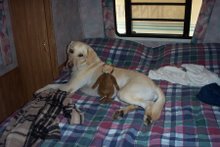
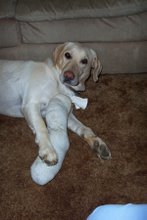
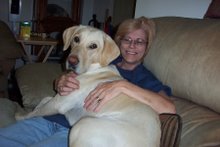
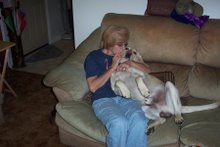
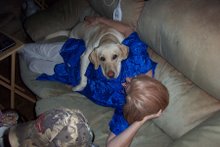
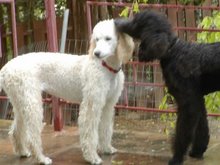
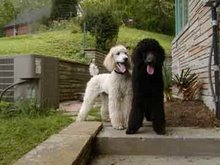
Kallee and Tamara
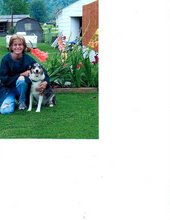
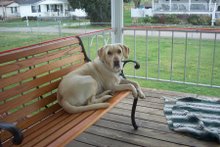
A Beautiful Summer Day.
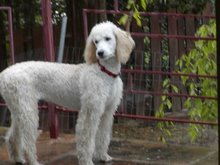
Madam Kallee, CTD, CGC - 1994-2005 - Certified Therapy Dog and a Canine Good Citizen
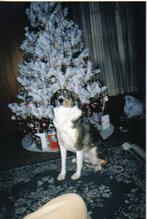
I am so pretty!
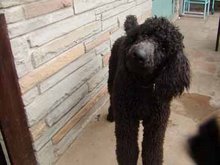
Kallee, T.D.I., CGC - Certified Therapy Dog and a Canine Good Citizen - 1994-2005

I loved to pose for the camera.
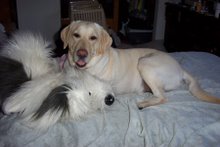
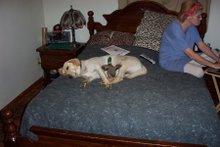
Hat Girl.

The things I do for my mom!
Happiness.

Bubby knows how to scratch a tummy.
Best of Friends.

Mine! No, Mine!, No Mine!!!
Whew !

Bubby wears me out!
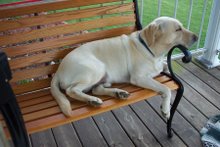
This is the Life.

Just relaxing with bubby.
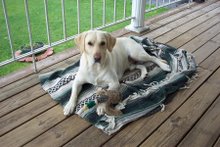
Kallee and Mr. Monkey
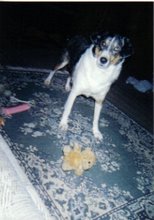
See Mr. Monkey? Wanna play?
Miss Cool.
I loved to wear my shades.
Tuesday, July 31, 2007


Wednesday, July 25, 2007
Unwanted Urination.
Preventing Unwanted Urination.
There are a number of reasons why dogs have problems with
inappropriate urination and in some cases defecation.
Unfortunately most dog owners don't understand why this happens and
are unsure what to do. It can even happen to dogs that have been trained and housebroken. Many dog owners who are unable to address the problem simply take
their dog to the pound as they assume there is no alternative to
the problem that they are unable to solve.
Unwanted urination is a very common problem that many dog owners
face and is more common than most people would assume. You will need to eliminate any medical reasons first, as there could be bladder infections that are causing the urination, but aside from that there are other reasons why dogs will urinate.
One of the most common reasons for a dog to lose control of it's
bladder is from excitement and you will generally see this happen a
lot more with puppies. With puppies this is a lack of bladder control that will generally stop, as they get older.
Puppies are often unaware that they are urinating when they get
excited and to reprimand them for doing this will cause confusion. To get angry with your dog for excitement urination can lead to other problems where the dog will begin to urinate from submissiveness rather than excitement thereby creating another
problem that will need to be addressed.
With excitement urination the best cure is prevention and that is
achieved by not allowing your dog to get overly excited. And the best way to stop your dog getting over excited in certain circumstances is to expose him/her to those situations more often until they no longer get excited to the extent that they urinate.
Puppies will eventually grow out of excitement urination as they
develop better bladder control. Submissive urination is something that is common in the wild, where dogs, being pack animals, show their submissiveness to the leader
of the pack by lowering themselves and urinating.
Where a dog is showing signs of submissive urination this is
effectively a sign of insecurity and is very often associated with
dogs that have been abused. It can be difficult to correct submissive urination and quite often the best method is to ignore what is happening and focus on
developing a better relationship with your pet and help to build
it's self confidence.
There are a number of reasons why dogs have problems with
inappropriate urination and in some cases defecation.
Unfortunately most dog owners don't understand why this happens and
are unsure what to do. It can even happen to dogs that have been trained and housebroken. Many dog owners who are unable to address the problem simply take
their dog to the pound as they assume there is no alternative to
the problem that they are unable to solve.
Unwanted urination is a very common problem that many dog owners
face and is more common than most people would assume. You will need to eliminate any medical reasons first, as there could be bladder infections that are causing the urination, but aside from that there are other reasons why dogs will urinate.
One of the most common reasons for a dog to lose control of it's
bladder is from excitement and you will generally see this happen a
lot more with puppies. With puppies this is a lack of bladder control that will generally stop, as they get older.
Puppies are often unaware that they are urinating when they get
excited and to reprimand them for doing this will cause confusion. To get angry with your dog for excitement urination can lead to other problems where the dog will begin to urinate from submissiveness rather than excitement thereby creating another
problem that will need to be addressed.
With excitement urination the best cure is prevention and that is
achieved by not allowing your dog to get overly excited. And the best way to stop your dog getting over excited in certain circumstances is to expose him/her to those situations more often until they no longer get excited to the extent that they urinate.
Puppies will eventually grow out of excitement urination as they
develop better bladder control. Submissive urination is something that is common in the wild, where dogs, being pack animals, show their submissiveness to the leader
of the pack by lowering themselves and urinating.
Where a dog is showing signs of submissive urination this is
effectively a sign of insecurity and is very often associated with
dogs that have been abused. It can be difficult to correct submissive urination and quite often the best method is to ignore what is happening and focus on
developing a better relationship with your pet and help to build
it's self confidence.
Saturday, July 21, 2007
Voice your opinion about Michael Vick's dog fighting ring.
http://blog.myspace.com/thehumanesociety
In the Herald Dispatch, they have a "dog" blog, and the blogger finally has some really useful information! Use the above address and click on the link to send a letter to the NFL about Michael Vick's involvement in dog fighting. The NFL has not suspended him, but suspended PacMan Jones before he was found guilty for an incident that didn't involve cruelty to animals. What makes Vick so special. He abuses animals. Dog fighting is a "sport" that is unfortunately gaining popularity in the US. Use your words to tell the NFL that their treatment of this situation is unacceptable.
In the Herald Dispatch, they have a "dog" blog, and the blogger finally has some really useful information! Use the above address and click on the link to send a letter to the NFL about Michael Vick's involvement in dog fighting. The NFL has not suspended him, but suspended PacMan Jones before he was found guilty for an incident that didn't involve cruelty to animals. What makes Vick so special. He abuses animals. Dog fighting is a "sport" that is unfortunately gaining popularity in the US. Use your words to tell the NFL that their treatment of this situation is unacceptable.
Tuesday, July 3, 2007
Boredom
Dogs are a lot like children. They need stimulation or they will get bored and we all know the trouble children can be when they get bored. Bored dogs are generally unhappy dogs and they are also the dogs that are most likely to get into trouble with other animals and humans. The happiest dogs are often the working dogs as they not only have a purpose in life but they also get the praise and regular
attention of their owners. Even simply getting your dog some toys of it's own to play with can add a lot of fun and happiness to it's life, but more importantly
getting the dog involved in family activities will have a positive
effect on it's mental state and happiness. Dogs love to be taken for walks or a run along the beach. They get to look at a different environment and interact with
strangers and other dogs. This social interaction is very important for the overall well being of your dog and it is something that needs to be done on a
regular basis. One of the benefits of dog training schools is the fact that your
dog will get to interact with other dogs, however training your dog
at home also has it's benefits as you will be learning each others
personalities when working closely together and your dog will still
get the opportunity to socialize with other dogs when you take it
for walks in the park and similar activities. Anytime you spend with your dog will increase the bond between you.
attention of their owners. Even simply getting your dog some toys of it's own to play with can add a lot of fun and happiness to it's life, but more importantly
getting the dog involved in family activities will have a positive
effect on it's mental state and happiness. Dogs love to be taken for walks or a run along the beach. They get to look at a different environment and interact with
strangers and other dogs. This social interaction is very important for the overall well being of your dog and it is something that needs to be done on a
regular basis. One of the benefits of dog training schools is the fact that your
dog will get to interact with other dogs, however training your dog
at home also has it's benefits as you will be learning each others
personalities when working closely together and your dog will still
get the opportunity to socialize with other dogs when you take it
for walks in the park and similar activities. Anytime you spend with your dog will increase the bond between you.
Tuesday, June 26, 2007
How To Stop Your New Puppy From Biting.
Puppies love to bite.
They do it naturally but it is something that they must be taught
not to do. This needs to be addressed while they are young because dog bites
can lead to all sorts of problems including legal action. It may seem fun and funny to have a puppy biting but a full-grown dog can do a lot of damage, particularly to children if they are in the habit of biting. Dogs have immense strength in their jaws and even a playful nip can do permanent damage to a child. Generally, puppies are taught to control their biting from their mothers but in most cases we get puppies as pets that have been taken from their mothers at a very young age and it is up to us to teach them as puppies not to bite. By letting your dog socialize with other dogs from a young age they will quickly learn from their elders, provided they have been taught well, that the desire to bite needs to be curbed to avoid retaliation and an ensuing fight.
The sooner the puppy is taught not to bite by the owner or by interaction with other dogs, the less aggressive they will become as they grow older and the more pleasant they will be to live with. Taking a puppy to a dog training school will allow it to interact with other dogs where it will quickly be corrected for any misbehavior. Puppies should generally learn to interact with other dogs within the first three months of their life. The longer this is left the more difficult it becomes for your dog to socialize correctly and they can become dangerous later in life. As with children, the sooner your puppy can learn correct behavior patterns the better they will be in the long term. It is also wise to get the puppy to behave correctly in the presence of other animals including cats and any other pets that they might come in contact with over their life. There are many items that are available from the pet stores and vets that can give your puppy suitable satisfaction to chew and bite upon. This will allow your puppy to learn what is right and what is not right to bite.
They do it naturally but it is something that they must be taught
not to do. This needs to be addressed while they are young because dog bites
can lead to all sorts of problems including legal action. It may seem fun and funny to have a puppy biting but a full-grown dog can do a lot of damage, particularly to children if they are in the habit of biting. Dogs have immense strength in their jaws and even a playful nip can do permanent damage to a child. Generally, puppies are taught to control their biting from their mothers but in most cases we get puppies as pets that have been taken from their mothers at a very young age and it is up to us to teach them as puppies not to bite. By letting your dog socialize with other dogs from a young age they will quickly learn from their elders, provided they have been taught well, that the desire to bite needs to be curbed to avoid retaliation and an ensuing fight.
The sooner the puppy is taught not to bite by the owner or by interaction with other dogs, the less aggressive they will become as they grow older and the more pleasant they will be to live with. Taking a puppy to a dog training school will allow it to interact with other dogs where it will quickly be corrected for any misbehavior. Puppies should generally learn to interact with other dogs within the first three months of their life. The longer this is left the more difficult it becomes for your dog to socialize correctly and they can become dangerous later in life. As with children, the sooner your puppy can learn correct behavior patterns the better they will be in the long term. It is also wise to get the puppy to behave correctly in the presence of other animals including cats and any other pets that they might come in contact with over their life. There are many items that are available from the pet stores and vets that can give your puppy suitable satisfaction to chew and bite upon. This will allow your puppy to learn what is right and what is not right to bite.
Tuesday, June 19, 2007
Dog Show on Animal Planet.
I am watching the 2007 Harrisburg PA dog show on Animal Planet. It is called the Animal Planet Dog Championships. Animal Planet has a lot to offer the animal lover. You don't have to be just a dog lover to watch animal planet. They have shows about all animals. The Best In Show was the Petit Basset Griffon Vendeen.(accent over the first "e" in Vendeen.) One of the many small varieties of the French hounds. Read more about this interesting little dog in my post "Dog Breeds - A-Z."
Sunday, June 17, 2007
AKC Breeds A-Z.
This post will be on-going. I am going to introduce you to each AKC registered breed.
Sporting Dogs:
The Brittany Spaniel was named for the French province in which it originated, the Brittany was, from 1934 to 1982, registered by the American KennelClub as the spaniel, Brittany. Although until then called a spaniel, in its manner of working game the Brittany is setterlike. In appearance it is smaller than the setters but leggier than the spaniels, with a short tail and a characteristic high ear set. Effective September 1, 1982, its official AKC name was changed to Brittany.
While it is generally conceded that the basic stock for all bird dogs is the same, most of the actual facts concerning the development and spread of the various breeds are lost in antiquity. Early written records are confusing. Dogs are referred to as being of Bretagne or Brittania, which may have referred to the British Isles rather than the French province, for Brittany was called Armorique until the 5Th century. Oppian, who lived about 150 A.D., wrote of the uncivilized people of Brittany (or Britain?) and reported that their dogs' scenting ability surpassed all others, a characteristic many present-day Brittanys retain.
It would seem probable that the dogs of Brittany and Wales had the same progenitors and developed along similar paths, quite possibly interbreeding. The two lands are geographically close and there was much commerce between them. One need only look at today's Welsh Springer and Brittany to recognize their similar physical characteristics.
The first accurare records to pinpoint the actual Brittany-type dog are the paintings and tapestries of the 17Th century. The frequency with which this type appears suggest it was fairly common. Oudry (1686-1745) shows a liver and white dog pointing partridge and this same type of dog is common in the Flemish paintings of the school of Jan Steen. Other painter show this same type of dog, so it must have been common along the northern coast of France and in Holland, even stretching into Germany where it developed into the Wachtelhund, modern breed much like the Brittany in appearance and ability.
Legend has it that the first tailless ancestor of the modern Brittany was bred about the mid-1800s at Pontou, a little town situated in the Valley of Douron, the result of a cross between a white-and-mahogany bitch owned by an old hunter of the region, and a lemon-and-white dog brought to Brittany by an English sportsman for the woodcock shooting. Of two tailless specimens produced in this litter, only one was considered worth keeping. His work in the field has been described as wonderful because of it he became a popular stud. All his litters contained puppies either without tails or with short stubs.
There is nothing written before 1850 that can be interpreted unequivocally as referring to the Brittany. In that year the Reverend Davies wrote of hunting in Carhaix with small bob-tailed dogs not as smooth as the Pointer, that worked well in the brush. They pointed, retrieved their game well and were particularly popular with poachers, as the nature of that profession required that the dogs be easy to handle. The description fits the Brittany to perfection.
It was speculated (and in at least one case confirmed) that matings of the native spaniels of Brittany were made around 1900 with English pointing dogs whose owners vacationed in France primarily for the woodcock shooting. These matings were believed to have been effective in intensifying the pointing qualities of the spaniel while the basic features of the dogs remained essentially Breton.
The Brittany's became a recognized breed when, in 1907, Boy, and orange-and-white, was registered as the first l'epagneul Breton (queue courte naturelle), a nomenclature that was soon shortened to simply l'epagneul Breton. Prior to this date, Brittany's had competed in classes for miscellaneous French Spaniels.
The first standard was outlined in 1907. This early standard required that the tail always be short at birth and that, in order to discourage further cross-breedings, black-and-white dogs be disqualified. The requirement for the natural bob-tail was soon dropped.
The breed was introduced into the United States in 1931 and officially recognized by the American kennel Club in 1934. The first standard was a direct translation from the French and not particularly comprehensible. The first major accomplishment of the American Brittany Club upon its formation in 1942 was to replace the original standard with a clear and concise one.
The Brittany's steady gain in popularity in the United States has been due to its merits as a shooting dog. Its smaller size and natural proclivity for hunting close fill the need of the modern American bird hunter. Its superb nose and desire to please are tow of its major assets. Its size makes it better adapted to city living than some of the larger bird dogs, and its close range makes it more adaptable to today's hunting areas, crisscrossed with numerous roads and fences.
Many American Brittany breeders have strived to maintain the dual concept, i.e. to breed a dog that is good looking as well as being a good hunter. The most popular former competition has been in field trials, sponsored by the parent club and its many chapters. Interest in showing Brittany's was initially somewhat limited, but there has been an upsurge over recent years. In the first 30 years of competition in this country, over 150 dogs of the breed gained the coveted title of Dual Champion (a champion in both the field and show).
Official Standard for the Brittany:
General Appearance-compact, closely knit dog of medium size, a leggy dog having the appearance, as well as the agility, of a great ground coverer. Strong, vigorous, energetic and quick in movement. Ruggedness, without clumsiness, is a characteristic of the breed. He/she can be tailless, or has a tail docked to approximately 4(four) inches.
Size, Proportion, Substance of the Brittany:
Height - 17 1/2 to 20 1/2 inches, measured from the ground to the highest point of the shoulders. Any Brittany measuring under 17 1/2 inches or over 20 1/2 inches shall be disqualified from a dog show or competition.
Weight - Should weigh between 20 and 40 pounds.
Proportion - So leggy is he that his height at the shoulders is the same as the length of his body.
Body Length - Approximately the same as the height when measured at the shoulders. Body length is measured from the point of the forechest to the rear of the rump. A long body should be heavily penalized.
Substance - Not too light in bone, yet never heavyboned or cumbersome.
Head:
Expression - Alert and eager, but with the soft expression of a bird dog.
Eyes - Well set in head. Well protected from briars by a heavy, expressive eyebrow. A prominent, full or popeye should be heavily penalized. It is a serious fault in a dog that must face briars. Skull well chiseled under the eyes, so that the lower lid is not pulled back to form a pocket or haw that would catch seeds, dirt and weed dust. Preferences should be for the darker colored eyes, though lighter shades of amber should not be penalized. Light and mean-looking eyes should be heavily penalized.
Ears - Set high, above the level of the eyes. Short or triangular, rather than pendulous, reaching about half the length of the muzzle. Should lie flat and close to the head, with the tip rounded very slightly. Ears well covered with dense, but relatively short hair, and with little fringe.
Skull - Medium length, rounded, very slightly wedge-shaped, but evenly made. Width not quite as wide as the length, and never so broad as to appear coarse, or so narrow as to appear racy. Well defined, but gently sloping stop. Median line rather indistinct. The occiput only apparent to the touch. Lateral walls well rounded. The Brittany should never be "appleheaded" and he should never have an indented stop.
Sporting Dogs:
The Brittany Spaniel was named for the French province in which it originated, the Brittany was, from 1934 to 1982, registered by the American KennelClub as the spaniel, Brittany. Although until then called a spaniel, in its manner of working game the Brittany is setterlike. In appearance it is smaller than the setters but leggier than the spaniels, with a short tail and a characteristic high ear set. Effective September 1, 1982, its official AKC name was changed to Brittany.
While it is generally conceded that the basic stock for all bird dogs is the same, most of the actual facts concerning the development and spread of the various breeds are lost in antiquity. Early written records are confusing. Dogs are referred to as being of Bretagne or Brittania, which may have referred to the British Isles rather than the French province, for Brittany was called Armorique until the 5Th century. Oppian, who lived about 150 A.D., wrote of the uncivilized people of Brittany (or Britain?) and reported that their dogs' scenting ability surpassed all others, a characteristic many present-day Brittanys retain.
It would seem probable that the dogs of Brittany and Wales had the same progenitors and developed along similar paths, quite possibly interbreeding. The two lands are geographically close and there was much commerce between them. One need only look at today's Welsh Springer and Brittany to recognize their similar physical characteristics.
The first accurare records to pinpoint the actual Brittany-type dog are the paintings and tapestries of the 17Th century. The frequency with which this type appears suggest it was fairly common. Oudry (1686-1745) shows a liver and white dog pointing partridge and this same type of dog is common in the Flemish paintings of the school of Jan Steen. Other painter show this same type of dog, so it must have been common along the northern coast of France and in Holland, even stretching into Germany where it developed into the Wachtelhund, modern breed much like the Brittany in appearance and ability.
Legend has it that the first tailless ancestor of the modern Brittany was bred about the mid-1800s at Pontou, a little town situated in the Valley of Douron, the result of a cross between a white-and-mahogany bitch owned by an old hunter of the region, and a lemon-and-white dog brought to Brittany by an English sportsman for the woodcock shooting. Of two tailless specimens produced in this litter, only one was considered worth keeping. His work in the field has been described as wonderful because of it he became a popular stud. All his litters contained puppies either without tails or with short stubs.
There is nothing written before 1850 that can be interpreted unequivocally as referring to the Brittany. In that year the Reverend Davies wrote of hunting in Carhaix with small bob-tailed dogs not as smooth as the Pointer, that worked well in the brush. They pointed, retrieved their game well and were particularly popular with poachers, as the nature of that profession required that the dogs be easy to handle. The description fits the Brittany to perfection.
It was speculated (and in at least one case confirmed) that matings of the native spaniels of Brittany were made around 1900 with English pointing dogs whose owners vacationed in France primarily for the woodcock shooting. These matings were believed to have been effective in intensifying the pointing qualities of the spaniel while the basic features of the dogs remained essentially Breton.
The Brittany's became a recognized breed when, in 1907, Boy, and orange-and-white, was registered as the first l'epagneul Breton (queue courte naturelle), a nomenclature that was soon shortened to simply l'epagneul Breton. Prior to this date, Brittany's had competed in classes for miscellaneous French Spaniels.
The first standard was outlined in 1907. This early standard required that the tail always be short at birth and that, in order to discourage further cross-breedings, black-and-white dogs be disqualified. The requirement for the natural bob-tail was soon dropped.
The breed was introduced into the United States in 1931 and officially recognized by the American kennel Club in 1934. The first standard was a direct translation from the French and not particularly comprehensible. The first major accomplishment of the American Brittany Club upon its formation in 1942 was to replace the original standard with a clear and concise one.
The Brittany's steady gain in popularity in the United States has been due to its merits as a shooting dog. Its smaller size and natural proclivity for hunting close fill the need of the modern American bird hunter. Its superb nose and desire to please are tow of its major assets. Its size makes it better adapted to city living than some of the larger bird dogs, and its close range makes it more adaptable to today's hunting areas, crisscrossed with numerous roads and fences.
Many American Brittany breeders have strived to maintain the dual concept, i.e. to breed a dog that is good looking as well as being a good hunter. The most popular former competition has been in field trials, sponsored by the parent club and its many chapters. Interest in showing Brittany's was initially somewhat limited, but there has been an upsurge over recent years. In the first 30 years of competition in this country, over 150 dogs of the breed gained the coveted title of Dual Champion (a champion in both the field and show).
Official Standard for the Brittany:
General Appearance-compact, closely knit dog of medium size, a leggy dog having the appearance, as well as the agility, of a great ground coverer. Strong, vigorous, energetic and quick in movement. Ruggedness, without clumsiness, is a characteristic of the breed. He/she can be tailless, or has a tail docked to approximately 4(four) inches.
Size, Proportion, Substance of the Brittany:
Height - 17 1/2 to 20 1/2 inches, measured from the ground to the highest point of the shoulders. Any Brittany measuring under 17 1/2 inches or over 20 1/2 inches shall be disqualified from a dog show or competition.
Weight - Should weigh between 20 and 40 pounds.
Proportion - So leggy is he that his height at the shoulders is the same as the length of his body.
Body Length - Approximately the same as the height when measured at the shoulders. Body length is measured from the point of the forechest to the rear of the rump. A long body should be heavily penalized.
Substance - Not too light in bone, yet never heavyboned or cumbersome.
Head:
Expression - Alert and eager, but with the soft expression of a bird dog.
Eyes - Well set in head. Well protected from briars by a heavy, expressive eyebrow. A prominent, full or popeye should be heavily penalized. It is a serious fault in a dog that must face briars. Skull well chiseled under the eyes, so that the lower lid is not pulled back to form a pocket or haw that would catch seeds, dirt and weed dust. Preferences should be for the darker colored eyes, though lighter shades of amber should not be penalized. Light and mean-looking eyes should be heavily penalized.
Ears - Set high, above the level of the eyes. Short or triangular, rather than pendulous, reaching about half the length of the muzzle. Should lie flat and close to the head, with the tip rounded very slightly. Ears well covered with dense, but relatively short hair, and with little fringe.
Skull - Medium length, rounded, very slightly wedge-shaped, but evenly made. Width not quite as wide as the length, and never so broad as to appear coarse, or so narrow as to appear racy. Well defined, but gently sloping stop. Median line rather indistinct. The occiput only apparent to the touch. Lateral walls well rounded. The Brittany should never be "appleheaded" and he should never have an indented stop.
Subscribe to:
Posts (Atom)